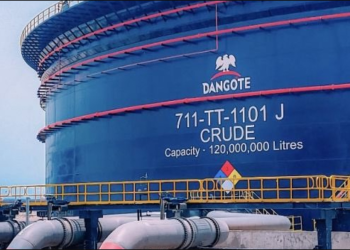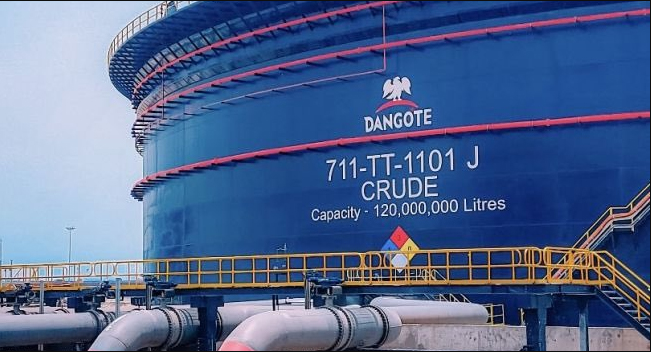
In a surprising turn of events, Dangote Petroleum Refinery and Petrochemicals has formally withdrawn its high-stakes lawsuit against Nigeria’s petroleum regulatory authorities and five major oil marketing companies, bringing an end to a contentious legal battle that had gripped the nation’s energy sector for months.
The case, which sought ₦100 billion in damages, was quietly discontinued at the Federal High Court in Abuja through a notice of discontinuance filed by Dangote’s legal team. The withdrawal comes without any official explanation from Africa’s richest man’s oil empire, leaving industry observers speculating about potential behind-the-scenes negotiations.
The Heart of the Dispute
The lawsuit had positioned Dangote Refinery against formidable opponents: the Nigerian Midstream and Downstream Petroleum Regulatory Authority (NMDPRA), the Nigerian National Petroleum Company Limited (NNPCL), and five petroleum marketing companies—AYM Shafa Limited, A.A. Rano Limited, T. Time Petroleum Limited, 2015 Petroleum Limited, and Matrix Petroleum Services Limited.
At the center of the dispute was Dangote’s challenge to NMDPRA’s issuance of import licenses for petroleum products. The refinery argued that such licenses violated sections 317(8) and (9) of the Petroleum Industry Act, claiming they should only be granted when genuine product shortfalls exist. Dangote further alleged that the regulatory authority had failed in its statutory duty to encourage local refineries like his multi-billion-dollar facility.
Accusations of Monopolistic Ambitions
The case quickly evolved into a broader debate about market competition and monopolistic practices in Nigeria’s petroleum sector. The defendant companies mounted a robust defense, arguing through their counter-affidavits that competitive practices are essential for Nigeria’s economic health and the oil sector’s viability.
In a pointed accusation, the marketers claimed that Dangote Refinery was seeking to monopolize Nigeria’s petroleum industry, positioning itself as the sole controller of supply, distribution, and pricing mechanisms. This allegation struck at the heart of concerns about market concentration in a sector critical to Nigeria’s economy.
Regulatory Defense
NMDPRA, through Senior Regulatory Officer Idris Musa, defended its licensing decisions by pointing to practical realities. In a sworn counter-affidavit, Musa argued that Dangote Refinery’s current production capacity does not meet Nigeria’s daily consumption requirements, necessitating continued imports to bridge supply gaps.
The regulatory authority maintained that its import licenses were issued to companies with proven track records in international petroleum products trading, following Section 317(9) of the Petroleum Industry Act. NMDPRA also emphasized its mandate to promote competition and prevent monopolies in the sector, categorically denying any conspiracy against Dangote.
Legal Complexities
The case was not without its procedural challenges. In December 2024, Dangote sought to amend its filing to correct the name of NNPCL, which had been incorrectly identified in the original suit. NNPC Limited responded with a preliminary objection, arguing that the misidentification rendered the entire suit incompetent.
However, Justice Inyang Ekwo dismissed this objection in March 2025, ruling that the naming error did not fundamentally affect the suit. The judge also criticized the defendants for raising procedural objections before addressing the substantive claims, suggesting the case was gaining momentum toward a full hearing.
Unanswered Questions
The sudden withdrawal leaves numerous questions unanswered. Industry analysts are now speculating whether an out-of-court settlement was reached, though no such agreement has been disclosed. The timing of the withdrawal, coming after the court had ruled in Dangote’s favor on procedural matters, adds to the mystery surrounding the decision.
The case had significant implications for Nigeria’s petroleum sector, touching on fundamental questions about market structure, regulatory authority, and the balance between promoting local industry and maintaining competitive markets. With Dangote Refinery representing one of Africa’s largest industrial investments and a cornerstone of Nigeria’s efforts to achieve petroleum self-sufficiency, the outcome of this dispute was being closely watched by investors, policymakers, and industry stakeholders across the continent.
The withdrawal, while ending this particular legal chapter, leaves the underlying tensions between local refining capacity, import dependencies, and market competition unresolved—issues that will likely continue to shape Nigeria’s petroleum sector policy in the months ahead.
WHAT YOU SHOULD KNOW
Africa’s largest refinery, Dangote Petroleum, has mysteriously withdrawn its ₦100 billion lawsuit against Nigerian oil regulators without explanation. The case centered on Dangote’s challenge to petroleum import licenses, which the company claimed violated industry laws and undermined local refining.
The sudden withdrawal raises questions about whether a behind-the-scenes settlement was reached, but leaves unresolved the critical tension between Nigeria’s push for petroleum self-sufficiency through local refining and maintaining competitive markets that prevent monopolistic control of the nation’s fuel supply.