Dangote Petroleum Refinery has issued a strong denial of recent allegations suggesting the facility imported substandard, high-sulphur petrol into the Nigerian market, describing the reports as “false and misleading.”
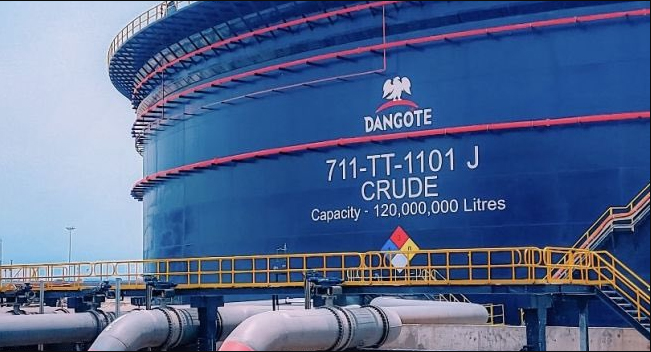
The refinery, which represents one of Africa’s largest petroleum processing facilities, moved swiftly to address the claims that have circulated in recent days, seeking to protect its reputation in Nigeria’s critical energy sector.
In a statement released by the company, Dangote Petroleum Refinery emphasized its unwavering dedication to maintaining international fuel quality benchmarks. The facility reiterated that all petroleum products leaving its gates conform to globally recognized standards, pushing back against suggestions that it would compromise on fuel specifications.
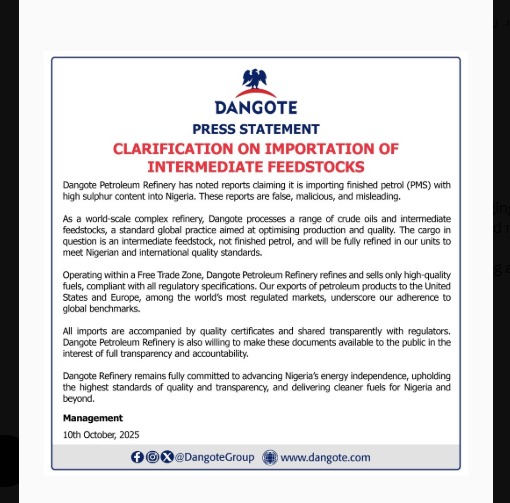
The allegations, which the company has not detailed specifically, appear to center on the sulfur content of petrol supplied to the Nigerian market. High-sulphur fuel has been a contentious issue in Nigeria and across Africa, where fuel quality standards have historically lagged behind those in Europe and North America. Excessive sulfur in petrol contributes to air pollution and can damage vehicle engines over time.
Dangote Refinery’s categorical denial comes at a crucial time for Nigeria’s petroleum sector. The 650,000-barrel-per-day facility, owned by billionaire industrialist Alaja Dangote, has been positioned as a game-changer for Nigeria’s fuel security, potentially ending decades of dependence on imported refined petroleum products despite the country’s status as a major crude oil producer.
The refinery has made considerable investments in processing infrastructure designed to produce cleaner fuels that meet Euro-V standards, which limit sulphur content to just 10 parts per million—significantly lower than older fuel standards.
Company officials have pledged continued transparency regarding their production processes and product quality, though they provided no specific data in their rebuttal to counter the allegations directly.
The controversy underscores the heightened scrutiny facing the Dangote Refinery as it ramps up operations and seeks to establish itself as Nigeria’s primary fuel supplier, navigating a complex landscape of regulatory expectations, market competition, and public accountability.
WHAT YOU SHOULD KNOW
Dangote Petroleum Refinery has firmly denied allegations of importing high-sulfur, substandard petrol into Nigeria, reasserting that it produces only high-quality fuel meeting international standards.
This controversy highlights the critical scrutiny facing Africa’s largest refinery as it seeks to transform Nigeria’s fuel landscape and end the country’s dependence on imported petroleum products.
The facility’s commitment to Euro-V standards—limiting sulfur to just 10 parts per million—positions it as a potential game-changer for cleaner fuel supply in Nigeria, though the allegations underscore the accountability pressures accompanying this pivotal role in the nation’s energy security.