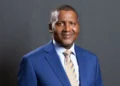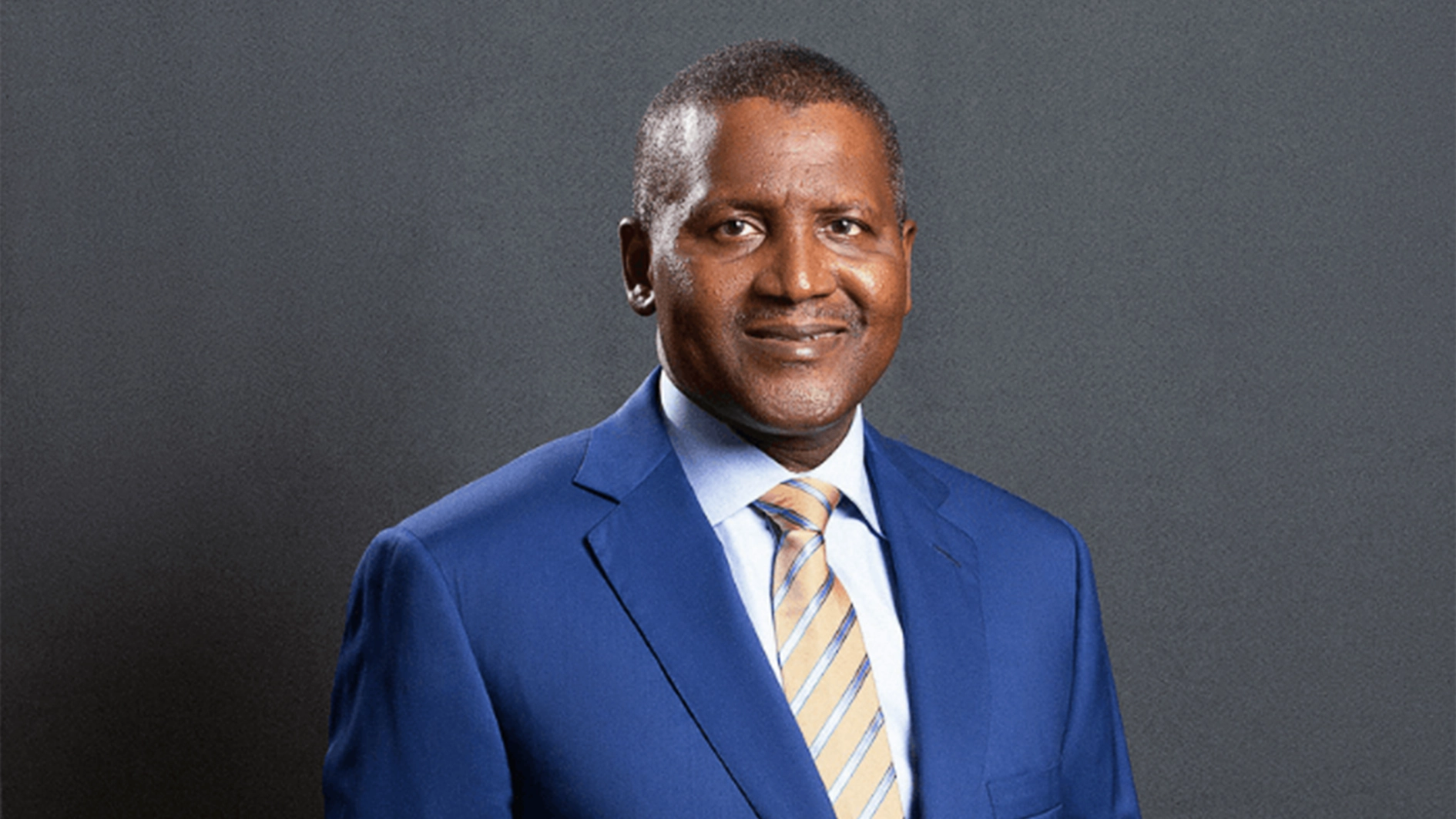
Aliko Dangote, the Nigerian cement-and-oil magnate, has told regional governments they can collectively buy into up to 30% of the equity in his proposed refinery on Kenya’s coast, a stake potentially worth roughly $1.5 billion in a project he now prices at around $16 billion.
The offer is the clearest signal so far that Dangote intends the plant to be a genuinely East African venture rather than a Nigerian company’s outpost abroad. It also comes as the billionaire races toward an October groundbreaking date he has set and staked his credibility on after years of the project existing largely on paper.
Dangote has settled on a financing structure of 30% equity and 70% debt for the refinery, with lenders expected to provide roughly 1.45 trillion Kenyan shillings, and shareholders, including Dangote among them, contributing about 621 billion shillings.
In dollar terms, that works out to lenders covering close to $11.2 billion and shareholders putting in around $4.8 billion.
If regional governments and investors take up the full 30% slice of that equity pool being made available to them, the math lines up closely with the $1.5 billion figure now circulating, a meaningful, if minority, foothold in a project Dangote insists will reshape fuel supply from the Horn of Africa to Egypt.
Dangote has taken to calling the project the “East African Refinery” specifically because of its intended regional reach, telling reporters it “concerns a lot of countries up to even Egypt.”
The plant, designed to process 700,000 barrels a day, is expected to supply fuel not just to Kenya but to landlocked and coastal markets, including Uganda, South Sudan, and the Democratic Republic of Congo.
That regional framing has not been without friction. Tanzania’s President Samia Suluhu publicly rebuked her Kenyan counterpart, William Ruto, after he announced the refinery would be sited in Tanga without consulting her before the location was ultimately narrowed toward Kenya’s coast.
Dangote Group had been running a feasibility study weighing the ports of Mombasa, Lamu, and Tanga as potential hosts.
Kenya’s government appears to be the first taker. President Ruto has appointed his deputy, Kithure Kindiki, to chair a committee coordinating the project and has earmarked roughly $165 million in seed capital, with Kenya expected to take a minority stake through its National Infrastructure Fund.
Dangote, for his part, has framed the decision as Nairobi’s to make: “The ball is in the hands of President Ruto,” he said. “Whatever President Ruto says is what I’ll do.”
The equity offer is not unconditional. Dangote has told the Kenyan government that construction hinges on securing land, some East African financing, and critically, protection from what he calls the “dumping” of cheap fuel from countries such as Russia and India, arguing that “there is no refinery in the world that can survive without that protection.”
The proposed regional stake echoes the model Dangote used to fund his Lagos refinery, Africa’s largest, which recently drew a $2.5 billion private placement from outside investors described as the largest publicly disclosed private investment in Africa ahead of a planned initial public offering.
Advisers on that Nigerian listing have separately held talks with markets in South Africa, Kenya, Egypt, Ghana, and Rwanda about giving local investors, including pension funds, a route into the Lagos plant as well.
Whether East African governments move quickly enough to claim their share of the Kenya project remains an open question.
Dangote has told the BBC he expects to break ground by October, with the refinery completed within four years once construction begins, a timeline that leaves regional capitals only a narrow window to decide how large a piece of the venture they want to own.
WHAT YOU SHOULD KNOW
Dangote’s offer of a 30% regional equity stake worth about $1.5 billion signals he wants East Africa’s governments to be genuine owners of the refinery, not just customers of it.
The offer comes with a catch: he’s told Kenya the project only moves forward if the government guarantees protection from cheap fuel imports from countries like Russia and India.
In short, the equity is real, but it’s conditional, and the clock is ticking toward his October groundbreaking deadline.