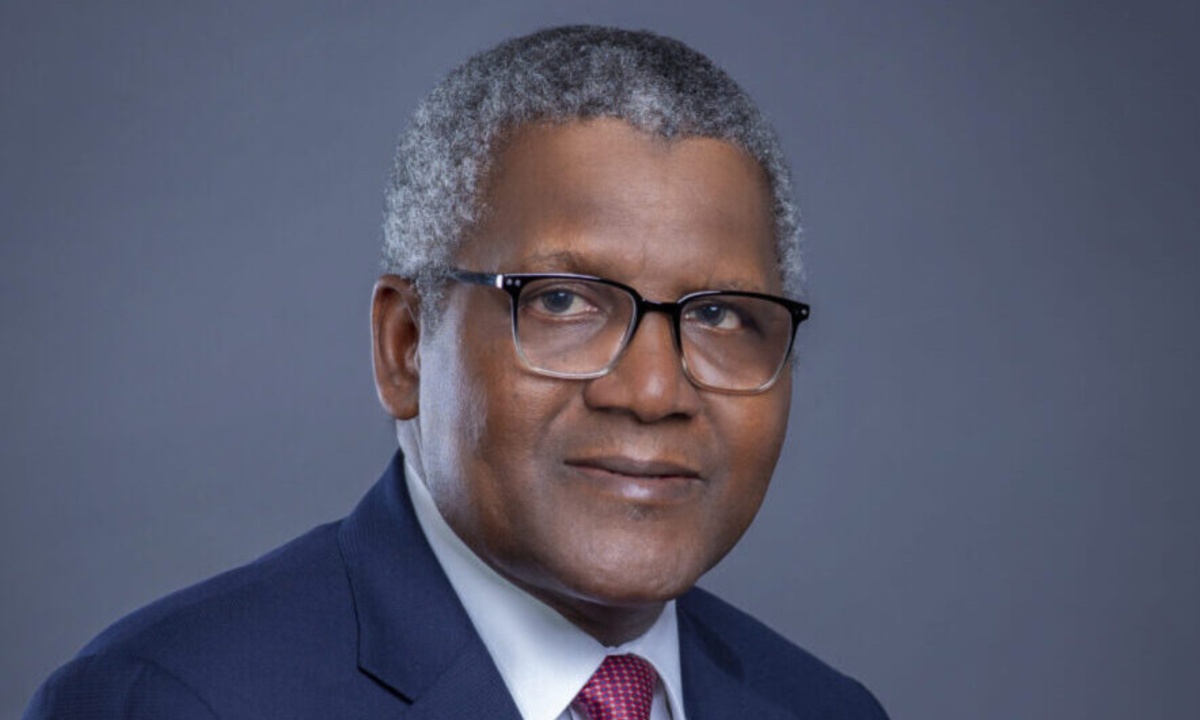
In a landmark development for African industrialisation, Nigerian billionaire industrialist Aliko Dangote has launched construction of a massive $2.5 billion fertiliser plant in Gode, Ethiopia, marking what officials describe as a transformative moment for the continent’s agricultural and economic landscape.
The ambitious project, unveiled at a groundbreaking ceremony attended by Ethiopian Prime Minister Abiy Ahmed, represents a joint venture between the Dangote Group and Ethiopian Investment Holdings. Once operational, the facility will boast an annual production capacity of three million metric tonnes of urea, positioning it among the world’s largest fertiliser manufacturing complexes.
Strategic Location and Resource Utilisation
Strategically situated in Ethiopia’s South-East region, the plant is designed to capitalise on the country’s substantial natural gas deposits from the Hilal and Calub reserves. This resource advantage is expected to provide a competitive edge in production costs while addressing critical agricultural needs across the Horn of Africa.
The project’s objectives extend beyond mere production figures. Ethiopian authorities anticipate the facility will significantly boost agricultural productivity, generate substantial employment opportunities, and strengthen food security throughout the region—a pressing concern for a continent where agricultural self-sufficiency remains elusive.
A Symbol of Pan-African Cooperation
Prime Minister Abiy Ahmed framed the initiative in broader geopolitical terms, characterising it as emblematic of shared responsibility and regional cooperation rather than simply industrial expansion.
“They embody our shared responsibility to harness opportunities, strengthen cooperation, and promote peace,” the Prime Minister stated, calling on Ethiopians to mobilise collectively for national progress. He emphasised that such ventures elevate Ethiopia’s global standing in a manner that honours the nation’s identity and aspirations.
Dangote’s Vision for African Industrialisation
The Dangote Group chairman offered effusive praise for Ethiopia’s economic reforms, crediting Prime Minister Abiy’s administration with implementing liberalisation policies that have unlocked key sectors for private investment. Dangote specifically highlighted the government’s infrastructure investments—including transportation networks, energy systems, and the controversial Grand Ethiopian Renaissance Dam—as foundational elements supporting the country’s industrial ambitions.
“This partnership with Ethiopian Investment Holdings represents a pivotal moment in our shared vision to industrialise Africa and achieve food security across the continent,” Dangote declared. He pledged to leverage his conglomerate’s decades of experience in executing large-scale industrial projects to ensure the venture becomes a cornerstone of Ethiopia’s economic transformation.
Expansion Plans and Regional Hub Ambitions
The Gode facility represents merely the opening salvo in a more comprehensive strategy. Dangote revealed plans to diversify production beyond urea to include ammonium nitrate, ammonium sulphate, NPK (nitrogen, phosphorus, and potassium compounds), and calcium ammonium nitrate. This expansion would position Ethiopia as a regional manufacturing hub for agricultural inputs.
In a bold prediction, the industrialist suggested Ethiopia could emerge as Africa’s pre-eminent agricultural nation within five years—a striking assertion for a country that has historically grappled with food security challenges.
Building on Established Presence
This fertiliser complex marks the Dangote Group’s second major investment in Ethiopia. The conglomerate’s cement subsidiary has operated a 2.5 million metric tonnes per annum plant in Mugher for over a decade, with an additional $400 million commitment to double that facility’s capacity.
The move aligns with Dangote’s broader continental strategy, which operates on the principle that “only Africans can develop Africa,” with particular emphasis on manufacturing to reduce import dependency—a structural weakness that has long plagued African economies.
Nigeria’s Transformation as a Blueprint
Dangote positioned Nigeria’s recent industrial evolution as a template for what Ethiopia might achieve. He highlighted his group’s role in transforming Africa’s most populous nation into a net exporter of petroleum products, cement, and fertiliser through strategic investments in refineries, cement plants, and fertiliser production—the latter set to reach nine million metric tonnes annually, which would make it the world’s largest.
“These investments have already changed Nigeria’s story. We’ve moved from being import-dependent to becoming self-sufficient and even exporters,” Dangote noted, expressing readiness to replicate this model across the continent.
Historic Significance
Dangote characterised the Gode project as unprecedented in African industrial development, describing it as the first instance of a private African investor partnering with an African nation to construct an industrial complex of this magnitude.
“We understand Africa, its challenges, its opportunities, and its potential. And we believe only Africans can truly transform Africa,” he asserted, reinforcing the pan-African dimension of the initiative.
Additional plans include establishing a polypropylene bagging plant to support the fertiliser industry’s supply chain within Ethiopia.
Financial Backing and Regional Support
The project has secured financial support from major African financial institutions, including Afreximbank, Africa Finance Corporation, and Nigerian commercial banks such as Access Bank, First Bank, and Zenith Bank—demonstrating continental confidence in the venture’s viability.
Mustafa Omar, president of Ethiopia’s Somali region, offered a glowing endorsement of the partnership, describing Dangote as “the anchor investor Ethiopia has been looking for” and emphasizing his standing as a trusted figure respected throughout the continent.
The groundbreaking ceremony signals a new chapter in Ethiopia’s industrialisation drive and represents a test case for whether African-led investment can deliver the transformative economic development the continent has long pursued.
WHAT YOU SHOULD KNOW
Aliko Dangote has launched a $2.5 billion fertiliser plant in Ethiopia—set to produce 3 million metric tonnes of urea annually and become one of the world’s largest fertiliser complexes. This groundbreaking project represents the first time a private African investor has partnered with an African government to build an industrial complex of this scale, marking a pivotal shift toward African-led industrialisation.
The facility will leverage Ethiopia’s natural gas reserves to boost agricultural productivity and food security across the Horn of Africa, with plans to expand into multiple fertiliser types and position Ethiopia as a regional manufacturing hub.
Dangote predicts Ethiopia could become Africa’s leading agricultural nation within five years, demonstrating that Africans are taking charge of their own continent’s economic transformation.