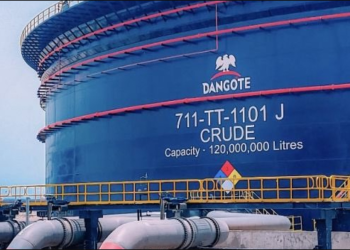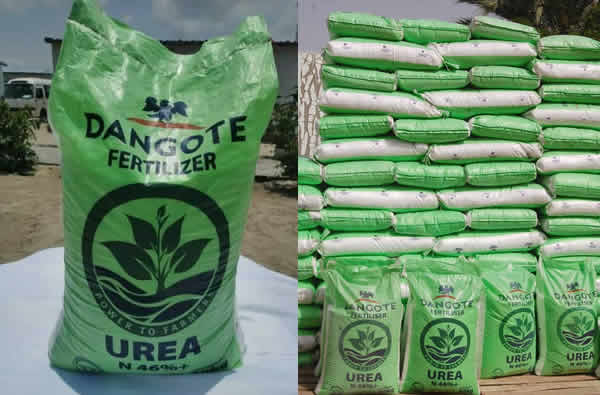
Dangote Fertilizer Limited has signed a landmark technology licensing agreement with German engineering giant Thyssenkrupp Uhde Fertilizer Technology to construct four new state-of-the-art urea granulation units at its Lekki facility.
The deal, announced in a statement released this week, will see DFL adopt UFT’s internationally acclaimed Fluid Bed Granulation Technology – the same system that currently produces over 70 percent of the world’s urea granules. Each of the four new production lines will boast a nameplate capacity of 4,235 metric tons per day, translating to a combined daily output of 16,940 metric tons.
This ambitious expansion represents a transformative leap for Africa’s largest fertilizer producer. When operational, the new units will catapult Dangote Fertilizer’s annual production capacity from approximately 2.65 million tons to over 8 million tons – more than tripling current output and significantly reducing Nigeria’s dependence on imported fertilizers.
The new facilities will be constructed adjacent to DFL’s existing fertilizer complexes in Lekki, which have been operating successfully with UFT technology since 2021. Those plants currently produce 3,850 metric tons per day each, and their proven track record appears to have informed management’s decision to expand using the same technological platform.
ENVIRONMENTAL AND EFFICIENCY GAINS
Beyond raw production numbers, the agreement encompasses several technical innovations designed to address both environmental concerns and operational efficiency. Under the terms of the deal, Thyssenkrupp will provide not only the technology license but also a comprehensive Process Design Package and proprietary equipment including specialized granulators and scrubbers.
The new units will feature UFT’s energy-efficient scrubbing system, engineered to minimize pressure drop while maintaining rigorous control over dust and ammonia emissions. This addresses one of the fertilizer industry’s most persistent environmental challenges, ensuring the plants meet increasingly stringent regulatory standards.
Perhaps most notably, the facilities will incorporate Ammonia Convert Technology (ACT), an innovative system that integrates ammonium sulfate byproducts directly into the urea granules. This eliminates traditional waste streams entirely, offering both environmental benefits and potential commercial advantages by creating a more efficient, zero-waste production process.
STRATEGIC SIGNIFICANCE
For Nigeria, a nation with vast agricultural potential but persistent food security challenges, the expansion carries strategic importance beyond mere production figures. The country has long grappled with fertilizer shortages that drive up costs for farmers and undermine agricultural productivity.
“This initiative reflects our commitment to agricultural self-sufficiency and industrial progress across Africa,” declared Aliko Dangote, President of Dangote Group, in his statement on the partnership. “With UFT technology, we are ensuring the production of high-quality urea fertilizer that meets global standards while reducing environmental impact. This investment further positions Nigeria as a leading fertilizer producer.”
Nadja Haakansson, CEO of Thyssenkrupp Uhde, framed the collaboration within broader global imperatives. “This partnership with Dangote Fertiliser Limited underscores our shared vision for sustainable industrial development and global food security,” she stated. “By deploying our proven UFT Fluid Bed Granulation Technology, we are setting new standards in efficiency and environmental stewardship in fertilizer production.”
REGIONAL IMPLICATIONS
The timing of this expansion is particularly significant as African nations increasingly prioritize agricultural self-sufficiency and regional value chain development. With fertilizer prices having experienced volatility in recent years due to global supply chain disruptions and geopolitical tensions, domestic production capacity offers both economic security and price stability for the agricultural sector.
Industry analysts suggest the expanded capacity could position Nigeria not only as self-sufficient in fertilizer production but potentially as a major exporter to neighboring West African nations, where demand for agricultural inputs continues to grow alongside population increases and efforts to modernize farming practices.
The Dangote-Thyssenkrupp partnership also reflects a broader trend of technology transfer and industrial collaboration between African and European companies, particularly in sectors critical to food security and sustainable development.
As construction timelines and investment figures were not disclosed in the statement, questions remain about when the new units will come online and begin contributing to Nigeria’s fertilizer supply. However, given DFL’s successful track record with UFT technology since 2021, industry observers express optimism about the project’s execution and long-term viability.
WHAT YOU SHOULD KNOW
Dangote Fertilizer is more than tripling its production capacity through a major expansion deal with German technology firm Thyssenkrupp, boosting annual output from 2.65 million tons to over 8 million tons of urea fertilizer.
This $multi-billion investment will make Nigeria self-sufficient in fertilizer production and potentially transform the country into a major exporter for West Africa, directly addressing food security challenges while using environmentally sustainable, zero-waste technology.
The four new production units in Lekki represent Africa’s largest fertilizer expansion and signal Nigeria’s emergence as a leading industrial producer on the continent.
Nigeria is positioning itself to solve its own agricultural input shortages while becoming a regional fertilizer powerhouse, reducing dependence on imports and stabilizing prices for farmers across West Africa.