China has warned that the expanding military use of artificial intelligence by the United States could push the world toward a dystopian future similar to the science-fiction film The Terminator.
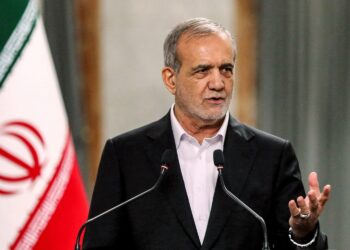
The warning was issued Wednesday by Jiang Bin, who criticised what Beijing described as the unrestricted use of AI technologies in warfare.
The remarks came amid reports that the administration of Donald Trump has been pushing for broader deployment of artificial intelligence tools by the US military.
According to reports, the Pentagon has cleared the use of the Grok AI system developed by Elon Musk for classified military environments, while placing restrictions on AI firm Anthropic after it refused to allow its Claude AI model to be used for mass surveillance or autonomous lethal warfare.
Responding to the development, Jiang warned that giving algorithms greater authority in warfare could weaken ethical safeguards.
“Such choices as the unrestricted application of AI by the military, using AI as a tool to violate the sovereignty of other nations, allowing AI to excessively affect war decisions, and giving algorithms the power to determine life and death, not only erode ethical restraints and accountability in wars, but also risk technological runaway,” he said.
He added that such a path could eventually lead to a dystopian scenario resembling that portrayed in The Terminator, a film about an apocalyptic future where machines controlled by artificial intelligence wage war against humans.

China said it believes human oversight must remain central to any military use of artificial intelligence and insisted that decisions involving life and death should not be left to automated systems.
According to Beijing, AI technologies should remain under human control and should not be used to pursue military dominance or interfere with the sovereignty of other nations.
Chinese officials also said the country is willing to work with other nations to establish global governance rules for artificial intelligence, particularly through multilateral cooperation led by the United Nations.
The debate over military AI has intensified in recent months as governments increasingly integrate advanced technologies into intelligence gathering, targeting systems and battlefield decision-making.
What you should know
Artificial intelligence is rapidly becoming a critical part of modern military strategy, with major powers investing heavily in AI-driven surveillance, targeting systems, and autonomous weapons.
Experts have warned that giving algorithms too much control over battlefield decisions could raise ethical and legal concerns, particularly if machines are allowed to decide when to use lethal force.
The issue has sparked global debates about regulation, with countries like China calling for international governance frameworks to ensure that AI remains under human control and does not trigger uncontrolled technological escalation.