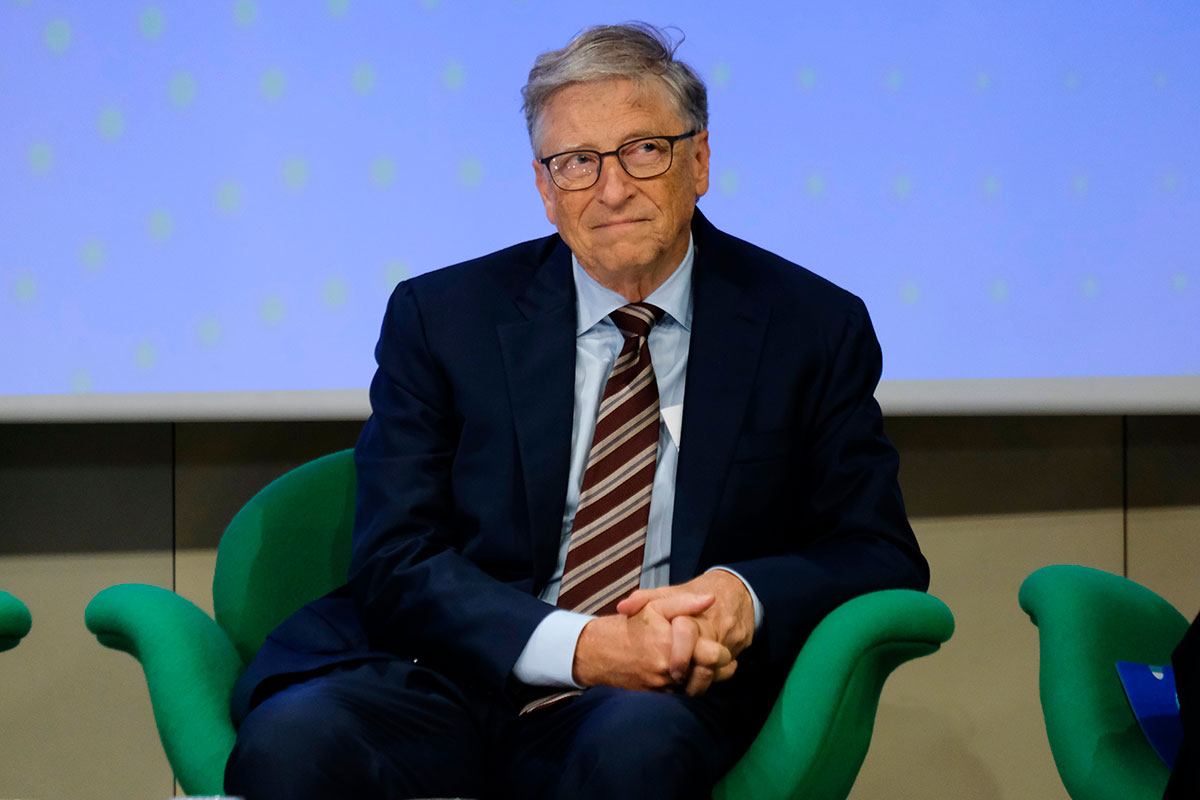
Microsoft co-founder and philanthropist Bill Gates, in a high-profile meeting with Indonesian President Prabowo Subianto on Wednesday, underscored the transformative potential of artificial intelligence (AI) in addressing global challenges in health, education, and agriculture.
Speaking in Jakarta, Southeast Asia’s economic powerhouse with a population of 280 million, Gates expressed optimism about AI-driven innovations, aligning his vision with Indonesia’s growing demand for advanced technology and data infrastructure.
The visit, which included a tour of a school’s free meal program and discussions with local philanthropists, highlighted Gates’ enduring commitment to global development and cemented his influence in Indonesia, where he has donated over $159 million since 2009.
AI as a Catalyst for Global Solutions
Gates, addressing President Prabowo and Indonesian philanthropists, emphasized AI’s role in unlocking new tools to tackle pressing issues.
“AI is going to help us discover new tools. And even in the delivery of health and education and agriculture advice, we’ll be using AI,” he said, envisioning a future where AI enhances service delivery across critical sectors.
He cited specific applications, such as AI-powered diagnostics in healthcare, personalized learning in education, and precision farming advice for agriculture, which could boost productivity in Indonesia’s sprawling archipelago.
The billionaire philanthropist tied AI’s potential to ambitious health goals, noting, “Once we finish eradicating polio, we’d like to try and eradicate measles and malaria as well. We have some new tools for that. And of course, part of my optimism about the innovation is because we have now artificial intelligence.”
Polio, a disease spread through contaminated water and sewage, has been the focus of a four-decade UN campaign, with only 12 cases reported globally in 2024, per WHO data.
Gates’ optimism reflects advances like AI-driven disease surveillance, which can predict outbreaks and optimize vaccine distribution, as seen in trials by the Bill & Melinda Gates Foundation.
Indonesia’s Strategic Importance
Indonesia, Southeast Asia’s largest economy with a GDP of $1.4 trillion, is a critical hub for tech investment due to its young, tech-savvy population and digital economy projected to reach $133 billion by 2025.
The country’s demand for AI infrastructure and data centers has surged, driven by e-commerce, fintech, and government digitization efforts.
Microsoft CEO Satya Nadella’s April 2024 pledge of $1.7 billion to develop Indonesia’s AI and cloud computing capabilities, including data centers in Bali and Jakarta, underscores this trend.
Gates’ visit builds on this momentum, positioning AI as a cornerstone of Indonesia’s development.
President Prabowo, who assumed office in October 2024, has prioritized technology and human capital development, aligning with Gates’ vision.
His administration’s free school meal program, which Gates observed at a Jakarta elementary school, aims to combat malnutrition among 20 million students, a cause Gates praised as “inspiring.” Prabowo also announced plans to confer Indonesia’s highest civilian award, the Bintang Republik Indonesia, on Gates for his “contribution to the Indonesian people and the world,” recognizing his $159 million in donations since 2009, primarily for vaccines and health initiatives.
Gates’ Philanthropic Legacy in Indonesia
Through the Bill & Melinda Gates Foundation, Gates has been a major player in Indonesia’s health sector, funding programs for polio, tuberculosis, and maternal health.
His contributions include $50 million for COVID-19 vaccine distribution in 2020 and $30 million for malaria research in 2018.
These efforts align with Indonesia’s goal to achieve polio-free status and reduce malaria incidence, which dropped from 1.9 million cases in 2000 to 600,000 in 2023, per WHO.
Gates’ focus on AI complements these initiatives, with projects like AI-based mosquito tracking showing promise in malaria-endemic regions like Papua.
The school visit, alongside Prabowo, highlighted Gates’ broader commitment to education and nutrition, key pillars of his foundation’s work.
The free meal program, serving 3 million students daily, addresses Indonesia’s 27% child stunting rate, a priority Prabowo has vowed to halve by 2029.
Gates, whose foundation has invested $10 million in similar programs globally, called it a “model for other nations.”
Public Sentiment and Challenges
The visit sparked lively discussion on X, with @IndonesiaNews lauding Gates’ “visionary approach to AI and health,” and @ASEANObserver noting Indonesia’s rise as a “tech hub.”
However, skeptics like @GlobalWatchID questioned the reliance on foreign tech giants, citing data sovereignty concerns, while @HealthAdvocate urged more focus on local innovation.
Critics also point to challenges in scaling AI solutions in Indonesia, including a digital literacy gap (only 54% of rural Indonesians have internet access) and infrastructure bottlenecks, with just 15% of planned data centers operational by 2024.
Implementing AI in health and agriculture faces hurdles like regulatory frameworks and equitable access. For instance, AI-driven farming tools require robust internet and training, which 40% of Indonesia’s 17,000 islands lack.
In healthcare, privacy concerns around AI diagnostics, as seen in a 2023 pilot where patient data was mishandled, underscore the need for stringent oversight.
What you should know
Gates’ visit reinforces Indonesia’s strategic role in the global AI landscape and his foundation’s commitment to leveraging technology for development.
Prabowo’s engagement signals a partnership that could accelerate Indonesia’s digital transformation, with Microsoft’s $1.7 billion investment laying the groundwork.
Upcoming initiatives, like a 2026 Gates Foundation-ASEAN summit on AI for health, hinted at during the visit, could further integrate Indonesia into global innovation networks.
For Indonesia, the challenge is to balance foreign investment with local empowerment, ensuring AI benefits reach its diverse population.
For Gates, the visit reaffirms his legacy as a philanthropist harnessing technology to solve humanity’s toughest problems.
As white smoke rises over the Vatican to signal a new pope, Gates’ vision of AI as a force for good offers a different kind of hope—one grounded in innovation and collaboration.
ALSO READ TOP STORIES FROM VERILY NEWS