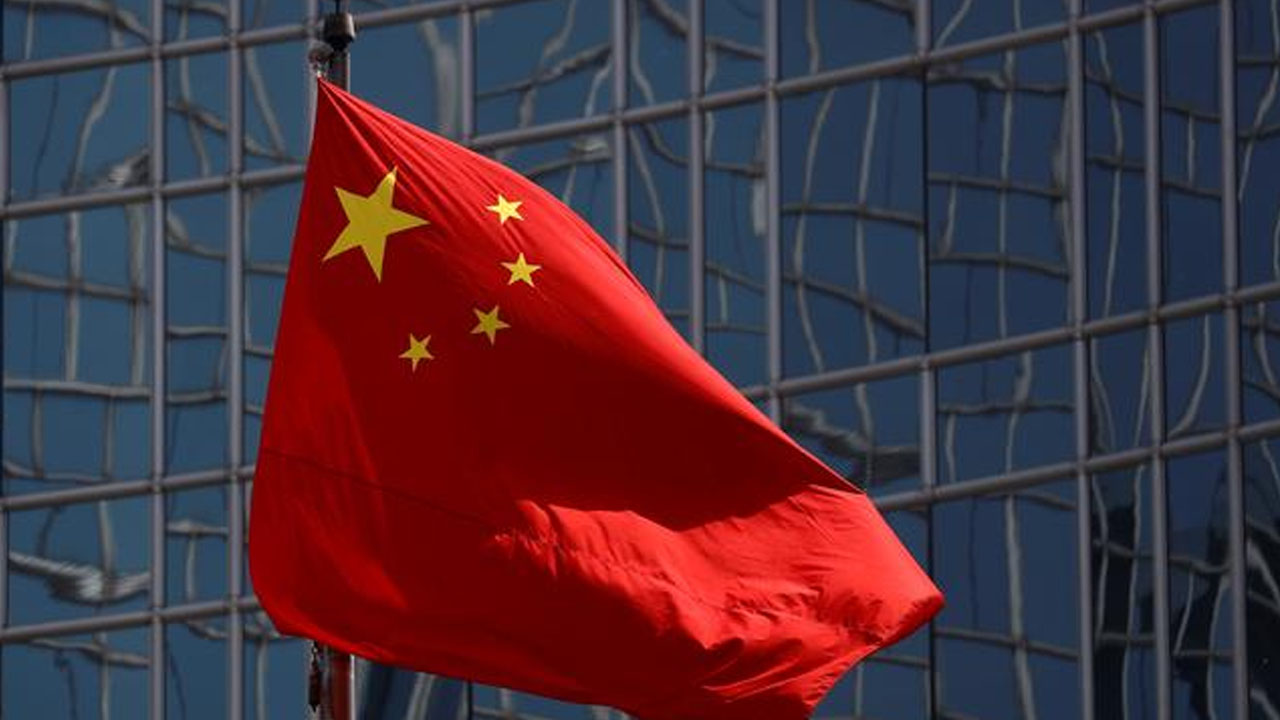
China on Monday firmly denied reports that Chinese firms supplied satellite imagery used in an Iranian strike that killed three US soldiers in Jordan, an allegation now straining US-China ties ahead of a planned summit between the two nations’ leaders.
The allegations, first reported by the Wall Street Journal over the weekend, center on the July 17 missile strikes Iran launched against Muwaffaq Salti Air Base in northeastern Jordan.
According to the Journal, unnamed US officials say Tehran acquired high-resolution satellite images of the base both before and after the assault intelligence they describe as the clearest evidence yet that Chinese support for Iran has carried a lethal cost for American forces. Within three days of the attack, Iran released high-resolution images showing damage in three separate sections of the Jordanian base.
The strike itself marked a grim escalation. It was one of three separate missile strikes on the base within 24 hours. Iranian ballistic missiles slammed into a residential compound where US troops were sleeping, killing three soldiers and wounding four others who required evacuation for treatment.
The deaths were the first US military fatalities of the Iran war since an April ceasefire, marking a major escalation in the conflict, which came as Washington and Tehran had both suspended a June interim agreement.
Crucially, the US officials cited by the Journal stopped short of directly implicating the Chinese state. They declined to name the specific Chinese entities involved and have not publicly identified the Chinese entities involved or alleged that the Chinese government directly authorized the assistance.
Analysts cautioned the imagery was likely just one thread in a broader intelligence tapestry available to Tehran. Iran’s military also relies on its own satellites and human intelligence networks while receiving intelligence and imagery from Russia.
Speaking at a regular briefing in Beijing, foreign ministry spokesperson Guo Jiakun rejected the reporting outright, describing the allegations as baseless. When American officials raised the matter with their Chinese counterparts, Beijing demanded evidence rather than concede any involvement.
According to the Journal’s sourcing, senior US officials reportedly brought up the imagery from the Muwaffaq Salti Air Base with their Chinese counterparts, but Beijing rejected the allegation and demanded that Washington provide evidence.
The episode is not the first sign of Chinese technology surfacing in Iran’s war effort. Reporting from earlier this year had already flagged the connection: the Financial Times reported in April that Iran was using a Chinese-built and launched spy satellite purchased by the Islamic Revolutionary Guard Corps’ Aerospace Force from a Chinese satellite company in late 2024.
Washington had already moved against such suppliers once before in May; the US sanctioned three China-based satellite firms it accused of enabling Iranian military operations.
Aboard Air Force One on Sunday, President Trump appeared eager to defuse the story rather than escalate it, framing Chinese intelligence-gathering as an unremarkable fact of great-power rivalry. “You know, when they say that China spies on us, I say you’re right, and we spy on them too,” he told reporters. “That’s what we do. They basically do what we do.”
The president’s restraint comes against a delicate diplomatic backdrop. Chinese leader Xi Jinping is set to visit the White House on September 24, and the timing of the Journal’s report threatens to complicate a relationship both sides have worked to stabilize in recent months.
Trump offered a broadly conciliatory assessment of his counterpart, saying Xi “has behaved reasonably well, and we behave reasonably well.”
Pressed separately on whether he would ever permit Chinese automakers to sell vehicles in the US market, Trump pointed to his own trade policy: “I haven’t. I’m the one that kept them out. The tariffs kept them out.”
The imagery allegations underscore the tangle of interests binding Beijing to Tehran even as China seeks to preserve its standing with Washington.
China remains one of Iran’s most important economic partners, absorbing the bulk of its oil exports, and has long served as a key diplomatic backer for the Islamic Republic on the world stage, a dual role that puts Beijing’s professed neutrality in the Iran conflict under continuing scrutiny.
Whether the satellite imagery dispute derails the momentum toward this month’s Trump-Xi meeting remains to be seen.
For now, both governments appear intent on containing the fallout: Beijing through blanket denial, and Washington through a notably subdued response from the president himself, even as the underlying military reality, three American service members dead in a barracks strike Tehran could not have executed with such precision alone, continues to reverberate through the relationship.
WHAT YOU SHOULD KNOW
US officials have linked Chinese-sourced satellite imagery to a precision missile strike that killed three American soldiers in Jordan but stopped short of accusing Beijing’s government of directly authorizing it.
China denies any involvement and is demanding proof. With Xi Jinping’s White House visit just weeks away, both sides appear more interested in containing the fallout than escalating it, as seen in Trump’s notably muted response.
This is less a diplomatic rupture than a test of whether US-China relations can absorb hard evidence of Chinese technology contributing to American deaths without derailing broader efforts at stability.