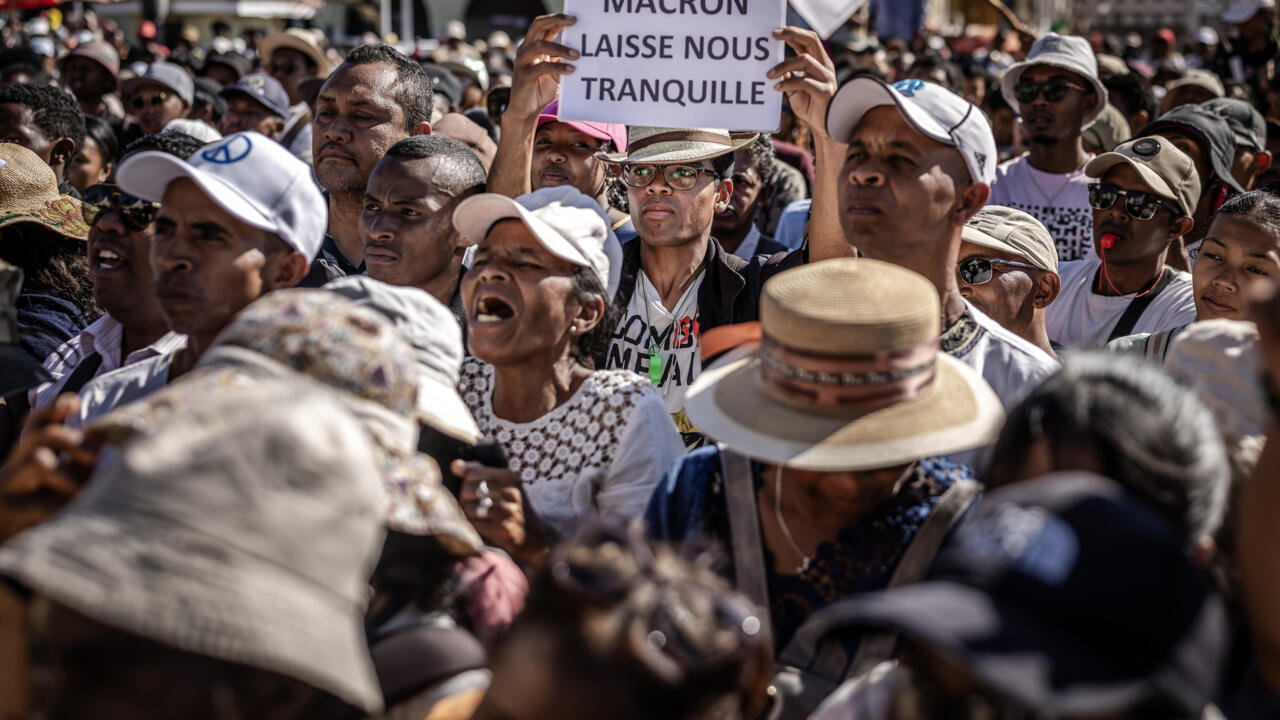
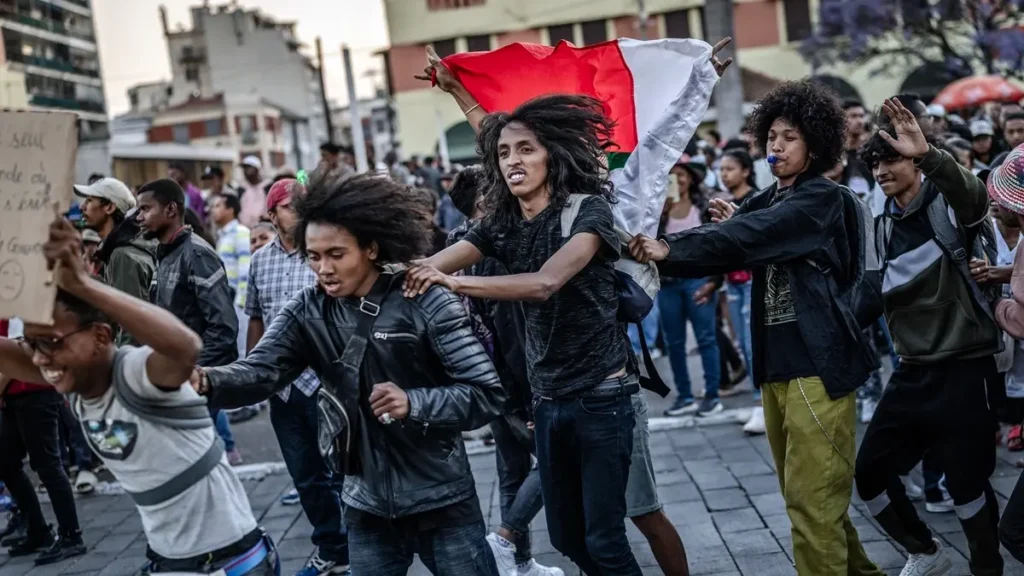
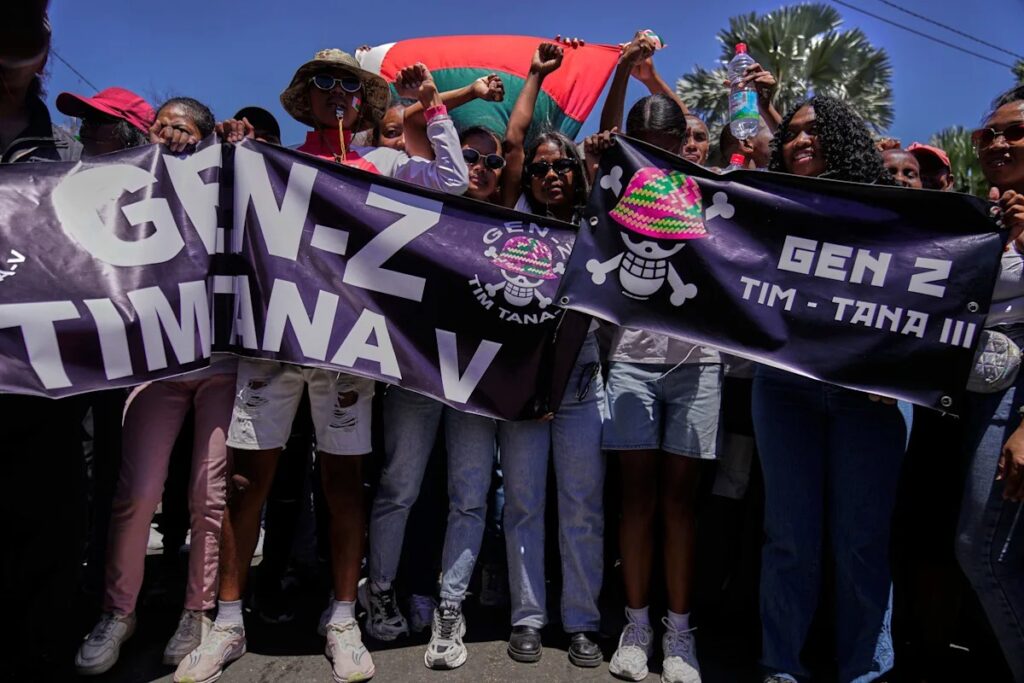
Placards and slogans condemning France have become a striking feature of the protests that erupted this week against Madagascar’s impeached President Andry Rajoelina, revealing the depth of anti-French sentiment that still lingers decades after independence.
Demonstrators waved banners reading “France out” and “Rajoelina and Macron out” following reports by French media that the ousted president had fled aboard a French military plane as an elite army unit joined calls for his resignation.
“They are still colonising us even though we are supposed to be independent,” said Koloina Andrianina Rakotomavonirina, a 26-year-old engineer who joined protests in central Antananarivo. “It’s unfair that they intervene in such a matter,” she told AFP.
Rajoelina’s exact whereabouts remain unknown after the National Assembly impeached him on Tuesday for dereliction of duty, paving the way for the CAPSAT military unit to seize control of the government.
According to Christiane Rafidinarivo, a Paris-based political scientist, the anger toward France is unsurprising given its colonial legacy. The Indian Ocean nation, once under French rule until 1960, suffered atrocities during its colonisation, including the brutal suppression of a 1947 rebellion that claimed tens of thousands of Malagasy lives.
“France represents colonialism,” Rafidinarivo explained. “This perception runs through public opinion and is triggered depending on current events.”
While French President Emmanuel Macron declined to confirm whether France played a role in Rajoelina’s evacuation, the timing of a presidential pardon for two French nationals previously convicted of coup-related charges in Madagascar has intensified public suspicion of a behind-the-scenes deal.
Citizenship Controversy and Lingering Distrust
Rajoelina’s close ties with France have long stirred criticism, but revelations in 2023 that he acquired French nationality nine years earlier ignited widespread anger. Opposition leaders argued that by doing so, he had forfeited his Malagasy citizenship, and therefore was ineligible to run for president under national law.
Although Rajoelina went on to win re-election, the polls were boycotted by much of the opposition and saw a historically low turnout. The outcome only deepened accusations that France was backing his presidency.
“France was accused of propping him up as a French agent,” said Adrien Ratsimbaharison, author of a book on the 2009 coup that initially brought Rajoelina to power. He added that former French President Nicolas Sarkozy was the first foreign leader to recognise Rajoelina’s government during a 2011 visit to Paris—a move many Malagasy citizens have never forgiven.
Ratsimbaharison also suggested that Sarkozy’s administration may have secretly provided funds to Rajoelina during the 2009 protests to help secure military support for the overthrow of then-president Marc Ravalomanana.
Rumours and Resentment
Amid social media misinformation, a viral photo appearing to show French gendarmes deployed in Madagascar further inflamed tensions. Authorities later clarified that the image actually depicted a Malagasy gendarme who had trained in France and was wearing French insignia.
Yet, resentment toward France extends beyond politics. Many Malagasy citizens express frustration over French economic dominance, from major contracts awarded to French firms to exploitative labour practices in call centres, where locals are paid a fraction of European wages.
“I was tired of being insulted by the French,” said Mampionona Razafinjoelina, 27, who quit his job at a French-run call centre in protest.
Open sex tourism by French nationals and France’s continued control over lucrative business interests have also exacerbated public anger.
During a visit to Madagascar in April, President Macron acknowledged the lingering wounds of colonisation, saying he wished to foster “forgiveness” and reconciliation. His visit was followed by the return of the remains of a Malagasy king, killed by French troops in 1897, which had been kept in France for more than a century.
Macron also announced the creation of a Franco-Malagasy commission to examine the historical atrocities committed during colonial rule—a move aimed at addressing grievances that continue to shape France’s strained relations with Madagascar and other former colonies in Africa’s Sahel region.
What You Should Know
The renewed anti-French sentiment in Madagascar underscores decades-old tensions rooted in colonial history and political mistrust.
As protests intensify following Rajoelina’s ouster, France once again finds itself at the centre of controversy in one of its former colonies—accused by many of meddling in the fragile politics of a nation still grappling with its post-independence identity.