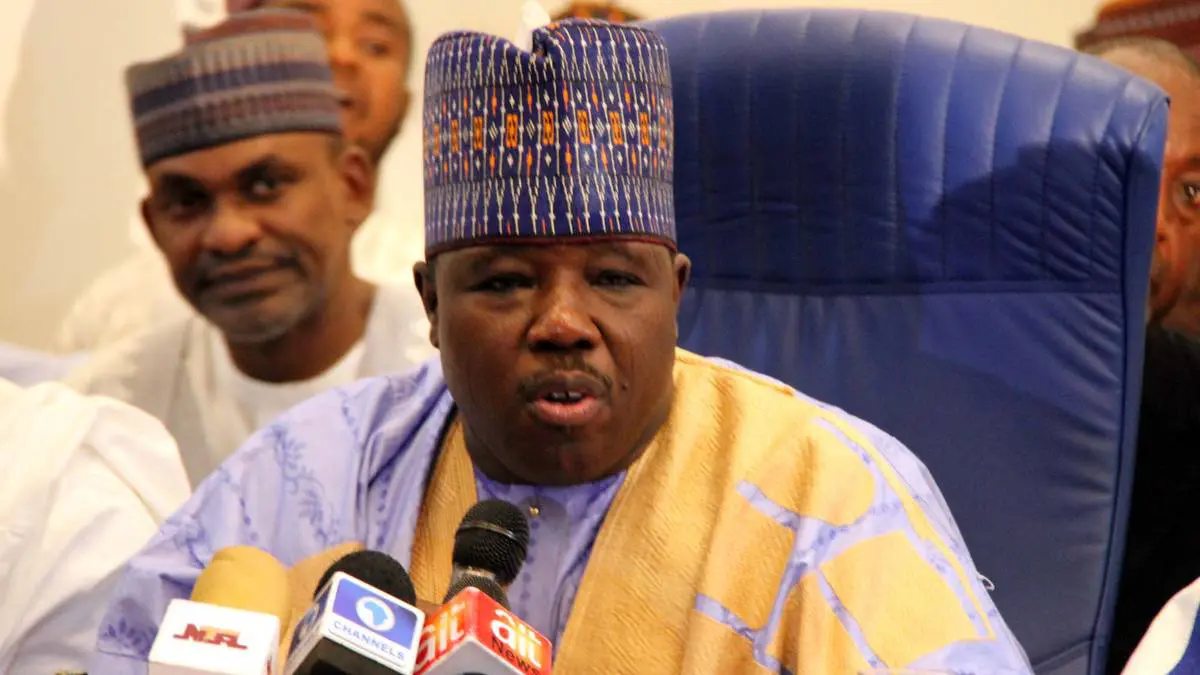
Former Borno State Governor and Senator, Ali Modu Sheriff, has called on the Federal Government to forge stronger alliances with Nigeria’s neighbouring countries as a crucial strategy in ending the Boko Haram insurgency.
Appearing on Channels Television’s Politics Today on Monday, Sheriff emphasized that sustainable peace in the northeast requires a collaborative approach involving countries like Cameroon, Chad, and Niger. “What should be done is that we have to have a proper relationship with Cameroon, Chad, and Niger,” he said, noting that these partnerships are key to eliminating the cross-border threats posed by insurgents.
Reflecting on his tenure as governor from 2003 to 2011, Sheriff shared that the insurgency was initially misunderstood as a localized Borno issue. “Even my next-door neighbour, then governor of Yobe State, did not believe this had nothing to do with the people of Borno. These are problems that were coming from outside Nigeria,” he explained.
Sheriff pointed out that Borno’s extensive land borders with the three nations made it vulnerable to infiltration. He further alleged that external forces were exploiting religious ideologies to manipulate local actors and destabilize Nigeria.
On the topic of Nigeria’s current economic struggles, Sheriff acknowledged the widespread hardship but cautioned against assigning sole blame to President Bola Tinubu. He encouraged a broader view of the challenges facing the country.
The Boko Haram insurgency has plagued Nigeria for over a decade, leading to tens of thousands of deaths and displacements. However, since President Tinubu assumed office in May 2023, more than 13,000 Boko Haram and ISWAP fighters have reportedly been neutralised, while approximately 124,000 have surrendered, according to National Security Adviser Nuhu Ribadu.
What You Should Know
Ali Modu Sheriff, who governed Borno State during the formative years of the Boko Haram insurgency, believes that a regional solution is vital to permanently ending terrorism in Nigeria’s northeast.
His call for stronger ties with neighbouring countries—Cameroon, Chad, and Niger—highlights the cross-border nature of the insurgency and the role of external forces in destabilizing the region.
Sheriff’s perspective is informed by firsthand experience, having dealt with insurgents who exploited Borno’s porous borders. His appeal underscores that lasting peace requires not just military action but diplomatic engagement, intelligence sharing, and coordinated efforts among West African nations to root out extremism.