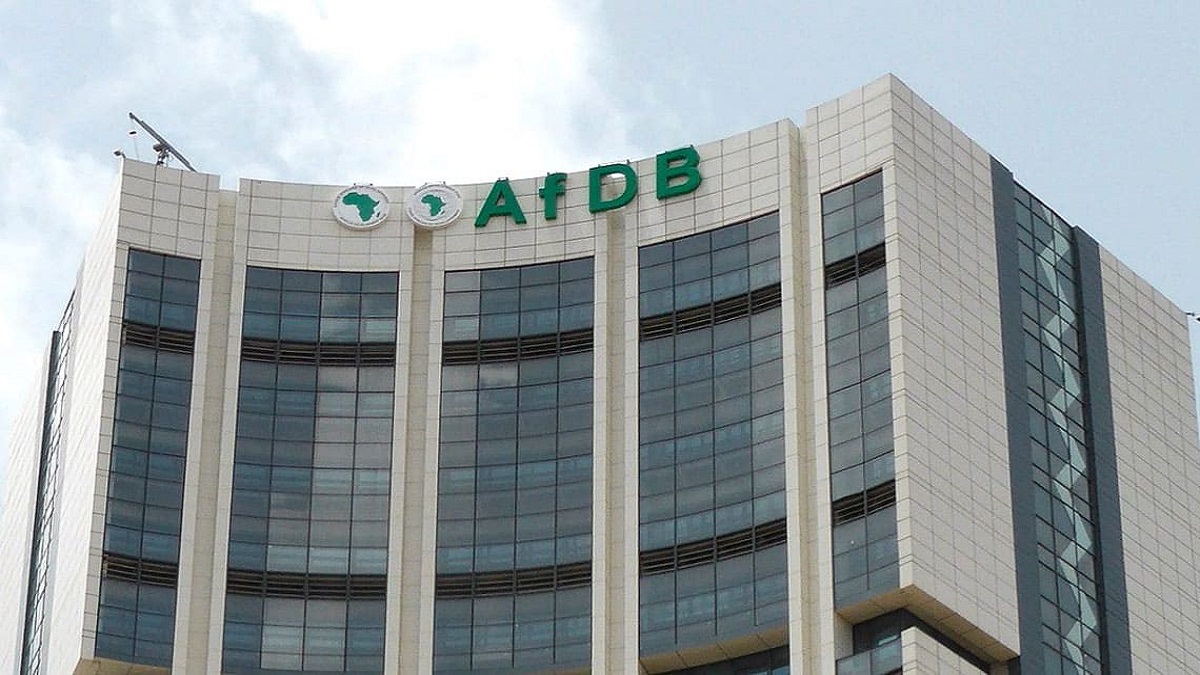
The African Development Bank (AfDB) has approved a $3.9 million technical assistance package aimed at transforming electricity access commitments into tangible connections across 13 African nations, marking a critical step in the continent’s race to bridge its widening energy gap.
The two-year project, approved by the AfDB Board of Directors and announced Friday, comes as Africa grapples with one of the world’s most acute electricity crises—a deficit that development experts say continues to hobble economic growth and social advancement across the continent.
The initiative, formally designated as AESTAP Mission 300 Phase II, represents an acknowledgment that bold policy declarations alone have proven insufficient to bring electricity to the estimated 600 million Africans currently living without power.
“Countries have made bold commitments through their Energy Compacts,” said Wale Shonibare, the AfDB’s Director of Energy Financial Solutions, Policy, and Regulation. “This new phase of support will help turn those commitments into real outcomes—ensuring that households, entrepreneurs, and communities actually gain access to electricity.”
The 13 beneficiary nations—Nigeria, Kenya, Ethiopia, Tanzania, the Democratic Republic of Congo, Uganda, Madagascar, Malawi, Chad, Gabon, Mauritania, Lesotho, and Namibia—will receive hands-on technical assistance designed to translate national energy strategies into concrete electricity connections for homes, businesses, and public facilities.
The project builds on Mission 300, a landmark initiative jointly launched by the World Bank and African Development Bank in January 2025 with the ambitious goal of providing electricity access to 300 million Africans within five years.
Under that framework, the AfDB encouraged African governments to develop National Energy Compacts—comprehensive blueprints detailing how each country plans to expand electricity access, modernize power sector institutions, and create conditions attractive to private investors.
Over the past year, dozens of African countries have unveiled such compacts, backed by government pledges and commitments from international development partners. These documents outline needed reforms in regulation, utility performance, and financing mechanisms required to dramatically scale up electricity delivery.
Yet as bank officials acknowledge, the gap between planning and implementation has remained stubbornly wide.
The newly approved funding is specifically designed to close that implementation chasm. Over the next 24 months, recipient countries will receive targeted support in several critical areas:
Regulatory and Planning Framework Enhancement: Technical advisers will work with governments to improve electricity regulations, planning systems, and tariff structures designed to unlock both public and private investment.
Utility Strengthening: The project will focus on building the capacity of national power utilities to deliver more reliable electricity service while reducing technical losses from aging infrastructure and commercial losses from theft and non-payment—twin problems that plague utilities across the continent.
Data and Knowledge Sharing: Countries will gain access to improved analytical tools, including the Electricity Regulatory Index, and will participate in regional energy forums to facilitate cross-country learning and best practice sharing.
Embedded Expertise: Perhaps most significantly, expert advisers will be stationed within national Compact Delivery and Monitoring Units, working shoulder-to-shoulder with government officials to coordinate reform implementation and track measurable progress.
The urgency driving these efforts cannot be overstated. Africa’s electricity access deficit represents not merely an infrastructure challenge but a fundamental constraint on human development and economic potential.
Across the continent, hundreds of millions of people rely on kerosene lamps, candles, and expensive, polluting diesel generators. Businesses operate at a fraction of their productive capacity. Students study in darkness. Clinics cannot refrigerate vaccines. The cascading effects touch every aspect of social and economic life.
While Asian economies have made dramatic strides in electrification over recent decades, Africa has lagged significantly behind, with the gap between urban and rural access particularly pronounced.
The $3.9 million allocation, while modest in absolute terms, is intended as a catalyst—providing the technical expertise and institutional support needed to mobilize far larger flows of investment capital into Africa’s power sector.
Success will be measured not in megawatts of installed capacity or kilometers of transmission lines, but in something far more fundamental: the number of households that can turn on a light switch, the number of businesses that can operate refrigeration, and the number of communities that can access clean water through electric pumps.
As Shonibare emphasized, the focus remains firmly on practical delivery. “We’re moving from commitments to connections,” he said.
With implementation now underway across 13 countries, the next two years will test whether Africa’s latest electrification push can finally deliver on decades of unfulfilled promises—or whether the continent’s energy gap will continue to widen, leaving millions more in darkness.
The African Development Bank, headquartered in Abidjan, is the continent’s premier development finance institution, with 81 member countries worldwide.
WHAT YOU SHOULD KNOW
The African Development Bank’s $3.9 million project addresses Africa’s critical weakness: not a lack of plans, but failure to execute them. While 13 African countries have drafted ambitious Energy Compacts promising to expand electricity access under Mission 300, translating paper commitments into actual power connections has proven nearly impossible.
This funding embeds expert advisers directly within government units to fix regulations, strengthen failing utilities, and coordinate implementation—moving Africa from policy promises to lights turning on in homes and businesses.