Executives, regulators, and investment bankers converge on Eko Hotel and Suites in Victoria Island today for the signing ceremony of the Dangote Petroleum and Petrochemicals FZE IPO, a formal first step toward what could be Nigeria’s biggest capital market event in decades.
The ceremony, scheduled for today, Monday, September 7, 2026, will bring together the leadership of Dangote Petroleum Refinery, fronted by Aliko Dangote, President and Chief Executive of Dangote Industries Limited, alongside representatives of the Securities and Exchange Commission and the offer’s lead issuing house, Vetiva Advisory Services Limited.
At the heart of the offer is a sale of 4.1 billion ordinary shares priced at ₦525 per share, a transaction that, if fully subscribed, could raise approximately ₦2.15 trillion, the equivalent of roughly $1.63 billion.
That valuation implies a market capitalization for the refinery of close to $47–50 billion, with Dangote himself said to be targeting a $50 billion valuation for the facility.
Regulatory clearance for the offer came just days ago, when the SEC approved the commencement of the IPO in a letter to Vetiva, conveyed by Abdulkadir Abbas, Director of the Commission’s Securities and Investment Services Department.
The same approval registered the company’s existing 120.13 billion ordinary shares and cleared the refinery’s draft offer documents, authorizing it to proceed to Monday’s Completion Board Meeting and Signing Ceremony.
The offer represents the refinery’s first brush with public markets since it was commissioned in May 2023, the culmination of nearly a decade of construction and an investment Dangote officials peg at roughly $20 billion.
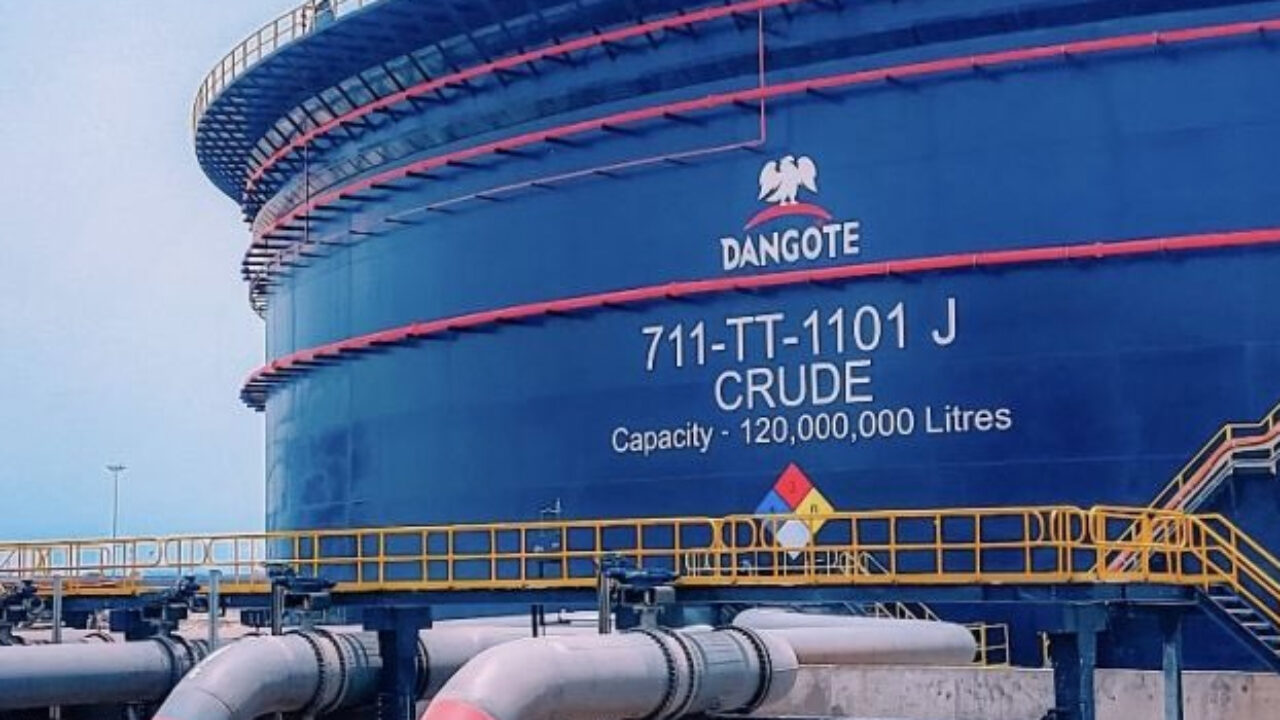
Sited in the Lekki Free Zone on the outskirts of Lagos, the plant’s 650,000-barrels-per-day nameplate capacity has already made it Africa’s largest single-train refinery and one of the largest anywhere in the world.
Should retail and institutional investors show up in force on listing day, SEC officials and company executives have described the deal as one of the largest capital market transactions in Nigeria’s history. Trading is expected to formally begin on the Nigerian Exchange (NGX) on September 14, a week after today’s signing.
To draw both local retail buyers and skittish foreign institutional money, Dangote has floated an unusual incentive for a Lagos-listed company: paying shareholder dividends in US dollars, funded by the refinery’s export earnings from refined products and petrochemicals.
The pitch is aimed squarely at insulating investors from naira volatility, a persistent headache for anyone holding Nigerian equities in recent years.
The refinery’s fundamentals give the pitch some weight. It already supplies more than 80 percent of Nigeria’s domestic petrol demand, though analysts caution that the stock’s long-run performance will hinge on steadier variables: the availability of crude feedstock, growth in export volumes, and the refining margins the plant can sustain once expansion is complete.
The IPO proceeds are earmarked for a significant capacity expansion, doubling throughput from the plant’s current operational baseline of 700,000 bpd to 1.4 million bpd. If achieved, that would vault the Lekki facility past India’s Jamnagar refinery to become the single largest operating oil refinery on the planet.
The equity raise follows on the heels of a $2.5 billion private placement completed in July, suggesting Dangote’s financing strategy is layering multiple capital sources: private placements, public equity, and eventually export revenue to fund the group’s regional refining ambitions.
Those ambitions extend well beyond Nigeria’s borders. Data cited from the Africa Finance Corporation shows African nations spend more than $230 billion annually importing commodities, with refined fuel making up over 70 percent of that regional consumption bill a deficit the Dangote Group is explicitly positioning itself to fill.
As if to underscore the point, the conglomerate is set to break ground later this month, on September 30, on a second coastal refinery in Lamu, Kenya, with a planned capacity of 700,000 bpd.
For now, all eyes turn to next Monday, September 14, when the shares actually begin trading. Market watchers will be scrutinizing subscription levels closely: a strong retail and institutional turnout would offer a rare vote of confidence in the depth of Nigeria’s domestic capital markets and in investor appetite for large-scale industrial assets, a test case that could shape how future mega-listings on the continent are structured and priced.
WHAT YOU SHOULD KNOW
The Dangote Refinery IPO, offering 4.1 billion shares at ₦525 each, opening for subscription September 14, is more than a stock sale; it’s a test of whether Nigeria’s capital markets can absorb a single listing capable of adding 30–40% to the entire NGX market cap overnight.
With a $47–50 billion valuation, dollar-denominated dividends to hedge against naira risk, and expansion plans that could make it the world’s largest refinery, the deal’s true significance lies in what happens on listing day: strong subscription would signal real investor confidence in large-scale African industrial assets, while a weak one would expose the limits of local market depth.
That single data point of how much of the offer gets taken up is the number worth watching above all else.