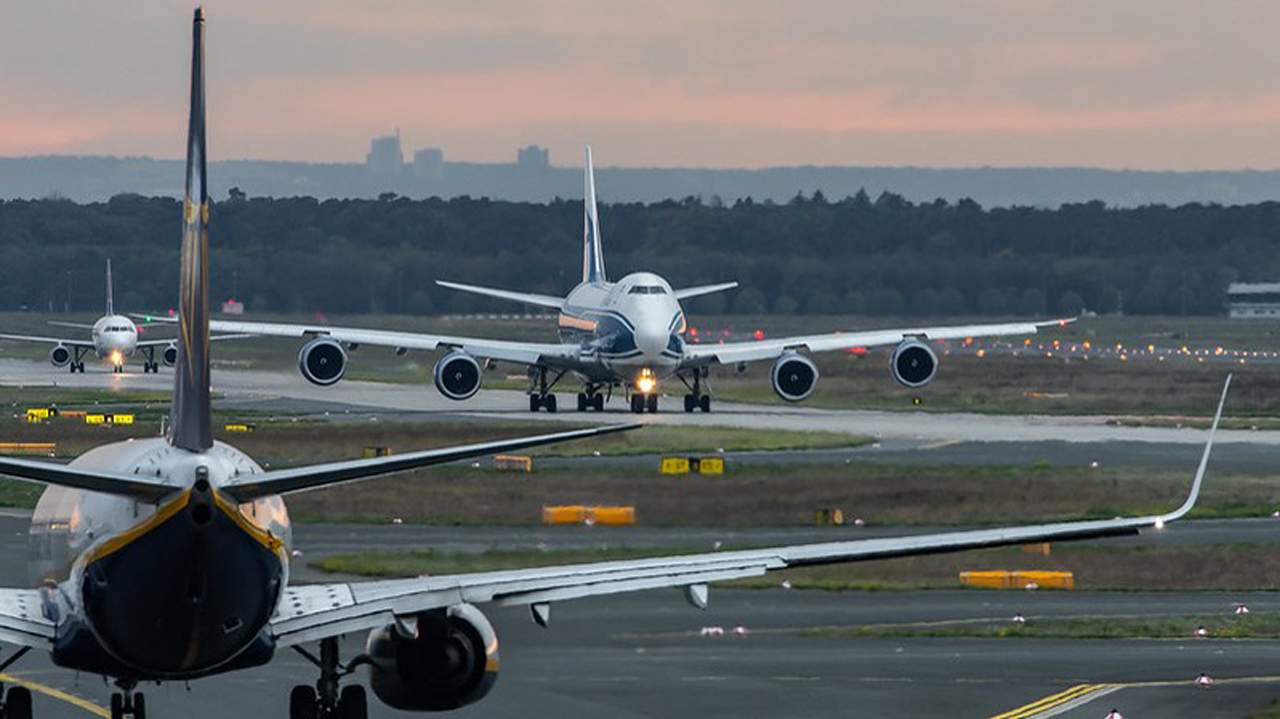
The Federal Government has once again been urged to slash aviation charges and taxes, as industry stakeholders warn that Nigeria’s air travel sector is buckling under a weight of costs that continues to price the ordinary Nigerian out of the skies.
The call was made on Wednesday by Adedayo Olawuyi, Chief Commercial Officer of United Nigeria Airlines, at the AeroWest conference in Lagos, an industry gathering themed “The Real Cost of Running Aviation Business: Fixing Connectivity, Affordability, FX, Fuel, and Border Friction.”
His remarks, contained in a statement issued by the airline and seen by Nairametrics, add fresh urgency to a debate that has simmered for years: why does flying in Nigeria remain a luxury rather than a routine mode of transport?
For many Nigerians, boarding a flight is still an aspiration rather than a habit. High ticket prices have kept air travel largely the preserve of business travelers and the well-to-do, even as the country’s road and rail alternatives remain slow, unreliable, or simply unavailable across many routes.
Speaking to industry operators, regulators, and financiers at the conference, Olawuyi painted a picture of an industry where the numbers simply do not add up. Chief among his concerns was the cost of capital. Domestic carriers, he said, are often forced to borrow at rates that make no commercial sense given the wafer-thin margins the business typically yields.
“How many of you would take a loan of 30% to invest in a business that gives you less than 5% profit?” Olawuyi asked the gathering, a question that appeared to distill the frustration of an entire industry into a single rhetorical jab.
Beyond financing, Olawuyi pointed to the strain of operating routes across West Africa, where thin passenger demand often forces airlines to carefully match aircraft size to market size or risk flying near-empty planes. It is a delicate balancing act that leaves little room for error and even less room for the kind of aggressive taxation and multiple charges that currently characterize the sector.
He used a vivid metaphor to capture the risk of over-extracting from an already fragile industry. “We all focus on making money from airlines. As my boss says, the airline is the goose that lays the golden egg, and everybody wants a piece of it. But at the end of the day, if the goose dies, everything is lost,” he said.
It was, in essence, a warning: squeeze the industry too hard, through charges, taxes, and regulatory friction, and there may be no golden eggs left to collect.
Olawuyi was careful to note that the sector’s troubles cannot be solved by airlines acting alone. He called for stronger collaboration between government, regulators, and industry operators, arguing that improving connectivity and ensuring the long-term sustainability of Nigerian carriers requires a coordinated, whole-of-industry approach rather than piecemeal fixes.
He listed foreign exchange volatility, aviation fuel costs, aircraft maintenance, pilot training, and financing as the five major cost pressures weighing on airlines today.
Central to many of these, he said, is a fundamental currency mismatch: airlines earn revenue in naira but incur a significant share of their expenses in foreign currency, a mismatch that exposes them to painful losses whenever the naira weakens.
Nowhere is that pressure more visible than in the price of Jet A1 fuel. According to Olawuyi, the cost of aviation fuel rose from roughly N900 per litre in December 2025 to around N3,000 per liter in 2026, a more than threefold increase in little over a year.
Yet, he insisted, airlines cannot respond to rising costs by cutting corners on safety, leaving fuel, financing, and other essential expenses as the primary levers operators are left to manage.
The cost pressures Olawuyi described are echoed elsewhere in the industry. Captain Zino Mario, CEO of Zino Aviation, has previously told Nairametrics that Nigeria’s shortage of simulator and type-rating facilities forces pilots to travel abroad for mandatory training, a requirement that piles foreign exchange costs, travel expenses, and accommodation bills onto an already expensive process of keeping cockpit crews certified.
On the fuel front, there has been at least some improvement. Toyin Leo-Olagbaiye, General Manager, Aviation at Ardova Plc, said the arrival of the Dangote Refinery has boosted Jet A1 availability and eased the supply shortages that once routinely disrupted airline schedules.
Even so, he cautioned that Jet A1 prices remain tethered to international benchmarks and the naira’s exchange rate, while the cost of transporting fuel by road to airports adds yet another layer to the final price tag.
The scale of fuel’s impact on the industry is stark. Aviation fuel expert Peter Zira Dia noted that Jet A1 accounts for more than 40% of airline operating costs in Nigeria, warning that any disruption to supply carries the risk of flight delays and cancellations.
For travellers, the implications are straightforward and unwelcome. Adeyinka Adewole, MD/CEO of Raven Energy Nigeria, said that as Jet A1 costs climb, airlines will have little choice but to pass those costs on to passengers through higher ticket prices, a dynamic that threatens to push air travel even further out of reach for ordinary Nigerians, even as industry voices unite in calling for relief.
As the AeroWest conference underscored, the path to more affordable air travel in Nigeria runs through a complex web of taxation, currency policy, fuel supply, and infrastructure investment, and, according to Olawuyi and his fellow panellists, it is a path the government cannot afford to leave the industry to walk alone.
WHAT YOU SHOULD KNOW
Nigerian airlines are being squeezed from every direction: 30% loan rates against 5% profit margins, Jet A1 fuel that has tripled from N900 to N3,000 per liter in a year, naira-dollar currency mismatches, and pilot training that must happen abroad. Fuel alone eats over 40% of operating costs.
Unless government cuts aviation charges and taxes, these costs will keep landing on passengers through higher fares, and if the pressure doesn’t ease, the industry itself risks collapse, as Olawuyi’s “goose that lays the golden egg” warning makes clear.