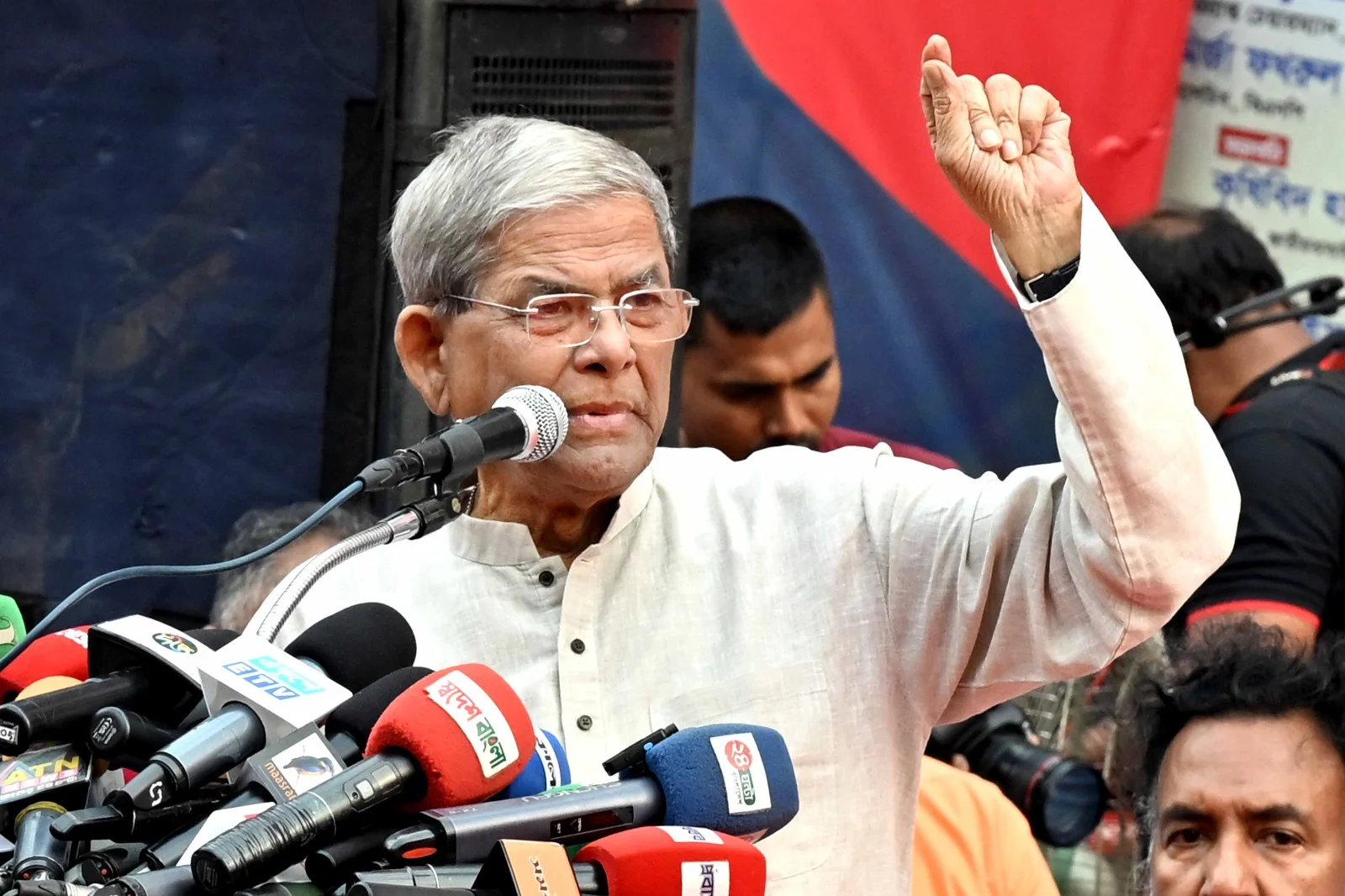
Bangladesh has a new head of state. Members of parliament gathered at the Jatiya Sangsad on Thursday and elected Mirza Fakhrul Islam Alamgir, a 78-year-old stalwart of the ruling Bangladesh Nationalist Party (BNP), as the country’s president, filling a vacancy left by the abrupt resignation of his predecessor over health concerns.
The result was decisive but not uncontested. Alamgir defeated retired army colonel Oli Ahmed, chairman of the Liberal Democratic Party and the nominee of an 11-party opposition alliance led by Bangladesh Jamaat-e-Islami, in what was the first contested presidential poll the country had seen in 35 years.
For more than three decades, opposition parties had largely declined to field rival candidates, turning the presidency into a single-name formality rather than a genuine contest.
This time was different. Lawmakers cast a total of 343 votes at the session, held between 2 p.m. and 5 p.m. local time under the supervision of Chief Election Commissioner ASM Nasir Uddin, who oversaw the count and declared Alamgir the winner with 255 votes to Ahmed’s 88.
Of the 349 members eligible to vote, the Jatiya Sangsad’s 350th seat had its election suspended six lawmakers did not cast a ballot. Among those who did vote were Acting President and parliamentary Speaker Major (Retd.) Hafiz Uddin Ahmed and Prime Minister Tarique Rahman himself.
Party officials said the nomination had been settled after internal deliberations. BNP Senior Joint Secretary General Ruhul Kabir Rizvi announced Alamgir’s candidacy following a meeting of the party’s National Standing Committee, saying the choice had been made in consultation with Prime Minister Rahman.
Alamgir’s rise to Bangladesh’s highest ceremonial office caps a political career spanning more than five decades.
He entered politics as a student at Dhaka University, where he studied economics and became a prominent student leader during the 1969 uprising against Pakistani military rule, a formative period that shaped much of Bangladesh’s post-independence political class.
He joined the BNP in the early 1990s and steadily climbed its ranks, eventually becoming the party’s secretary general, a post he has held since 2016 under BNP chairs Khaleda Zia and, more recently, Tarique Rahman.
During the long years of Sheikh Hasina’s Awami League government, Alamgir became one of the most recognizable faces of the opposition, a period marked by repeated arrests he has consistently described as politically motivated rather than legally justified.
He has also held several ministerial portfolios over the years, including stints overseeing agriculture and civil aviation and tourism under a previous BNP government, and most recently served as minister for local government, rural development, and cooperatives in Rahman’s cabinet.
Speaking ahead of Thursday’s vote, Alamgir struck a populist note, framing his ambitions for the presidency around the country’s poorest citizens and describing a vision of a welfare-oriented state in which low-income and daily-wage families would no longer struggle to secure two meals a day, according to the state news agency BSS.
Thursday’s election was necessitated by the resignation of President Mohammed Shahabuddin, 76, who stepped down on July 24 nearly two years before the scheduled end of his term, citing serious illness.
Shahabuddin had been elected in 2023 near the height of Awami League dominance and was widely regarded as an ally of Hasina, a relationship that left him increasingly exposed as opposition pressure mounted for his resignation.
Under Bangladesh’s constitution, a new president must be chosen within 90 days of a vacancy, putting Thursday’s vote on a tight and closely watched timeline.
The presidency carries mostly ceremonial weight; the officeholder serves as head of state and nominal commander-in-chief of the armed forces, while executive power rests with the prime minister, but the symbolism of the vote was hard to miss.
It marked the BNP’s continued consolidation of power since the party swept back into government following the February 12 general election, in which it won a two-thirds parliamentary majority and installed Tarique Rahman as prime minister.
That election followed the collapse of Sheikh Hasina’s Awami League government in 2024, driven from power by mass youth-led protests.
Hasina has since lived in exile in India, though she has signalled an intention to return to Bangladesh in December, a prospect that continues to loom over the country’s fragile post-uprising political order as the BNP settles into its new mandate, now with a president of its own choosing at the head of state.
WHAT YOU SHOULD KNOW
Bangladesh has just held its first genuinely contested presidential election in 35 years, and the BNP’s Mirza Fakhrul Islam Alamgir won it decisively, 255 votes to 88, over opposition candidate Oli Ahmed.
While the presidency itself is largely ceremonial, the vote cements the BNP’s dominance of Bangladeshi politics since Tarique Rahman became prime minister earlier this year, and it comes at a delicate moment: predecessor Mohammed Shahabuddin resigned early over health concerns, and Sheikh Hasina, the leader whose 2024 ouster reshaped the country, has said she plans to return from exile in December.
Bangladesh’s post-uprising political order is still being defined, and this election is another marker of the BNP consolidating power as that process unfolds.