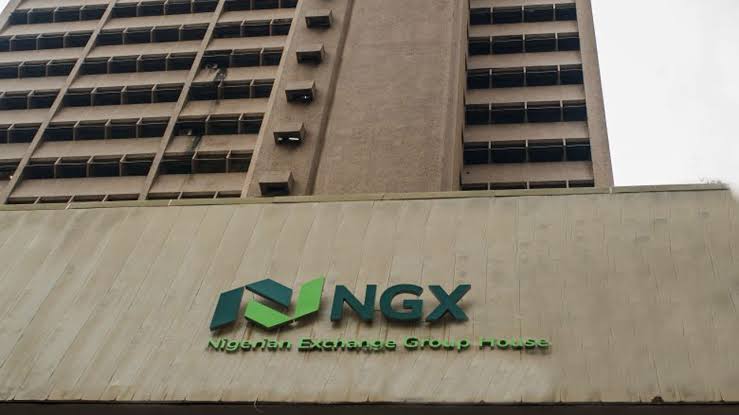
The bears have taken firm hold at the Nigerian Exchange Limited (NGX). A routine round of profit-taking after a record rally has turned into the market’s longest sell-off of the year, with investors now down N5.45 trillion after eight straight losing sessions.
The rout, which started on Tuesday, August 11, has proven remarkably persistent, chipping away day after day at gains investors had booked only weeks earlier when the All-Share Index (ASI) touched a record close of 248,529.75 points and market capitalization briefly crossed the historic N160 trillion mark on Monday, August 10.
Since that peak, the index has shed roughly 8,500 points, and the market’s year-to-date return, once above 60 percent, has moderated to the mid-50s as the correction has ground on.
Last week alone accounted for N3.8 trillion of the damage, spread across four consecutive bearish sessions as investors continued locking in profits following the market’s record run.
The selling did not let up when the new trading week opened. From Monday through Thursday this week, the NGX shed a further N1.65 trillion, session after session, as large- and mid-cap counters bore the brunt of the exodus.
Thursday’s session was no exception. Market capitalization slipped by N440 billion, or 0.30 percent, closing at N154.977 trillion, down from N155.417 trillion at the opening bell. The All-Share Index shed 712.67 basis points to settle at 240,037.80 points.
Trading data showed sentiment firmly negative, with 28 stocks declining against just 14 advancers, a breadth reading that underscores how broad-based the pullback has become, rather than being confined to one or two heavyweight counters.
On the day’s ticker, Haldane McCall bucked the trend to lead the gainers’ table, climbing 9.38 percent to close at N3.85 per share. At the other end, International Energy Insurance led the losers, tumbling 9.85 percent to N4.30, a continuation of the punishing week the insurance sub-sector has endured.
Beyond the ordinary rhythm of profit-taking, insurance counters have been contending with a more structural shock: the rollout of the Nigerian Insurance Industry Reform Act 2025.
In recent weeks, the National Insurance Commission has moved to revoke the operating licences of Universal Insurance and Nigeria Reinsurance, casualties of the tighter capital and compliance requirements the new law imposes.
The regulatory clean-up has rattled investor confidence across the sector, compounding the losses already flowing from the broader market correction and helping explain why insurance names have featured so prominently among the session’s worst performers.
The insurance sector has not suffered alone. Earlier in the slide, heavy selling in consumer goods names, including BUA Foods and Unilever Nigeria, both of which shed close to 10 percent in a single session, dragged the market lower, while oil and gas heavyweights such as Aradel Holdings later became a fresh drag as the correction entered its second week.
Banking stocks, too, have taken their share of punishment, with the sector’s index falling by close to 2 percent in one recent session as investors trimmed exposure across the board.
Market watchers remain divided on how to read the slide. Some analysts have characterized the pullback as an overdue and arguably healthy correction after an extraordinary rally that pushed the market past the N160 trillion mark for the first time, a natural pause as investors bank profits rather than a sign of deteriorating fundamentals.
Others point to a more cautious mood taking hold ahead of upcoming political events, alongside the insurance sector’s regulatory upheaval, as evidence that sentiment could remain fragile in the near term.
For now, the NGX remains solidly positive for the year, with the All-Share Index still up more than 50 percent since January.
Eight consecutive losing sessions, the market’s longest such run in 2026, have served as a sharp reminder that even the strongest rallies eventually meet resistance and that the N160 trillion milestone came with a corrective bill that investors are still paying down.
WHAT YOU SHOULD KNOW
The NGX’s eight-session slide, which has erased N5.45 trillion since August 11, is largely a profit-taking correction after the market’s record N160 trillion peak, not a collapse.
But the one factor worth watching closely is the insurance sector: the Nigerian Insurance Industry Reform Act 2025 and NAICOM’s revocation of licences for Universal Insurance and Nigeria Reinsurance point to a genuine structural shakeout, not just market noise, and that’s the piece of this story likely to have lasting consequences beyond the current sell-off.