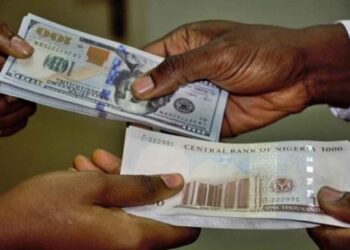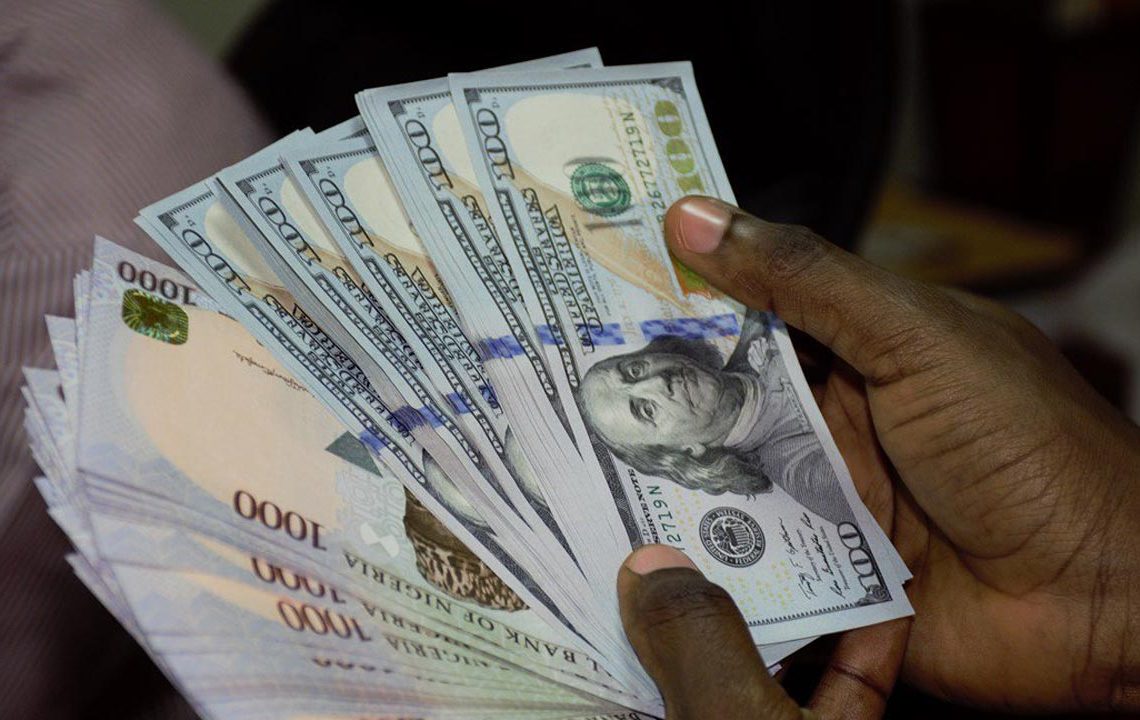
The naira notched another day of gains against the US dollar on Thursday, continuing a rally that has now stretched across multiple trading sessions and lifted the currency to its strongest levels in months.
According to the latest data from the Central Bank of Nigeria’s Nigerian Foreign Exchange Market (NFEM), the dollar was quoted at approximately ₦1,344.45 as of the most recent indication on Thursday, a level corroborated by a live currency-tracking platform, which pegged USD/NGN at ₦1,344.45 as of 5:18 a.m. UTC.
CBN data showed the NFEM rate stood at ₦1,343.32 on August 18, while the currency had strengthened to around ₦1,350 per dollar at the close of trading on August 17.
Traders and analysts have pointed to one clear driver behind the sustained appreciation: improved dollar liquidity across the foreign exchange market. The trend has been building for days.
AbokiFX reported on August 19 that the naira had risen to a five-month high of ₦1,343.32 per dollar at the official market amid stronger dollar liquidity. This milestone underscored just how far the currency has climbed back from earlier weakness this year.
Yet even as the official window brightens, the street tells a different story. In the parallel market, the dollar was selling for about ₦1,404 on Thursday, according to Aboki Forex. That leaves a gap of roughly ₦60 between the official and black-market rates, a spread that, while narrower than the chasms seen at points during Nigeria’s post-unification currency turbulence, still signals that confidence and access to dollars remain uneven outside the formal banking channels.
For ordinary Nigerians and businesses needing foreign currency for travel, school fees, imports, or remittances, that divergence matters. Whether they can access the more favorable official rate or are pushed toward Bureau de Change operators and street dealers quoting closer to ₦1,404 often depends on which bank they use, where they’re located, and the size of the transaction.
The CBN has been at pains to clarify how its published figure is derived. The NFEM rate is calculated using a volume-weighted average and serves as the official exchange rate for the day. However, the rate available to individuals and businesses may differ depending on the transaction.
That caveat is worth underlining: the ₦1,344.45 figure making headlines is a benchmark, not a guarantee. It can and often does shift over the course of a single trading day as demand and supply conditions evolve in both the official and parallel markets.
Zooming out, Thursday’s rate fits into a broader pattern of relative naira stability in 2026 compared to the sharp swings of prior years.
Historical data for the year shows the naira’s best exchange rate against the dollar was 1,340.0005 on February 18, with an average rate of roughly 1,375.57 across the year to date, meaning Thursday’s ₦1,344.45 print sits near the strong end of that range, reinforcing the sense that the currency is riding a genuine recovery rather than a one-day blip.
Still, market watchers caution against reading too much into any single session. With oil revenues, CBN interventions, and diaspora remittance flows all continuing to shape supply, the naira’s trajectory in the weeks ahead will likely hinge on whether this liquidity boost proves durable or whether the persistent gap with the parallel market widens again once conditions tighten.
WHAT YOU SHOULD KNOW
The naira’s climb to ₦1,344.45 on the official market, its strongest level in five months, is real, but it isn’t the full picture.
A ₦60 gap still separates the official rate from the ₦1,404 parallel-market rate, meaning most everyday Nigerians won’t actually get the headline figure when buying dollars.
The takeaway isn’t just “the naira is strengthening”; it’s that where and how you access dollars still determines what you actually pay.