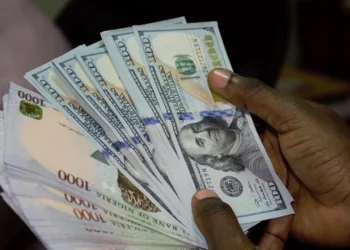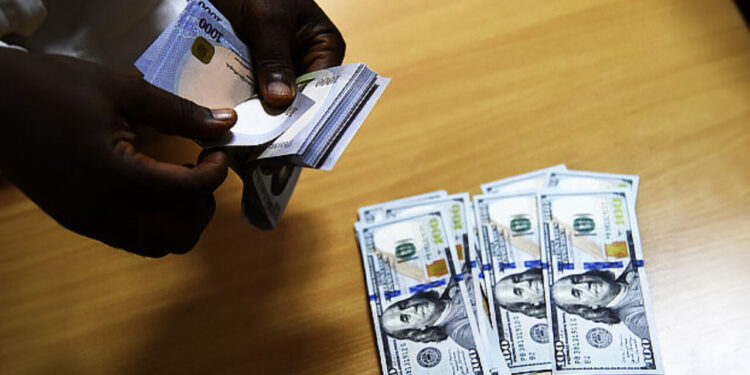
The naira firmed further against the US dollar at the official market on Monday, closing at ₦1,350/$ on the Nigerian Foreign Exchange Market (NFEM), its strongest finish since April 22, 2026, as improved dollar liquidity continued to buoy Nigeria’s currency markets.
According to figures released by the Central Bank of Nigeria (CBN), the local unit gained ₦8.25, or roughly 0.6 per cent, from the ₦1,358.25/$ recorded at the close of trading on Friday, August 14.
The advance marks the latest leg in a steady appreciating trend that has taken the naira from ₦1,365.69/$ the previous week, through ₦1,357.61/$ on August 17, to its current level just above the ₦1,350 mark.
Early indications on Tuesday suggest the currency is holding its ground. A live USD/NGN tracking source pegged the naira at approximately ₦1,352.22/$ in morning trading, a marginal pullback from Monday’s close, but one that keeps the unit firmly within its recent trading band and signals a degree of stability entering the new week.
The official market’s gains, however, have not been mirrored on the parallel market, where the dollar continued to command a hefty premium. Bureau De Change operators were quoting the greenback at around ₦1,407 for buying and ₦1,420 for selling as of the latest available rates.
In practical terms, a customer looking to purchase $1,000 on the street would need to part with roughly ₦1.42 million, while someone selling the same amount would receive about ₦1.407 million a stark illustration of how far retail access still lags the official rate.
That ₦1,420 parallel-market selling rate sits ₦70 above the NFEM’s ₦1,350/$ close, putting the spread between the two markets at approximately 5.2 percent.
While narrower gaps typically signal a healthier, more unified currency regime, a spread of this size indicates that demand pressures persist outside formal channels, even as the official window shows signs of relative strength.
Analysts and market watchers attribute the naira’s official-market gains largely to improved foreign exchange liquidity and a stronger flow of dollar supply into the formal system a trend the CBN has been working to reinforce through its interventions and reforms aimed at unifying Nigeria’s fragmented FX landscape.
Beyond liquidity conditions, several other variables are expected to continue shaping the currency’s trajectory in the days ahead:
- Importer demand, which tends to exert downward pressure on the naira as businesses seek dollars to settle foreign obligations
- Crude oil receipts, still central to Nigeria’s dollar earnings given the economy’s continued reliance on oil exports
- Foreign portfolio and direct investment inflows, which remain sensitive to investor confidence and yield differentials
- Diaspora remittances, an increasingly significant and steady source of dollar liquidity
- CBN policy actions, including any further interventions or adjustments to the FX framework
It’s worth noting that the NFEM figure represents the volume-weighted average of transactions across Nigeria’s formal foreign exchange market, giving it a degree of methodological rigor that parallel-market quotes, which can vary considerably by location, transaction size, and individual dealer, simply don’t share.
With the naira now trading at its firmest level in nearly four months, market participants will be watching closely to see whether the current liquidity conditions can be sustained or whether renewed demand pressures, seasonal or otherwise, will test the currency’s resilience in the weeks ahead.
For now, though, the trend line points in the naira’s favour, even as the persistent premium on the parallel market serves as a reminder of how much ground remains to be closed between Nigeria’s official and informal currency markets.
WHAT YOU SHOULD KNOW
The naira’s rise to ₦1,350/$, at its best level since April, reflects genuine improvement in official market dollar liquidity, not a resolution of Nigeria’s currency challenges.
The real story is the persistent 5.2% gap with the parallel market (₦1,420/$), which shows that everyday Nigerians and businesses without access to official channels are still paying a steep premium for dollars.
Until that gap closes meaningfully, the naira’s “strength” remains a two-tier reality rather than a broad-based recovery.