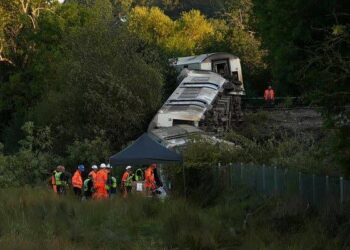
Eastern Japan awoke to devastation on Friday after “unprecedented” overnight rain hit Chiba prefecture, killing at least five, cutting power to tens of thousands, and trapping 6,000 travelers at Narita Airport.
The storm system moved in late Thursday and intensified through the night, dumping torrential rain across the prefecture east of Tokyo.
By the time the worst of it passed, the Japan Meteorological Agency had done something it had never done before for the region: issue a level-5 emergency warning, the highest classification in the national alert system, for Chiba.
“This is shaping up to be an unprecedented level of heavy rain,” a JMA official warned reporters as the system bore down Thursday evening, a statement that proved grimly accurate by morning.
At an emergency disaster management meeting convened Friday afternoon, Chiba officials confirmed five fatalities, though public broadcaster NHK reported the number could climb as high as eight as rescue crews continued searching flooded neighborhoods.
Among the confirmed dead: a man believed to be in his 60s or 70s, found floating in a flooded roadway, and a 66-year-old woman who became trapped inside her car as floodwaters rose around it.
Authorities also reported a man of unknown age found collapsed in the street and a fifth victim whose gender and age had not yet been determined. The circumstances underscore how quickly the flooding overtook people who had little warning and even less time to react.
In Chiba’s low-lying rural districts, the scale of the flooding was visible in the vehicles simply left behind. An AFP journalist counted more than a dozen abandoned cars littering roads that had become impassable overnight.
In the city of Kashiwa, NHK broadcast footage of vehicles submerged up to their headlights, motionless in water that had, hours earlier, been an ordinary street.
More than 80 houses flooded outright in cities including Ichikawa, Kashiwa, and Sakura, while close to 90 additional homes reported water seeping beneath their floorboards, a lower-grade but still costly form of damage likely to affect thousands of residents in the weeks ahead as insurance claims and repairs begin.
Power losses compounded the misery. Nearly 26,000 households across the prefecture were left without electricity, according to the disaster management office, with no clear timeline for restoration in the hardest-hit areas.
“This happened all of a sudden, so it was a complete surprise,” one Ichikawa resident told NHK on Thursday, her business now in limbo. “The power is out, so I’m worried whether I can open in the next couple of days.”
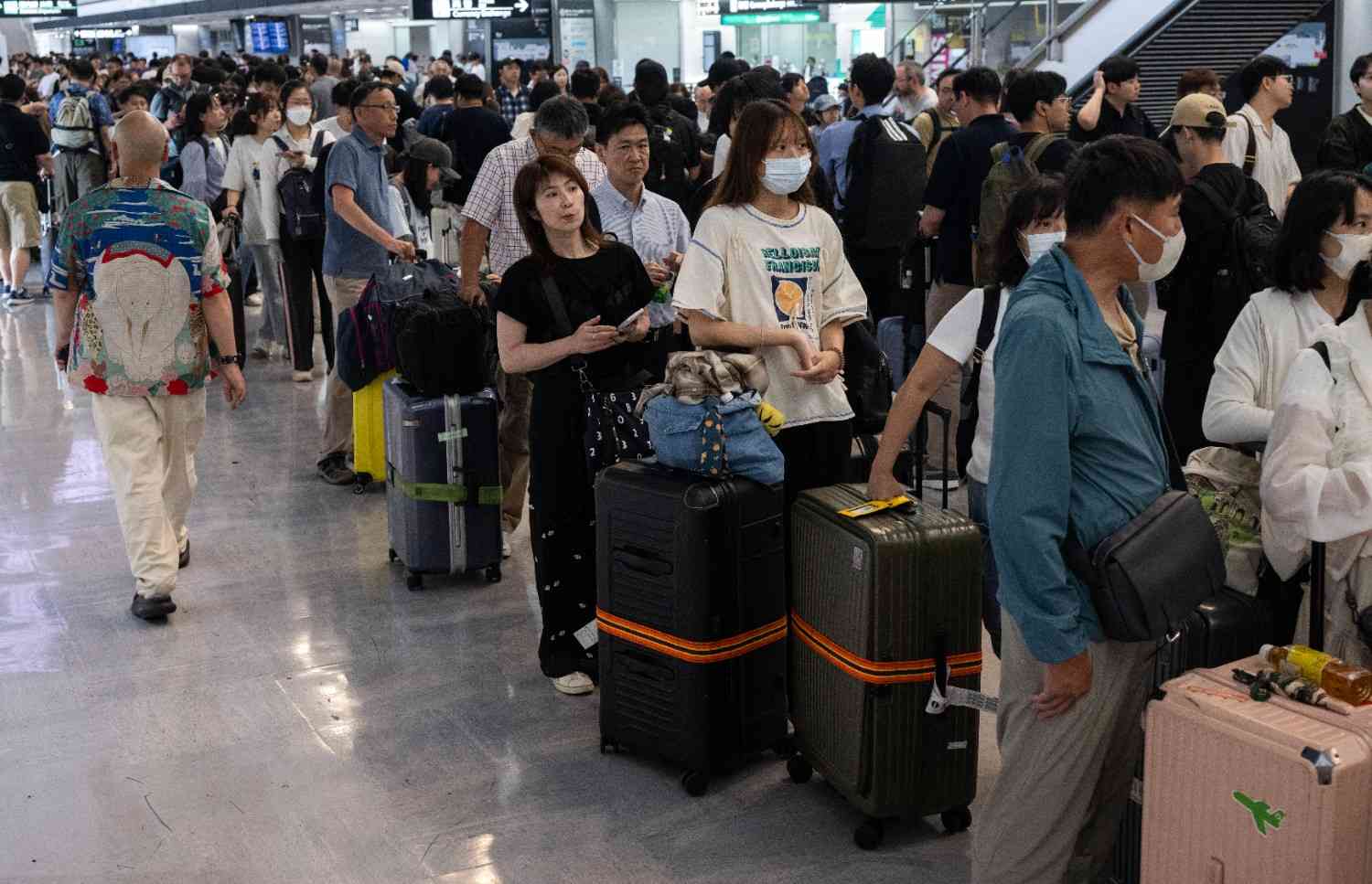
Nowhere was the disruption more visible than at Narita, one of two major airports serving the greater Tokyo area. As rail lines connecting the airport to the city shut down and roads became unreliable, thousands of travelers found themselves with nowhere to go.
By nightfall, sleeping bags were handed out by airport staff along with water and food, according to accounts shared on social media that covered stretches of the terminal floor.
Check-in lines stretched the length of the concourse as airlines scrambled to rebook passengers onto delayed and canceled flights, with train service to and from the airport suspended well into Friday afternoon.
Among the roughly 6,000 stranded overnight was a British traveler who gave his name as Philip. He described a nine-hour ordeal, part of it by taxi just to reach the terminal before dawn Friday. Once there, resignation set in.
“Just been trying to get some sleep and watching Netflix,” he said, sleeping bag in hand. “Just get on with it, really. Nothing else you can do.”
Another stranded passenger, speaking to NHK, struck a similarly weary but philosophical tone. “I never thought I’d spend the night at the airport, but it is what it is, and we are learning,” he said. “We’re never going to forget this trip.”
The disruption wasn’t confined to the airport. Hundreds more travelers were left stranded at Chiba station after train services there were suspended, an AFP journalist witnessed, while hundreds of others across the prefecture spent the night in emergency shelters rather than risk the flooded roads home.
By Friday morning, the level-5 warnings that had blanketed Chiba overnight were downgraded to level-4, a sign that the most acute danger had passed even as the cleanup and the search for additional victims continued.
The storm adds to a pattern that scientists have long cautioned Japan and the world to prepare for. Researchers studying the climate say human-driven warming is making extreme rainfall events like this one more frequent, more prolonged, and more intense, turning what officials once might have called freak weather into a recurring seasonal threat.
For now, Chiba residents and stranded travelers alike are left assessing the damage to homes, to travel plans, and to a sense of normalcy upended in the span of a single night.
WHAT YOU SHOULD KNOW
A single night of record-breaking rain overwhelmed Chiba prefecture, killing at least five people, cutting power to 26,000 households, flooding hundreds of homes, and stranding 6,000 travelers at Narita airport.
Japan’s meteorological agency issued its first-ever level-5 warning for the region, underscoring that this wasn’t ordinary bad weather but a genuinely unprecedented event, and scientists warn climate change is making such extremes more common, not less.