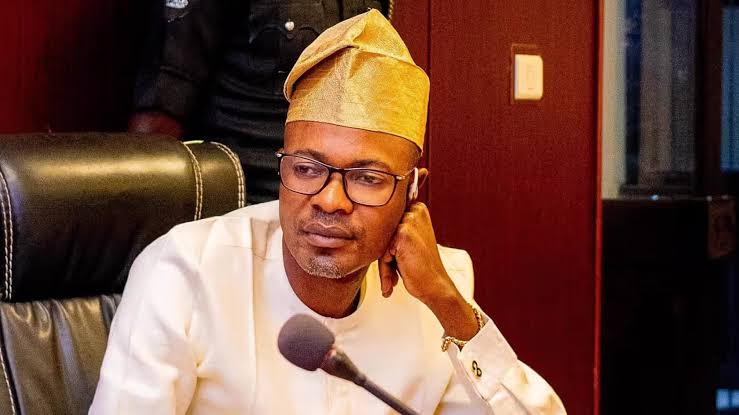
For the second time in as many months, the courtroom benches at the Federal High Court in Abuja sat half-empty where the accused should have been. Adeniyi Adeyemi, the man at the center of one of Nigeria’s stranger impersonation scandals in recent memory, simply did not show up.
Justice Mohammed Umar did not linger on the absence. Within minutes of the case being called and the defendant’s empty seat noted, the judge granted an oral application from the prosecution and ordered a bench warrant for Adeyemi’s arrest, a blunt instrument reserved for defendants the court has concluded cannot be trusted to appear voluntarily.
It was a swift and almost anticlimactic end to a hearing that had, until that point, followed a familiar script: another adjournment in a case that has now stalled repeatedly since charges were filed.
At the heart of the matter is an eight-count charge brought by the Nigeria Police Force, accusing Adeyemi of conspiracy, forgery, and impersonation in connection with his self-styled role as director-general of the “Presidential Foreign Investment Promotion Council,” a body the presidency has publicly and repeatedly insisted has no legal standing whatsoever.
The case file, marked FHC/ABJ/CR/562/2025, reads like the plot of a con-artist thriller. Prosecutors allege that Adeyemi, working alongside two still-at-large suspects known only as Femi and Anu, fabricated an elaborate paper trail to breathe fictitious life into the council: a forged presidential appointment letter, counterfeit State House letterheads, a bogus conveyance approval for office premises, fraudulent staffing requests, and letters seeking “collaboration” with a federal ministry all reportedly dressed up with fake signatures, invented reference numbers, forged official seals, and an unauthorized reproduction of the Nigerian Coat of Arms.
One count of the charge alleges that the purported appointment letter was fabricated to appear as though it had been personally issued by President Bola Ahmed Tinubu and countersigned by the Chief of Staff to the President, Femi Gbajabiamila, an offence prosecutors say falls under the Miscellaneous Offences Act.
A separate count accuses Adeyemi of falsely parading himself as the council’s director-general under the Penal Code’s impersonation provisions.
If convicted, the forgery charges alone could see him spend up to 21 years behind bars, with no option of a fine. The impersonation count carries a comparatively lighter maximum of three years’ imprisonment or a fine.
What made Tuesday’s proceedings notable was not just the warrant itself, but the exchange that preceded it. Adeyemi’s lawyer, Genesis Francis, told the court his client had stayed away out of genuine fear for his life, fear serious enough, he said, that Adeyemi had written directly to President Tinubu about it. The defendant, his counsel insisted, wanted very much to remain alive long enough to stand trial.
Justice Umar’s reply was terse and pointed: the court, he said, would help him do exactly that by having him arrested. The case was then adjourned to September 30, 2026, for arraignment to be attempted once more.
The irony of Tuesday’s no-show is hard to miss. Barely 24 hours earlier, Adeyemi had gone on Channels Television to insist he was not evading anyone. “I’m ready to show my face. I’m not hiding,” he told viewers, adding that he believed, on what he called good authority, that his life was genuinely at risk and that there had been multiple attempts on it.
During that same interview, Adeyemi doubled down on a claim he has made before: that he paid ₦400 million through an intermediary to secure his appointment as the council’s Director-General, money he says he borrowed and which his creditors have since flagged to the Economic and Financial Crimes Commission in a formal petition.
According to police accounts, the investigation began after the Office of the Chief of Staff to the President formally petitioned the Inspector General of Police in October 2025, alarmed by forged appointment letters circulating under its name.
Investigators allege Adeyemi did not operate in the shadows; he reportedly ran the purported council out of a real office inside the Federal Secretariat Complex in Abuja’s Phase III, lending the operation a veneer of institutional legitimacy that apparently helped it persist for months.
The scandal has also become entangled with a death. Investigators have linked the alleged scheme to Dolapo Babatunde Tanimola, described by Adeyemi as a key intermediary in the affair, who died in a hotel fire in Abuja, a death Adeyemi has cited as part of the reason he has kept a low public profile.
Rather than retreat, Adeyemi has gone on the offensive rhetorically, if not in court. He maintains that the council is, in fact, real and has called for an independent probe into the entire affair, including scrutiny of a ₦1.3 billion allocation reportedly earmarked for the council in the 2026 Appropriation Act.
In an open letter to the president, he asked for a multi-stakeholder investigative panel to be established, drawing in civil society groups, the Nigerian Bar Association, independent media, international financial institutions, human rights organizations, foreign diplomatic missions, the ICPC, and the EFCC.
He has pledged to hand over documentary evidence and cooperate fully should such a panel materialize.
For now, that offer is moot: there is a warrant out for his arrest, and the court has made clear it intends to secure his presence one way or another.
Whether Adeyemi turns himself in, is located by police, or continues to elude arraignment will determine whether the September 30 court date becomes a turning point in the case or simply the next entry in a growing list of adjournments.
WHAT YOU SHOULD KNOW
A Nigerian court has issued a bench warrant for Adeniyi Adeyemi after he skipped his own arraignment on forgery and impersonation charges tied to a fake “Presidential Foreign Investment Promotion Council,” an agency the Presidency says simply doesn’t exist.
Despite publicly claiming just a day earlier that he wasn’t hiding, he failed to appear in court and now faces up to 21 years in prison if convicted. The case returns September 30, 2026, but only if he’s found first.