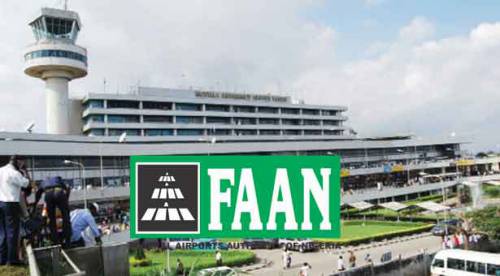
A fresh wave of anxiety has gripped airport taxi operators across Nigeria’s major airports, as drivers plead with the federal government to halt a Federal Airports Authority of Nigeria (FAAN) directive they say threatens to strip them of their livelihoods.
The controversy erupted after Objectv Media circulated a video on Friday showing a visibly distressed cab driver, speaking in Yoruba, making an emotional appeal directly to Nigerians and President Bola Tinubu.
In the clip, the driver detailed what he described as an impossible demand: replace their existing taxis with vehicles from 2020 or newer cars; he estimates the cost is upward of N18 million in an economy already buckling under inflation, fuel price volatility, and shrinking purchasing power.
“This is what we are facing,” he said, his voice carrying the weight of a profession under siege. “They said we should go and buy a vehicle from 2020 or above… Let this go viral. Nigerians, pity us and help us intervene.”
Beyond the vehicle-age requirement, the driver raised a second grievance: FAAN’s reported plan to migrate airport taxi operations onto a digital app-based platform, a move he suggested had been introduced with little consultation with those it would affect most.
FAAN has publicly defended its vehicle-upgrade policy on multiple occasions, insisting the initiative is about lifting Nigeria’s airports to international standards rather than punishing drivers.
In statements issued through its head of corporate affairs, the authority has argued that passengers arriving at Lagos’s Murtala Muhammed International Airport or Abuja’s Nnamdi Azikiwe International Airport deserve vehicles that are “clean, roadworthy, comfortable, and professionally maintained,” reflecting, in the agency’s words, “the premium environment expected of a modern international airport.”
FAAN has also pushed back on accusations that operators were blindsided, noting that consultations on the vehicle-standard requirements date back to July 2024 and that operators have already benefited from at least two deadline extensions, first to January 2026, then to June 2026, with a further extension to October 2026 now reportedly under consideration.
Notably, there appears to be some inconsistency in how the policy has been reported: while the viral video and this appeal reference a “2020 model and above.” requirement; FAAN’s own public statements and the drivers’ union, the Nigeria Union of Private Cab Operators (NUPCO), have more consistently cited a cutoff barring vehicles manufactured before 2012, alongside a tariff hike from N500 to N1,500 per pickup.
Whether the 2020 threshold reflects a tightening of the policy, a miscommunication, or confusion among operators themselves is unclear and worth watching as the story develops.
The grievance has already moved beyond viral videos and X threads. NUPCO, under its National President Adeola Adepegba, had earlier threatened to ground taxi operations entirely at both Lagos and Abuja airports from July 1 if FAAN did not reverse what the union branded “anti-labor policies.”
The union framed the 200 percent tariff increase as economically unsustainable, arguing that “there is no genuine business that can currently deliver 200 percent profit” in the current climate, and warned that the cost would inevitably be passed on to passengers through higher fares.
Nigerians on social media have split sharply along familiar lines. Some sympathize with the drivers, questioning the practicality of the policy in an economy where new vehicles, let alone luxury-tier ones, remain out of reach for most citizens.
One user, @Esta43547782, asked pointedly where “the average Nigerian” would even source funds to buy, clear, and operate such a vehicle. Another, @NjaCoach, raised the absence of accessible auto loans as a structural barrier the policy seemingly ignores.
But not everyone is convinced the drivers are blameless. Critics like @ItsTheIroko argue that the current fleet’s condition doesn’t match the fares charged, recounting personal experiences of walking away from airport taxi ranks to use ride-hailing apps like Bolt or InDrive instead, services often perceived as offering better value and more reliable vehicles.
With FAAN signaling it is unlikely to grant further extensions beyond October 2026, and drivers insisting the economics simply don’t work, the standoff appears headed toward a decisive moment later this year.
Whether the Federal Government intervenes as the viral video’s protagonist implored President Tinubu to do or whether FAAN holds firm on its compliance timeline, the coming months will test whether Nigeria’s push to modernize its airport transport image can be reconciled with the economic realities facing the drivers tasked with delivering it.
WHAT YOU SHOULD KNOW
FAAN wants newer, safer taxis to match “world-class airport” standards; drivers say the economy simply doesn’t allow it. With a hard compliance deadline reportedly set for October 2026 and no further extensions expected, this standoff is heading toward a real breaking point: either FAAN blinks, drivers comply at great financial strain, or airport taxi services face disruption.