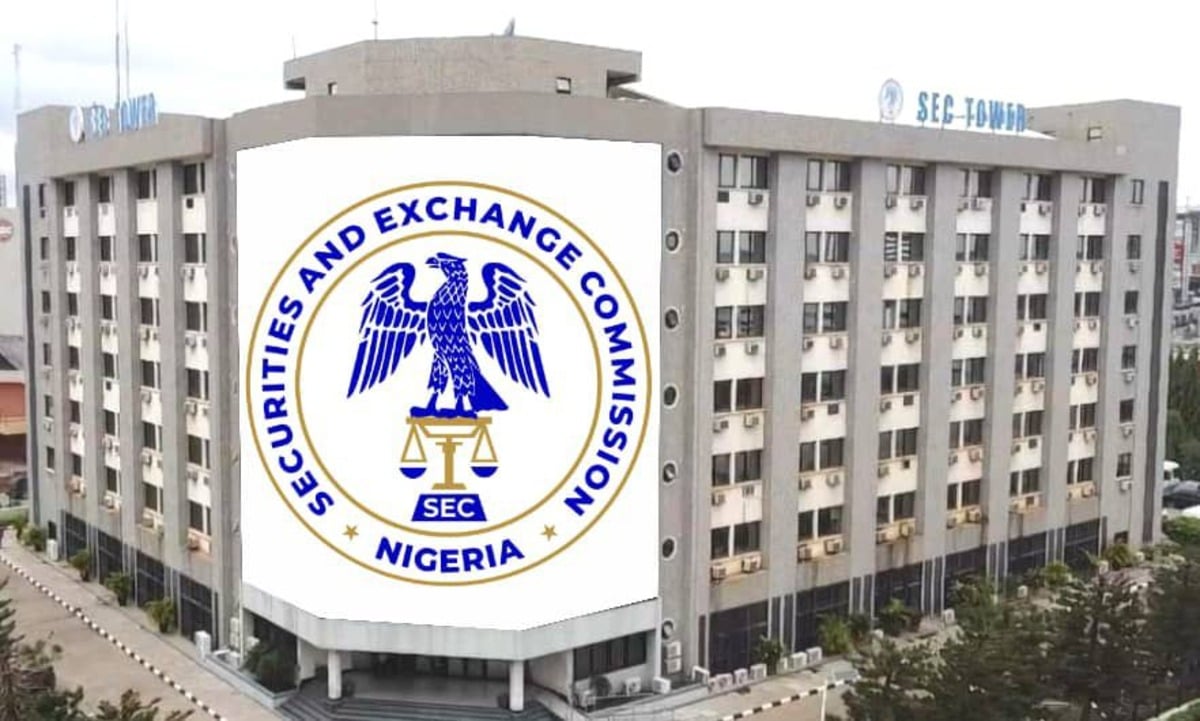
Nigeria’s Securities and Exchange Commission (SEC) has formally lifted the suspension it imposed on BGL Securities Limited and BGL Asset Management Limited more than a decade ago, restoring both firms’ standing in the country’s capital market.
The commission confirmed the reversal in response to an inquiry into the registration status of the two entities, stating plainly: “Suspension is lifted from BGL Securities and BGL Asset Management.”
The decision brings to a close one of the more protracted regulatory sagas in Nigeria’s financial sector, dating back to May 2015, when the SEC banned BGL Securities, BGL Asset Management, and a third affiliate, BGL Capital Limited, from all capital market operations. That action followed a sweeping investigation triggered by more than 40 complaints from investors who alleged the BGL Group owed them roughly N5.8 billion.
According to documentation, the SEC’s reinstatement came in two separate approvals. The first, contained in a letter dated 17 April 2025 and signed by Hafsat O. Rufai, Director of the Registration, Exchanges, and Market Infrastructure Department, approved BGL Securities Limited’s registration as a broker/dealer, effective the same date.
The second, dated 22 November 2024 and bearing the same signatory, confirmed BGL Asset Management Limited’s registration as a fund/portfolio manager, also effective immediately.
Notably, the SEC characterized these approvals not merely as a lifting of past sanctions but as fresh registrations granted after the companies underwent and passed interviews conducted by the commission, suggesting a deliberate vetting process rather than an automatic restoration of old licenses.
The scale of the original scandal was considerable. Forensic auditors who examined BGL Group’s books found that the conglomerate’s management had progressively eroded shareholders’ funds through losses totaling approximately N48 billion over five years as of 31 December 2014, a finding that painted a picture of an institution in deep financial distress well before the ban took effect.
The SEC said that despite repeated all-parties meetings and repayment agreements brokered between BGL and aggrieved investors, the group “continued reneging on promises to restitute investors,” a pattern that ultimately hardened the regulator’s resolve to act.
Beyond barring the corporate entities, the commission handed down life bans to two individuals at the center of the affair: Alex Okumagba, the then managing director of BGL Group, who has since died, and his deputy, Chibundu Edozie.
The SEC also directed BGL Group to refund investors more than N2 billion, citing violations under Sections 96, 312, 322, and 323 of the Penal Code Law, Chapter 89.
The SEC’s latest correspondence does not address the fate of BGL Capital Limited, the third subsidiary swept up in the 2015 ban, nor does it detail what became of the personal bans against Okumagba and Edozie.
It is also not yet clear whether the roughly N5.8 billion in investor claims or the N2 billion refund order was ever fully settled or whether restitution featured as a condition of the companies’ return to good standing.
For now, the reinstatement marks a significant, if narrowly documented, turning point for a brand that spent over a decade on the sidelines of Nigeria’s capital market and raises fresh questions about what assurances, if any, were extracted from BGL before the SEC agreed to let it back in.
WHAT YOU SHOULD KNOW
After eleven years in regulatory exile, BGL Securities and BGL Asset Management are back in Nigeria’s capital market, but the bigger story is what’s missing from their comeback.
The SEC has approved them as fresh registrants following a vetting interview yet has said nothing about whether the roughly N5.8 billion owed to investors, or the N2 billion refund order tied to the original scandal, was ever actually paid.
Until that gap is addressed, the reinstatement reads less like vindication and more like an open question about accountability.