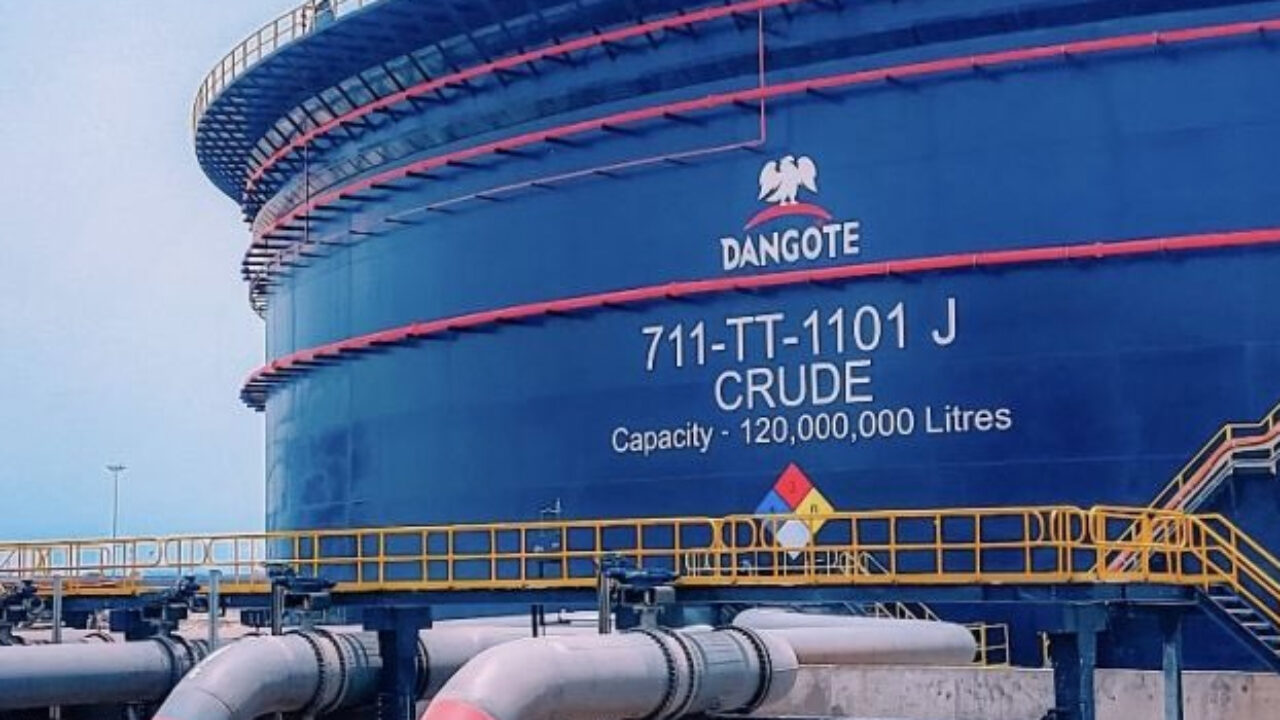
The Federal Government has escalated from public warnings to direct action, summoning Dangote Refinery, the FCCPC, PETROAN, and other major oil and gas operators to a closed-door meeting at NMDPRA headquarters in Abuja to force down petrol pump prices.
The gathering is the clearest sign yet that the government intends to back its recent warnings with concrete outcomes, rather than leave the matter to persuasion alone.
The meeting comes only days after the Minister of State for Petroleum Resources (Oil), Senator Heineken Lokpobiri, ordered marketers to immediately cut pump prices to reflect the retreat in global crude prices.
That directive was itself a follow-up to an even earlier warning: at the NMDPRA’s General Counsel and Legal Advisers’ Forum in Abuja on June 29, Lokpobiri had first flagged the disconnect between falling international benchmarks and stubbornly high domestic pump prices, instructing the regulator to invoke its powers under the Petroleum Industry Act (PIA) to check what he described as profiteering dressed up as deregulation.
The numbers explain the minister’s impatience. Brent crude, which spiked toward $120 a barrel amid the Iran-United States conflict earlier this year, has since eased back toward the low $70s following a ceasefire and the reopening of the Strait of Hormuz, essentially returning to pre-war levels.
Yet retail petrol prices nationwide have been slower to fall in step, with pumps averaging around N1,200 a liter in many locations even as ex-depot prices from local refiners settled closer to N1,025–N1,075.
That gap has fuelled accusations, including from the FCCPC, which reportedly concluded that some operators had engaged in undue exploitation of consumers and that the deregulated market is not adjusting fairly.
Today’s meeting appears to answer a call PETROAN itself had made. Its national president, Billy Gillis-Harry, had argued publicly that while the minister, the NMDPRA, and the FCCPC all had the power to intervene, any such move ought to follow proper consultation with stakeholders and had urged the minister to convene exactly this kind of forum to work out a resolution that serves ordinary Nigerians.
Beyond Dangote Refinery, the FCCPC, and PETROAN, the room brought together TotalEnergies, Eterna, Matrix Energy, the Depot and Petroleum Products Retailers Association of Nigeria (DPRP), the Major Energy Marketers Association of Nigeria (MEMAN), the Depot and Petroleum Products Marketers Association of Nigeria (DAPPMAN), the Independent Petroleum Marketers Association of Nigeria (IPMAN), and the Nigerian Association of Road Transport Owners (NARTO), effectively spanning the entire PMS supply chain, from refining and depot storage to haulage and the retail pump.
Opening the session, Lokpobiri reiterated that with Brent crude down sharply from its wartime peak, there was no basis for pump prices to remain elevated.
He was careful, however, to frame the exercise as a search for consensus rather than an act of price-fixing, urging stakeholders to find common ground and stressing that deregulation was never meant to license excessive profiteering, a point he has now made in at least three separate public forums over the past two weeks.
He assured the industry that government remained committed to protecting both ordinary consumers and the broader deregulation agenda, suggesting the two goals were not in conflict.
NMDPRA Authority Chief Executive Rabiu Abdullahi Umar, who has fronted the regulator’s messaging on this issue in recent weeks, told the gathering that months of volatility in international crude markets had finally given way to a welcome easing, but that the domestic retail market had not moved in harmony with that trend.
He was at pains to characterize the exercise as collaborative rather than coercive, framing it as an open and solution-oriented conversation aimed at understanding marketers’ cost pressures, examining market surveillance and inventory management, and aligning stakeholders around accelerating mechanisms such as the National Strategic Stock to safeguard the country’s energy security.
The tone of openness from officials belies weeks of friction beneath the surface. IPMAN’s National Publicity Secretary, Chinedu Ukadike, has repeatedly pushed back on suggestions of profiteering, insisting that many independent marketers are absorbing losses because of the rapid succession of gantry price cuts by Dangote Refinery and warning that any attempt to impose price control in a deregulated market could push operators to shut down filling stations altogether.
His argument has consistently been that competition, more imports, and more functioning local refineries, rather than regulatory pressure, are the real levers for lower prices.
Dangote Refinery, for its part, has continued to trim its ex-gantry PMS price incrementally, with the latest adjustment taking it from N1,125 to N1,075 per liter, part of a string of roughly N50 cuts since the refinery scaled up domestic supply.
Whether those reductions are being passed on fully to consumers at the pump or absorbed as margin by marketers further down the chain is understood to be one of the central questions the closed-door talks are meant to resolve.
After the opening remarks, journalists including this reporter were asked to leave the room, and the substantive negotiations continued without press access.
That closed session was still ongoing at the time of filing, leaving unanswered the question that will matter most to Nigerian motorists: whether the meeting produces a concrete, industry-wide commitment to lower pump prices or simply another round of assurances in a standoff that has now stretched on for weeks.
Given the competing interests in the room a refiner keen to defend its margins, marketers warning of losses, and a government under pressure to show consumers a tangible dividend from falling global oil prices any outcome is likely to be a negotiated compromise rather than a unilateral directive.
WHAT YOU SHOULD KNOW
Nigeria’s petrol prices haven’t followed crude oil down. Brent crude has fallen from a wartime peak of $120 to the low $70s per barrel, but pump prices have stayed high around N1,200/liter even as Dangote’s ex-depot price has dropped to N1,075.
That gap is why the government summoned every major player in the supply chain to Abuja: to force an answer on who is holding onto that margin and to get pump prices to actually reflect cheaper crude.
Whether marketers agree to pass on the savings or dig in and warn of shutdowns as IPMAN has threatened will determine if this meeting produces real relief for Nigerian motorists or just another round of promises.