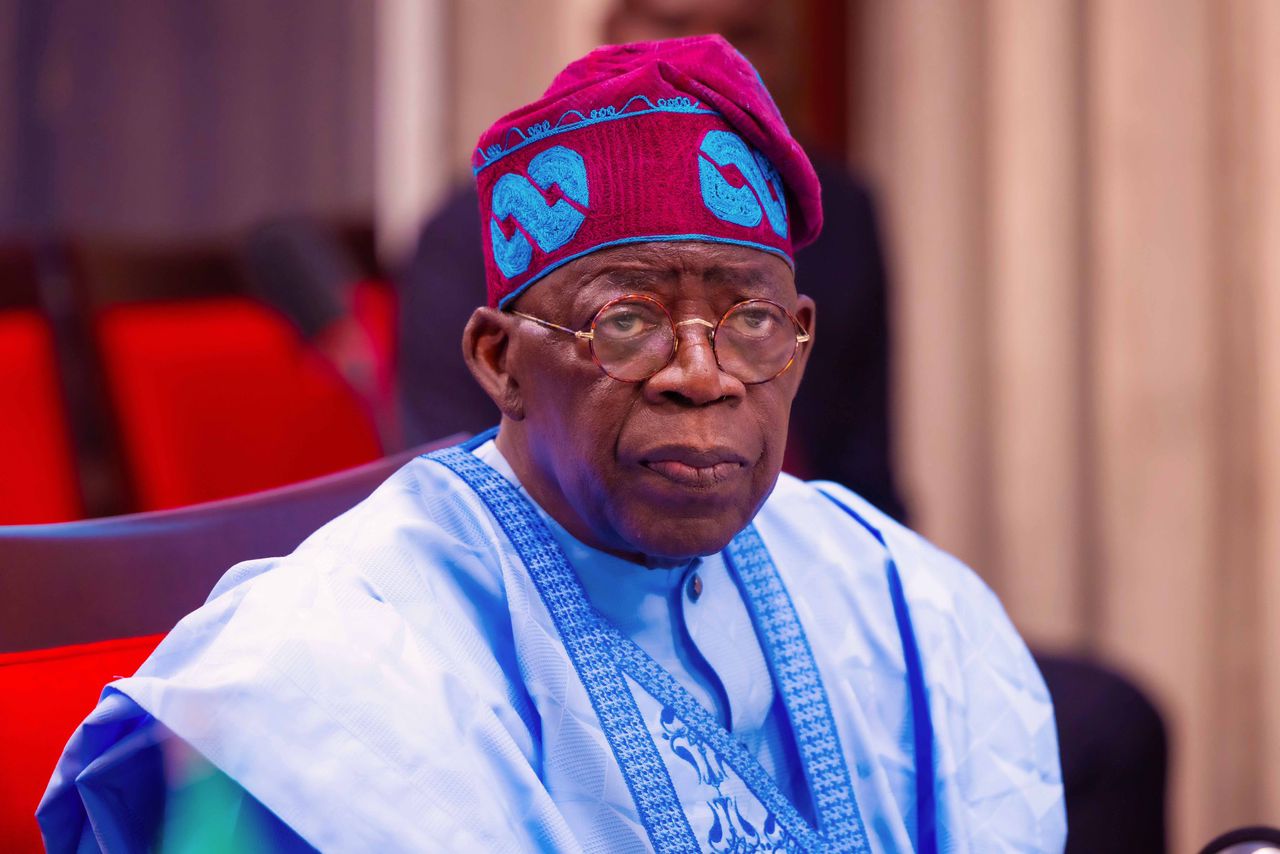
The Nigerian Presidency has swiftly dismissed a viral report alleging that President Tinubu plans to rename Nigeria the “United States of Nigeria” and abolish Sharia Law in the North, calling the claims deliberate falsehoods aimed at destabilizing the country ahead of the 2027 elections.
In a strongly worded statement issued on Thursday, Presidential Spokesperson Bayo Onanuga described the viral report as not only false but deliberately engineered by unnamed political actors seeking to fan the flames of division and uncertainty in a country whose political temperature is already beginning to rise.
The report, which circulated widely across social media platforms and messaging apps, alleged that the Tinubu administration was quietly preparing a sweeping legislative package reportedly code-named “Project True Federation” that the president intended to transmit to the National Assembly by December 15, just weeks before the general elections.
Among its most incendiary claims was the proposal to strip northern Nigeria of its constitutionally recognized Sharia legal framework, a move that would almost certainly ignite fierce religious and political backlash across the country’s deeply conservative north.
Onanuga was unequivocal in his rejection of the story. “This report is fake, malicious, and politically motivated,” the spokesperson declared, noting pointedly that the story relied entirely on anonymous sources, a hallmark, he suggested, of misinformation campaigns crafted to inflict maximum political damage while avoiding accountability.
Beyond denouncing the report’s content, Onanuga also offered a pointed civics lesson to those who may have taken the allegations at face value—underscoring that the Nigerian constitution cannot simply be rewritten at the whim of a sitting president or a compliant legislature.
Under Nigeria’s constitutional framework, any amendment to the nation’s founding document is a lengthy, rigorous, and multi-layered process. It requires extensive parliamentary scrutiny and debate, the approval of no fewer than two-thirds of members of both the Senate and the House of Representatives, and critically, the endorsement of at least 24 of Nigeria’s 36 State Houses of Assembly.
The suggestion, therefore, that President Tinubu could unilaterally or quietly push through changes of such magnitude before a looming election was, according to the presidency, not just false but fundamentally implausible.
“The president cannot arbitrarily carry out constitutional amendments,” Onanuga stressed. “Neither can the National Assembly.”
Perhaps more telling than the denial itself was the urgency and tone with which the presidency chose to respond, suggesting that officials are acutely aware of the combustible political environment in which such a report could thrive.
Nigeria is heading into what is widely expected to be a fiercely contested election season, with the January 2027 general elections already casting a long shadow over the nation’s political landscape.
The Tinubu administration, which has spent much of its tenure navigating the turbulent aftermath of painful economic reforms—including the removal of the decades-old petrol subsidy and the liberalization of the naira is keenly sensitive to narratives that could inflame ethnic or religious tensions and erode its political base.
Onanuga described the perpetrators of the fake report as “agents of destabilization and promoters of disorder,” warning that such tactics were likely to intensify as the campaign season draws closer. “Nigerians should be alert,” he cautioned, “as the spread of fake news is expected to escalate as political campaigns commence ahead of the 2027 elections.”
In closing, the presidency sought to redirect public attention to what it characterized as the administration’s primary preoccupation: economic recovery. Onanuga affirmed that President Tinubu remains laser-focused on implementing and consolidating the economic reforms his administration has introduced since taking office in May 2023, with the overriding goal of translating policy changes into measurable improvements in the daily lives of ordinary Nigerians, a pitch clearly aimed at voters who have endured months of economic hardship.
The episode is a reminder of the volatile intersection between social media, ethnic and religious identity, and electoral politics in Africa’s most populous nation. Nigeria’s complex federal structure, which binds together more than 250 ethnic groups and a near-even split between Christians and Muslims, makes it particularly susceptible to rumors that touch on religion, regional autonomy, or national identity.
Whether the viral report was the work of opposition political actors, mischief makers, or a more organized disinformation operation remains unclear.
What is clear, however, is that the presidency has drawn an early and firm line, signalling that it intends to aggressively counter any narrative it deems a threat to political stability, even as the race to 2027 quietly begins.
WHAT YOU SHOULD KNOW
The Nigerian Presidency has firmly rejected viral claims that President Tinubu plans to rename Nigeria the “United States of Nigeria” and abolish Sharia law, calling the report fake and politically motivated.
With the 2027 general elections approaching, disinformation is already being weaponized as a political tool. Nigerians must exercise serious caution about the news they consume and share, as sponsored falsehoods designed to inflame religious and ethnic tensions will only grow more frequent and more dangerous as campaign season intensifies.