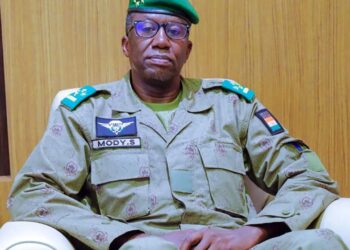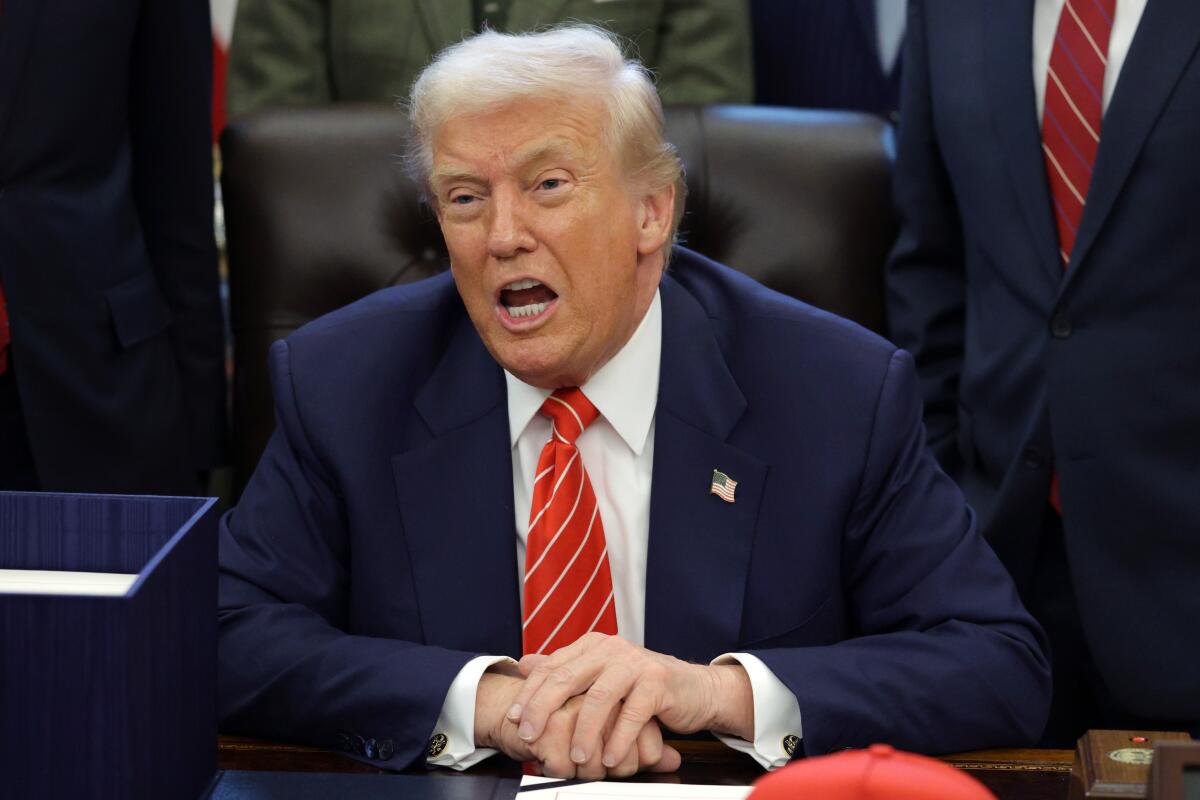
United States President Donald Trump has announced the killing of Abu-Bilal al-Minuki, a top ISIS commander described as the group’s global second-in-command, following a joint military operation involving American forces and the Nigerian Armed Forces.
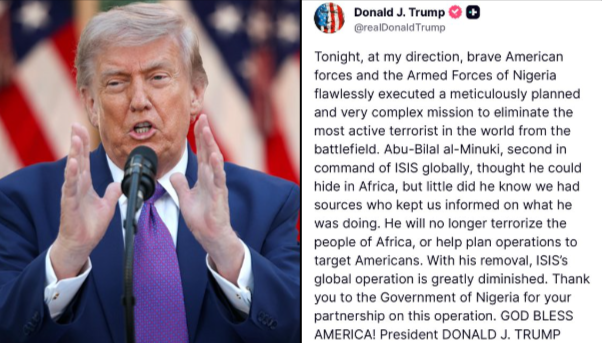
Verily News reports that Trump made the announcement late Friday through a post shared on Truth Social, revealing that the operation was carried out under his direct instruction and executed through coordinated efforts between U.S. special forces and Nigerian military personnel.
According to the U.S. President, the mission was highly strategic and carefully coordinated, targeting a man he described as one of the world’s most active and dangerous terrorist operatives.
“Abu-Bilal al-Minuki, second in command of ISIS globally, thought he could hide in Africa, but little did he know we had sources who kept us informed on what he was doing,” Trump stated.
While the President did not disclose the precise location where the operation took place, he acknowledged the cooperation of the Nigerian government and commended the country’s military for its role in what is now being regarded as a major counterterrorism breakthrough.
Reports by Reuters indicated that al-Minuki was a Nigerian national who had been formally designated as a “specially designated global terrorist” in 2023 under the administration of former U.S. President Joe Biden.
The operation marks another major chapter in the expanding security partnership between Washington and Abuja, particularly in efforts to combat extremist networks linked to ISIS and al-Qaeda operating across West Africa.
The development also comes months after Trump publicly criticised Nigeria over attacks on Christian communities by Islamist militants. Nigerian authorities have consistently rejected allegations of religious bias in their security operations, insisting that insurgent violence has affected both Muslim and Christian populations across the country.
Security analysts believe that if officially confirmed by both Nigerian authorities and U.S. defence officials, the killing of al-Minuki would rank among the most significant anti-terrorism successes involving Nigerian forces in recent years.
The United States had earlier launched targeted strikes against ISIS-linked fighters in Nigeria in December. Since then, Washington has reportedly increased support for Nigeria’s counterterrorism efforts through intelligence-sharing, drone surveillance operations, and the deployment of about 200 military personnel for training and strategic coordination.
Trump also stated that al-Minuki would “no longer terrorize the people of Africa” or coordinate attacks against American interests, adding that his elimination had significantly weakened ISIS’s global operational structure.
For Nigeria, the operation is likely to be viewed as both a major security achievement and a diplomatic statement of closer defence cooperation with the United States, even as concerns remain over foreign military involvement, national sovereignty, and civilian protection within the country’s broader anti-insurgency campaign.
As of the time of filing this report, Nigerian authorities had yet to release detailed operational information, including the exact location of the strike or whether additional ISIS fighters were captured or neutralised.
What You Should Know
The reported killing of Abu-Bilal al-Minuki signals a major development in global counterterrorism efforts and highlights growing military cooperation between Nigeria and the United States.
If officially verified, it would represent one of Nigeria’s most notable successes against ISIS-linked terror networks. The operation also reflects increasing U.S. strategic interest in West Africa as extremist threats continue to expand across the region.
However, questions remain about the exact circumstances of the operation, its broader implications for Nigeria’s sovereignty, and whether it could trigger retaliatory actions from extremist cells still active in parts of the country.