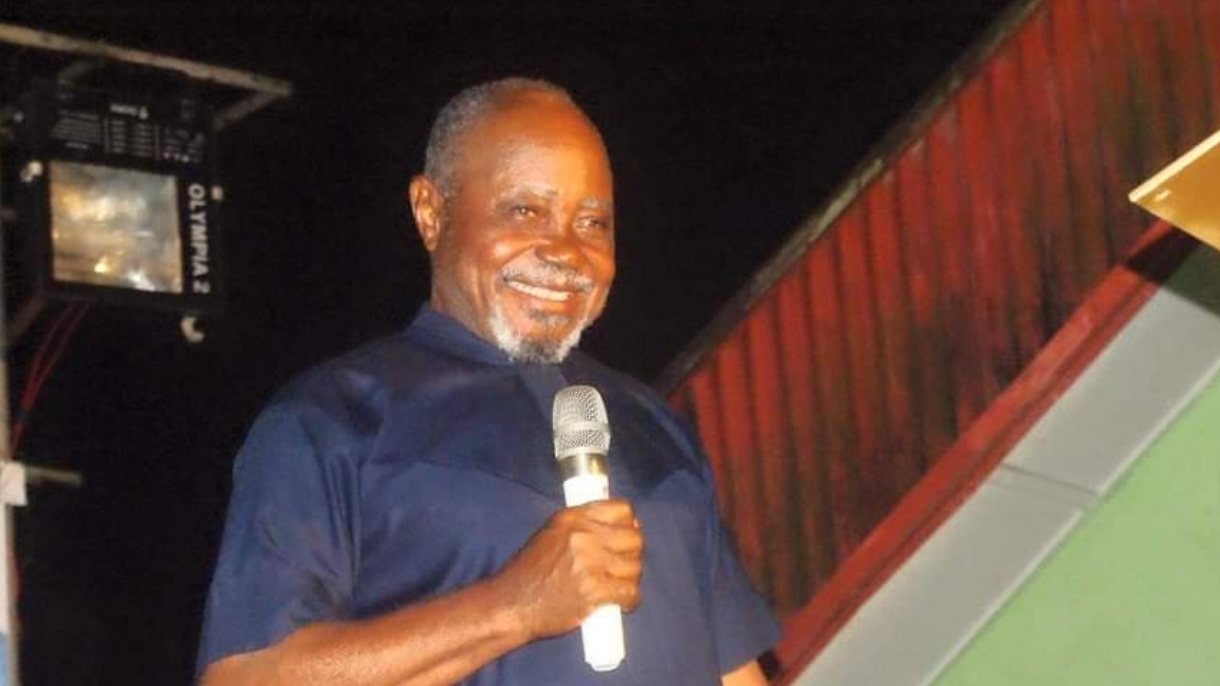
For decades, Roy De Nani has been a familiar face in Nollywood, a craftsman of his trade who built a career through grit, talent, and perseverance in one of Africa’s most competitive entertainment industries.
But behind the scenes, the veteran Nollywood actor has been carrying a weight that would crush most men: a career strangled by powerful enemies, a grief unsupported by colleagues, and the unimaginable agony of watching his own children die from a preventable cause.
In a rare and deeply candid appearance on the “Where Is the Lie” podcast, De Nani pulled back the curtain on a life marked by professional betrayal and devastating personal loss, painting a picture of an industry that, for all its glitz and growing global recognition, can be ruthlessly indifferent.
Perhaps the most explosive revelation from the interview was De Nani’s claim that he was, for a significant stretch of his career, effectively banned from working not through any formal process, but through the quiet, lethal power of a single individual’s word.
“A man gave an order that nobody should give Roy De Nani a job again,” the actor alleged, his words measured but unmistakably raw. “For years, even when I was already recording, a producer would come in and say, ‘No, cancel it. Stop.'”
The implications of that allegation are staggering. In an industry where livelihoods depend almost entirely on personal relationships, word of mouth, and the goodwill of producers and gatekeepers, an informal blacklisting of that nature can be more effective and far more difficult to challenge than any legal or contractual sanction.
De Nani has not publicly named the individual responsible, but his account describes a systematic effort to erase him from sets he had already secured, suggesting someone with both significant clout and a determined personal agenda against him.
For an actor of his standing to be intercepted mid-production, pulled from jobs he had already begun, speaks to the extraordinary, and often unchecked, power dynamics that govern Nollywood behind closed doors.
But professional sabotage, as crushing as it was, would not be the deepest wound De Nani would have to endure. When death came to his family, he found himself facing it without the community he had spent years working alongside.
The actor recalled the death of his brother, a full sibling, he emphasized, “from the same father,” and the silence that greeted it from his industry peers. “When he died, not a single actor or actress showed up,” he said.
In Nigerian culture, where communal mourning and solidarity in grief are deeply ingrained social expectations, the absence of even a token gesture of support from colleagues would have registered not merely as disappointment but as a profound and public humiliation.
For a man already navigating what appears to have been a period of professional isolation, the silence from Nollywood during that period of bereavement would have been deafening.
De Nani went on to reveal that he lost not one, but two of his children, a son and a daughter, both of whom lived with sickle cell disorder, a hereditary condition that affects millions across sub-Saharan Africa and demands consistent, costly medical management to keep patients alive.
The children needed regular blood transfusions. Their father could not afford them.
“I lost my son, I lost my daughter because they needed blood transfusions so they could continue living, but there was no money to buy the blood, and they died,” De Nani said.
For a man who had spent years giving Nigerian audiences some of their most memorable screen moments, the inability to afford basic medical care for his own children represents a catastrophic failure, not just of personal fortune, but of every system that should have caught him before he fell that far.
And once again, the industry was absent.
“Nollywood never came to assist me,” he said, though in a moment of striking grace, he stopped short of condemning his colleagues outright. “Not that they don’t care, but they have not been touched. Let it be said that way.”
Roy De Nani is not claiming that Nollywood is populated by wicked people. He is suggesting something more troubling: that empathy in the industry is conditional, transactional, and reserved for those whose suffering is visible enough, or proximate enough, to register.
His story raises urgent questions about the welfare structures or glaring lack thereof available to Nigerian actors, particularly those of older generations who built the industry from its early foundations but now find themselves without a safety net when hardship strikes.
There is no union with the teeth to protect its members from informal blacklisting. There is no welfare fund robust enough to ensure that a veteran actor’s children do not die from a lack of affordable blood.
Roy De Nani survived all of it: the sabotage, the grief, and the loss. He is speaking now, perhaps because silence has cost him enough already.
WHAT YOU SHOULD KNOW
Roy De Nani’s story is ultimately one of a talented man who failed because of the very industry he helped build. Blacklisted by a powerful figure, ignored in grief, and left so financially desperate that he could not afford the blood transfusions that would have kept his children alive, he faced it all without a single gesture of solidarity from Nollywood.