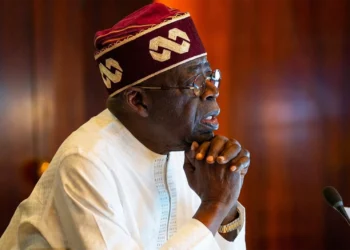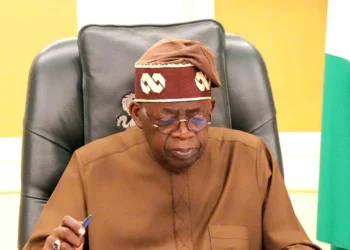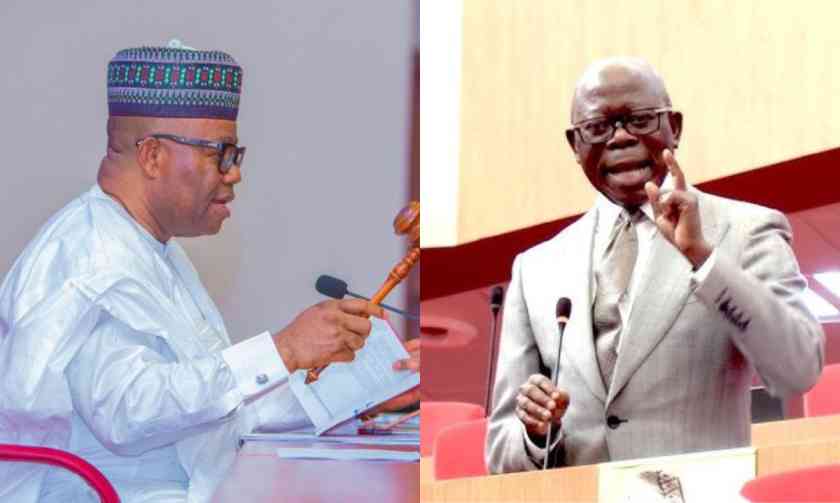
The Senate chamber on Wednesday witnessed a dramatic moment of tension as a heated confrontation broke out between Senate President Godswill Akpabio and Senator Adams Oshiomhole over the interpretation of newly amended standing rules.
The disagreement disrupted proceedings for more than 15 minutes and exposed growing tensions over recent changes to Senate regulations that could shape leadership contests in the 11th National Assembly.
The confrontation began when Akpabio commenced the reading of the Votes and Proceedings from Tuesday’s plenary session.
As the process was ongoing, Senator Oshiomhole, representing Edo North, raised a point of order.
Akpabio immediately interrupted him and reminded him that under the Senate Standing Order 2023 as amended, points of order are not entertained during the reading of Votes and Proceedings.
Despite the clarification, Oshiomhole persisted.
In response, Akpabio called on former Senate Chief Whip, Senator Orji Uzor Kalu, to explain the rules to the Edo lawmaker.
Kalu reaffirmed the Senate President’s position, stressing that no point of order could be raised at that stage of proceedings.
However, Oshiomhole continued to insist on being heard.
This prompted Senate Chief Whip, Senator Tahir Monguno, to issue a stern warning, cautioning that disciplinary powers could be invoked if the disruption continued.
He urged Oshiomhole to respect the rules and allow proceedings to continue.
As the exchange intensified, Akpabio delivered a sharp rebuke.
“We should not just go home, buy forms and come here without knowing the rules,” he said.
The Senate President then issued a direct warning to Oshiomhole.
“Oshiomhole, if you become unruly, we will use the rules to take you out of the Senate,” he declared.
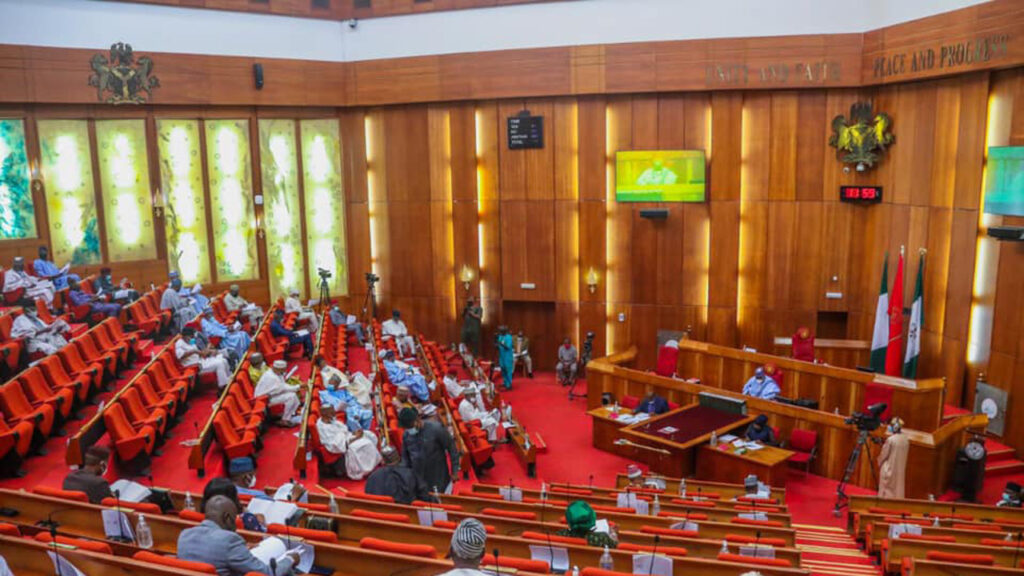
Following the tense exchange, Akpabio resumed the reading and eventually concluded the exercise.
The adoption of the Votes and Proceedings was subsequently moved by Senator Adamu Aliero and seconded by Senate Minority Leader, Senator Abba Moro.
Political observers believe Oshiomhole’s resistance may be connected to the controversial amendment of Senate rules passed during Tuesday’s plenary.
The amendment introduced stricter eligibility requirements for senators seeking principal and presiding positions in the 11th National Assembly.
Under the revised rules, only senators who have served two consecutive terms immediately preceding nomination will be eligible to contest for principal offices, including Senate President and Deputy Senate President.
The implication is that only senators currently serving in the 10th Senate who secure re-election into the 11th Assembly will qualify.
This effectively shuts out several prominent political figures expected to return to the Senate in 2027 but who were not members of both the 9th and 10th Assemblies.
Among those potentially affected are Senator Hope Uzodimma, former Senator Kabiru Marafa, and Senator Adams Oshiomhole himself.
The Senate reportedly reached the decision after a three-hour closed-door session on Tuesday.
The amendment specifically altered Orders 4 and 5 of the Senate Standing Rules.
Order 4 now prioritises eligibility based on ranking, beginning with former Senate Presidents and Deputy Senate Presidents, followed by former principal officers and senators with prior legislative experience.
Order 5 goes further by stipulating that no senator can contest for any principal office unless they have served at least two consecutive terms immediately before nomination.
Senate leadership has defended the amendment, saying it is designed to strengthen parliamentary tradition and ensure continuity in leadership.
Supporters argue that the changes will deepen institutional experience and preserve legislative stability.
Critics, however, view the amendment as a strategic move to limit competition and control succession ahead of 2027.
Wednesday’s clash highlights the growing controversy surrounding the rule changes and suggests that debate over the amendment is far from over.
What You Should Know
The Senate’s amended standing rules could significantly alter the political calculations ahead of the 2027 leadership contest in the National Assembly.
By restricting eligibility to senators who have served two consecutive terms, the amendment limits opportunities for returning political heavyweights and strengthens the position of current ranking lawmakers.
Critics see it as a move to predetermine future leadership outcomes, while supporters argue it aligns with parliamentary tradition.
The clash between Akpabio and Oshiomhole reflects broader tensions over power succession within the Senate and signals that the battle for the 11th Assembly’s top positions has already begun.