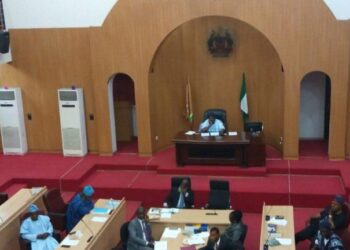
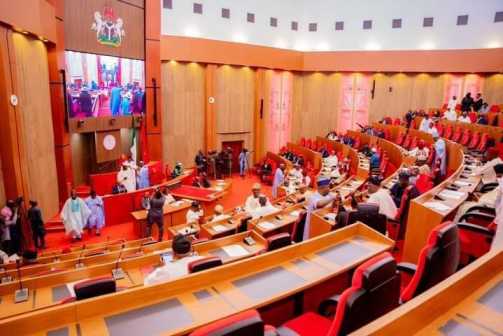
The House of Representatives witnessed a major political shift on Tuesday as no fewer than 17 lawmakers formally announced their defection from the African Democratic Congress (ADC) to the National Democratic Congress (NDC) during plenary.
The lawmakers, drawn from Kano, Anambra, Lagos, Edo, and Rivers states, submitted separate letters to the House, explaining that their decision was prompted by unresolved internal crises within the ADC stretching from the national leadership to grassroots party structures.
According to the defecting lawmakers, the persistent instability within the party had made it increasingly difficult for them to function effectively and deliver quality representation to their constituents.
Among those who announced their exit was Yusuf Umar Datti, representing Kura/Madobi/Garun Mallam Federal Constituency of Kano State.
In his letter, Datti stated that the prolonged internal wrangling within the ADC had created uncertainties that undermined political coordination and effective legislative engagement.
Similarly, Harris Okonkwo, who represents Idemili North/Idemili South Federal Constituency of Anambra State, said his decision followed extensive consultations with political stakeholders and constituents in his constituency.
He noted that the move was carefully considered and driven by the need to align with a more stable political platform.
Other lawmakers who defected from the ADC to the NDC include Sani Adamu (Minjibir/Ungogo, Kano), Thaddeus Attah (Eti-Osa, Lagos), Deputy Minority Whip George Ozodinobi (Njikoka/Anaocha/Dunukofia, Anambra), Lilian Obiageli (Awka North/Awka South, Anambra), and OluwaSeyi Sowunmi (Ojo, Lagos).
Also among the defectors are Peter Anekwe (Anambra East/West), Zakari Umar Mukhtari (Tarauni, Kano), George Olawande (Amuwo Odofin, Lagos), Murphy Osaro Omoruyi (Egor/Ikpoba-Okha, Edo), Umezuruike Manuchim (Port Harcourt I, Rivers), Emeka Idu (Onitsha North/South, Anambra), and Jesse Onuakalusi (Oshodi-Isolo, Lagos).
Others include Ifeanyi Uzokwe (Nnewi North/South/Ekwusigo, Anambra), Afam Ogene (Ogbaru, Anambra), and Kamilu Ado (Wudil/Garko, Kano).
In a separate development, Leke Abejide, representing Yagba Federal Constituency, also announced his departure from the ADC but chose to align with the ruling All Progressives Congress (APC).
The wave of defections triggered reactions within the chamber, with some lawmakers expressing concern over the increasing frequency of political realignments as preparations for the 2027 general elections intensify.
Several members observed that internal party crises remain one of the most consistent triggers for defections within Nigeria’s political space.
The Speaker of the House acknowledged all the letters and, in keeping with parliamentary tradition, wished the lawmakers success in their new political parties.
The development is expected to significantly reshape the political balance among minority parties in the lower legislative chamber, particularly weakening the ADC’s influence while boosting the growing profile of the NDC.
The mass movement also signals an emerging realignment that could have wider implications for coalition-building and opposition politics ahead of the next electoral cycle.
What You Should Know
The defection of 17 lawmakers from the ADC to the NDC represents one of the most significant political shifts in the House of Representatives in recent months.
The development strengthens the NDC’s growing influence following the recent entry of high-profile opposition figures into the party. It also further weakens the ADC, which has been battling internal crises and leadership disputes. Political defections often reshape legislative alliances, committee structures, and minority party influence within the National Assembly.
With 2027 approaching, these movements signal broader political repositioning as parties seek stronger platforms ahead of what is expected to be an intensely contested general election.