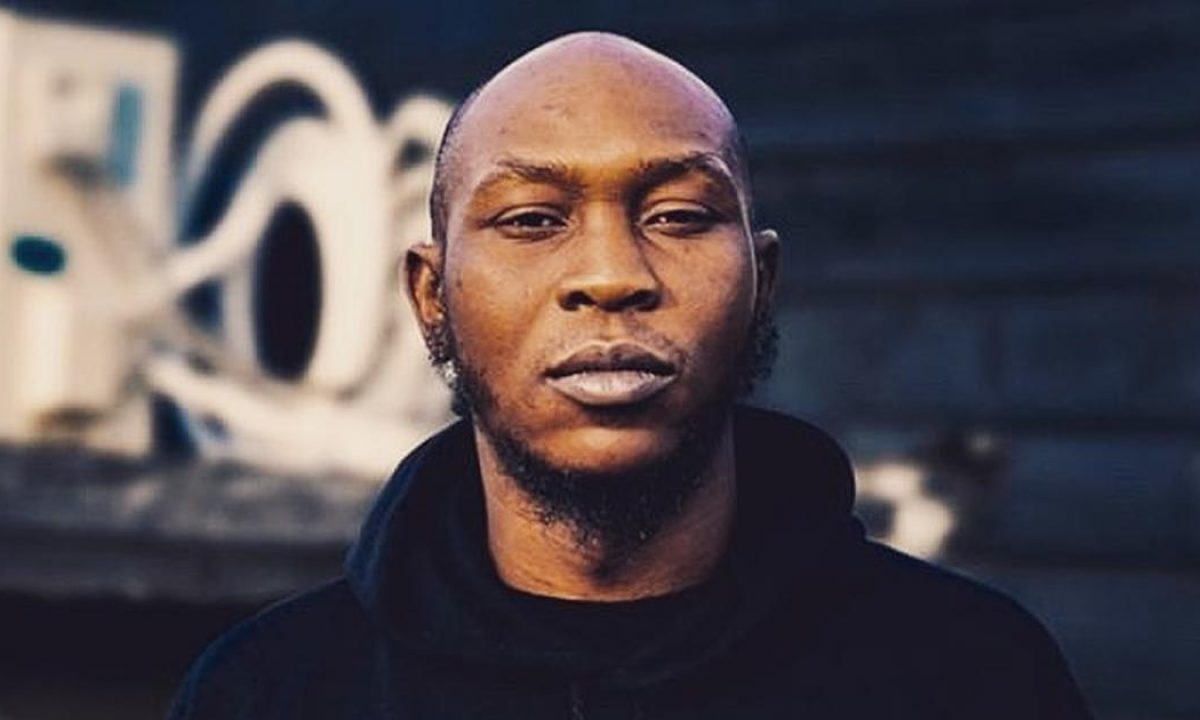
Grammy-nominated Afrobeat star Seun Kuti says he has been blacklisted in Nigeria’s music industry for 13 years, not for lack of talent, but because of deliberate political moves to silence dissenting voices.
Speaking during a recent episode of the Saleh Meditate podcast, the youngest son of legendary musician and activist Fela Anikulapo-Kuti did not mince words, painting a vivid and troubling picture of an industry he says has been quietly weaponized by the government against artists who dare to speak truth to power.
According to Kuti, his troubles with the Nigerian establishment trace their roots directly to his father’s towering legacy. Fela Anikulapo-Kuti, who died in 1997, spent decades using his Afrobeat music as a blunt instrument of political resistance, rattling successive Nigerian governments with songs that exposed corruption, military brutality, and systemic oppression.
“The impact of Fela and his contemporaries who spoke truth to power scared the government,” Kuti said during the podcast. “They made the government realize the power of artistry. So, the government invested more in artists who don’t make conscious music than in artists who sing about realities.”
The implication is both stark and deeply unsettling: that Nigerian authorities, acutely aware of music’s capacity to mobilize public opinion, made a calculated decision to starve politically conscious musicians of platforms, airplay, and institutional support while funneling resources and visibility toward artists whose work poses no ideological threat.
Kuti pinpoints the moment his blacklisting became most acute: a performance at an event organized by then-Lagos State Governor Akinwunmi Ambode. What was ostensibly a routine concert appearance, it seems, became a political flashpoint when Kuti delivered the kind of unvarnished, socially charged performance that has defined his career. The fallout, he says, was swift and lasting.
“I have been cancelled for about 13 years now after I performed conscious music at former Lagos State Governor Ambode’s event,” he said. “Even before then, my music was heavily restricted.”
The account raises serious questions about the relationship between state power and artistic freedom in Nigeria, a country that, despite producing some of the world’s most commercially successful musicians, has long struggled with issues of press freedom and political expression.
What makes Kuti’s story particularly compelling and perhaps frustrating for those who sought to silence him is that the blacklisting appears to have achieved very little in terms of blunting his global influence.
A Grammy nominee with a devoted international following built on the very Afrobeat tradition his father pioneered, Kuti says the Nigerian market, while symbolically significant, is far from the center of his commercial universe.
“People think I am not cancelled because I am doing well,” he said with characteristic directness. “Nigeria has cancelled me for a long time, but Nigeria is just like a really small percentage of my market. So, being cancelled doesn’t really affect me.”
He noted that artists who live in fear of being blacklisted do so precisely because, unlike him, they depend overwhelmingly on the Nigerian market for their livelihoods. For those artists, the cost of speaking out is not abstract; it is financial ruin, obscurity, and professional death.
He argued that government interference has significantly degraded the quality and social impact of modern Nigerian music production, in effect, a generation of commercially successful but politically neutered artists whose work, however melodically infectious, is stripped of the moral urgency that once made Nigerian music a force on the world stage.
Seun Kuti’s allegations arrive at a moment when Nigerian music, propelled by the global Afrobeats phenomenon, enjoys arguably its greatest international visibility in history. Yet beneath the glittering surface of chart-topping exports and stadium tours lies a tension that Kuti is now openly naming: between the music Nigeria sells to the world and the music it allows its own people to make freely.
Whether his claims prompt wider scrutiny of government-industry relations in Nigeria remains to be seen. What is beyond doubt is that Seun Kuti remains as unbothered and unbowed as the man who raised him, still performing, still agitating, and still, it seems, scaring the right people.
WHAT YOU SHOULD KNOW
Seun Kuti‘s story is ultimately one of artistic integrity versus political convenience. For over a decade, he said, he has been deliberately sidelined within Nigeria’s music industry not for a lack of talent but for refusing to be silent.