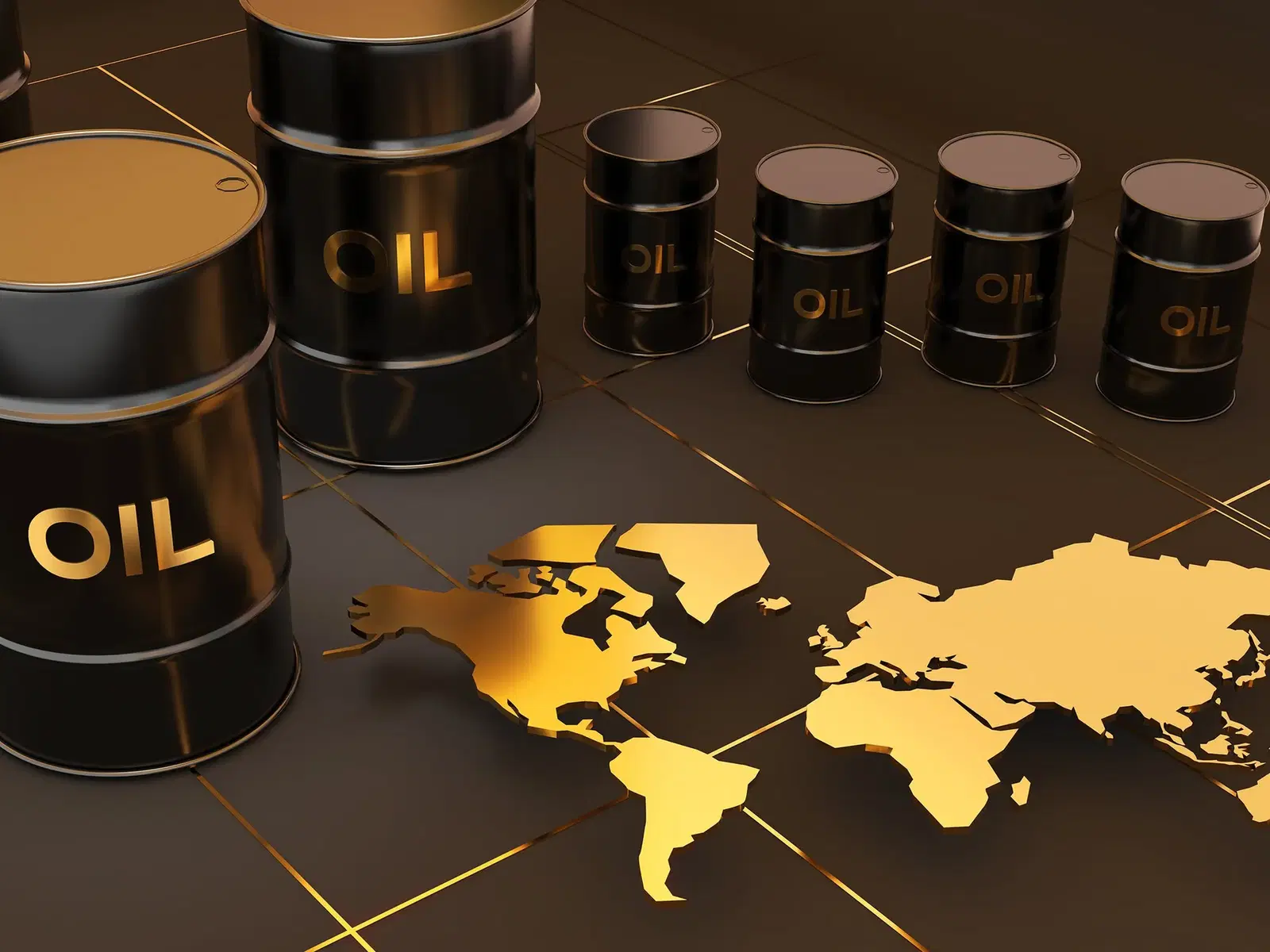
Oil markets stayed rattled on Tuesday, with Brent crude clinging to $114 despite a slight dip, as the U.S.-Iran military standoff showed no signs of easing.
Brent crude eased 93 cents, or 0.8%, to $113.51 per barrel by 07:19 GMT, a modest retreat after surging 5.8% in the previous session. U.S. West Texas Intermediate followed suit, slipping $2.16, or 2%, to $104.26, still elevated after Monday’s 4.4% gain.
The modest pullback offered little comfort to traders who have watched prices whipsaw violently in recent weeks as events in the Gulf have lurched from tense to explosive and back again with alarming speed.
At the heart of the crisis lies the Strait of Hormuz, a narrow waterway barely 33 kilometers wide at its most constricted point, yet responsible for carrying roughly 20% of the world’s daily oil and gas supply. Whoever controls it, in effect, holds a hand on the throat of the global economy.
The United States and Iran launched fresh attacks against each other’s naval and commercial interests in the Gulf, each side maneuvering for strategic dominance over the strait in what analysts are describing as dueling maritime blockades.
The confrontation shattered an already fragile truce and marked what military observers are calling the most serious escalation since a ceasefire was nominally declared four weeks ago.
Several commercial vessels were reportedly struck during Monday’s hostilities, sending alarm bells ringing across global shipping lanes. Most dramatically, a key oil port in the United Arab Emirates was set ablaze following an Iranian strike, images of the burning facility circulating across financial terminals and news networks, providing a visceral illustration of just how close the world’s energy infrastructure now sits to the front lines.
In a significant show of force, the United States on Monday launched what the Pentagon has dubbed “Project Freedom,” a naval operation designed to physically escort commercial vessels through the strait and restore freedom of navigation in defiance of Iranian interdiction efforts.
The operation yielded at least one early, if limited, result. Danish shipping giant Maersk confirmed that the Alliance Fairfax, a U.S.-flagged vehicle carrier, successfully exited the Gulf through the strait under U.S. military escort, a moment that briefly lifted market sentiment and gave the White House a symbolic win to tout.
“It shows that limited safe passage is possible under current conditions and helps chip away at some of the worst-case supply disruption fears,” said Tim Waterer, chief market analyst at KCM Trade.
That distinction matters enormously to energy markets. A single escorted transit, however choreographed, does nothing to resolve the underlying standoff. Insurers, shipowners, and cargo operators are not making routing decisions based on one successful passage under gunboat protection; they are watching the broader trajectory of a conflict that has, by every measure, continued to intensify rather than abate.
Market analysts were largely unmoved by the diplomatic and military theater unfolding at sea.
Priyanka Sachdeva, senior market analyst at Phillip Nova, offered a blunt assessment of the price dynamics at play. “Prices continue to trade in a highly volatile range, driven largely by ongoing tensions in the Strait of Hormuz,” she said. “While prices have eased slightly in recent sessions, this is not due to any real improvement in fundamentals but rather a temporary relief after the U.S. launched ‘Project Freedom.'”
Her remarks cut to the core of the market’s dilemma: the slight retreat in crude prices on Tuesday is not a signal that the crisis is resolving. It is a pause, a breath between punches in what remains a deeply unstable standoff.
Iran’s response to “Project Freedom” on Monday made that plain. Tehran launched counter-operations in the Gulf within hours of the U.S. announcement, signaling that it has no intention of ceding the strait without a fight and that Washington’s naval muscle-flexing carries a price.
In remarks that briefly soothed frayed nerves in trading rooms, President Donald Trump suggested overnight that the conflict could wind down within two to three weeks. Markets responded with a flicker of relief, but analysts at ING warned their clients not to read too much into the comment.
“Markets may find some relief today following President Trump’s overnight comments suggesting the conflict could continue for another two to three weeks,” ING analysts wrote in a note pointedly framing the optimism as a “may” rather than a certainty.
Their skepticism is well-founded. Since hostilities began, projected timelines for ending the conflict have been repeatedly extended. Each ceasefire has proven fragile, each de-escalation has been followed by fresh provocation, and each deadline has quietly dissolved into the next. Traders who built positions around earlier peace timelines have been badly burned.
“There is considerable skepticism in the market on this view, given the recent escalation and the repeated extensions of projected timelines,” the ING analysts added a diplomatic understatement for what, in trading floors from Singapore to London, amounts to widespread disbelief.
The stakes extend far beyond the price of a barrel of crude. Persistent disruption to Hormuz traffic threatens to cascade through the global economy in ways that dwarf the supply shocks of previous decades. Airlines, manufacturers, utilities, and consumers worldwide are already absorbing elevated energy costs.
A prolonged closure or even sustained uncertainty risks tipping fragile economies into recession and undermining the inflation progress that central banks have worked years to achieve.
For now, the market’s verdict is one of nervous watchfulness. Prices remain elevated. Volatility remains extreme. And the next development, whether a diplomatic breakthrough, a new Iranian strike, or another U.S. naval operation, could move crude by several dollars in either direction before the end of the trading day.
In the Strait of Hormuz, the world’s most important 33 kilometers of water, the battle for control is very far from over.
WHAT YOU SHOULD KNOW
The U.S.-Iran standoff over the Strait of Hormuz is keeping global oil markets on a knife-edge, with Brent crude hovering near $114 a barrel. While America’s “Project Freedom” naval operation secured one escorted vessel through the strait, analysts are clear that this is a symbolic gesture, not a solution.
Iran continues to strike back, commercial ships are under attack, and a UAE oil port has been set ablaze. President Trump’s suggestion of a two-to-three-week resolution is being met with widespread market scepticism, given how many previous timelines have collapsed.