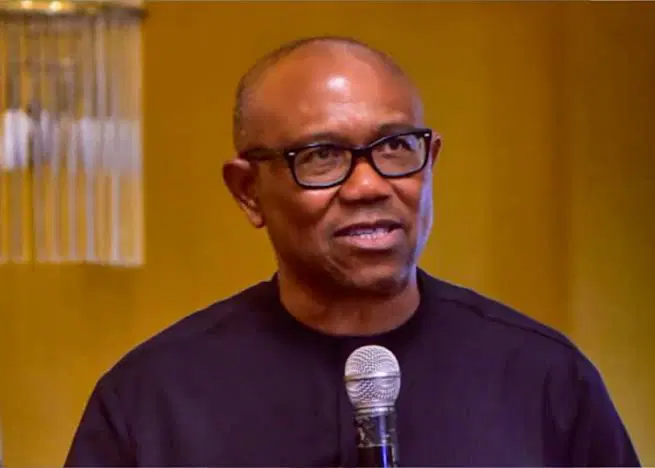
Former presidential candidate, Peter Obi, has explained the reasons behind his decision to leave the African Democratic Congress (ADC), citing internal crises, external interference, and what he described as Nigeria’s increasingly hostile political environment.
In a statement released on Sunday, Obi said the country’s political space has become deeply toxic, characterised by intimidation, insecurity, and sustained scrutiny that continues to frustrate genuine efforts aimed at national development and public service.
The former Anambra State governor clarified that his departure from the party was not due to any personal disagreement with key leaders of the ADC, including National Chairman David Mark and former Vice President Atiku Abubakar.
He noted that he still holds both men in high regard and maintains respect for their leadership.
According to Obi, his decision was influenced by familiar patterns of instability, which he said mirror the challenges he encountered during his time in the Labour Party.
He alleged that forces responsible for creating divisions within the Labour Party are beginning to infiltrate the ADC.
“The same Nigerian state and its agents that created unnecessary crises and hostility within the Labour Party that forced me to leave now appear to be finding their way into the ADC,” Obi stated.
He expressed concern over what he described as a political culture where values such as integrity, humility, and sincere service are often interpreted as weakness.

Obi lamented that individuals genuinely committed to reform and national progress frequently become targets of criticism, distortion, and deliberate misrepresentation.
He further observed that even within political parties where one contributes significantly, there is often a tendency for such individuals to be treated as outsiders and unfairly blamed for internal challenges beyond their control.
Despite his decision to withdraw from the ADC, Obi stressed that the move was primarily motivated by his desire to preserve peace within the party and avoid deepening existing tensions.
The former governor also reaffirmed that his political aspirations are not rooted in personal ambition or the pursuit of high office.
“I am not desperate to be President, Vice President, or Senate President. I am desperate to see a society that works for all,” he said.
Obi used the statement to highlight Nigeria’s pressing challenges, including insecurity, widespread poverty, and increasing displacement across several parts of the country.
He argued that addressing these issues requires leadership driven by compassion, fairness, justice, and equal opportunity for all citizens.
While acknowledging the difficulties facing the country, Obi maintained that Nigeria still possesses the capacity for transformation under responsible and visionary leadership.
“A new Nigeria is possible,” he said.
His exit from the ADC is expected to trigger fresh political conversations about opposition realignments ahead of the 2027 general elections, particularly as major political figures continue to reposition themselves across different platforms.
What You Should Know
Peter Obi’s exit from the ADC adds another layer to Nigeria’s shifting opposition politics ahead of 2027.
Having previously left the Labour Party amid internal disputes, his latest departure reinforces concerns about instability within opposition platforms. Obi’s statement suggests broader systemic pressures affecting party structures and political participation.
His continued emphasis on governance reform rather than office-seeking may shape his next political move.
Analysts believe his decision could influence ongoing coalition talks and further alter opposition calculations as parties seek credible structures capable of mounting a serious challenge in the next presidential election.