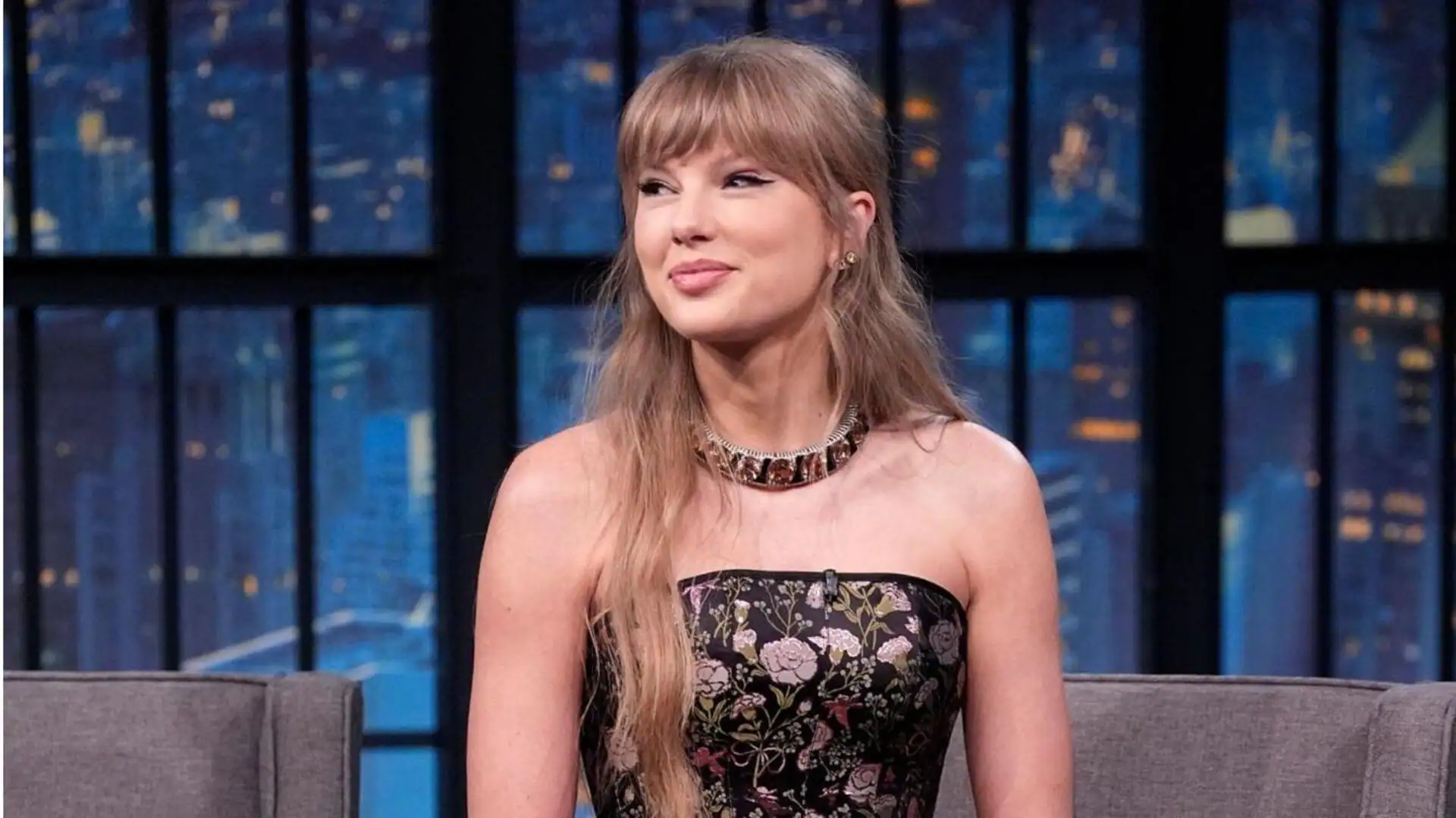
Global pop phenomenon Taylor Swift has launched a multi-pronged legal offensive to safeguard her identity in an era where artificial intelligence threatens to blur the line between reality and imitation.
Newly filed trademark documents reveal that Swift is seeking federal protection not just for her name or brand, but for the very sound of her voice and the visual trademark of her stage persona.
The filings, which fall under the rarely invoked “sound mark” category, target specific phrases intimately associated with Swift’s voice: “Hey, it’s Taylor Swift” and “Hey, it’s Taylor.”
For the uninitiated, sound marks are an exceptional class of trademark protection, historically reserved for the most distinctive audio identifiers in commerce; think the roar of the MGM lion or the three-toned NBC chime. That Swift is now seeking refuge under this legal umbrella speaks volumes about how seriously her team is taking the AI threat.
“This is uncharted territory for celebrity identity law,” one intellectual property attorney familiar with such filings might well observe. “Securing a sound mark tied to a real person’s voice is not just protective — it’s strategic. It gives her legal ammunition in court that most public figures simply don’t have.”
The timing of Swift’s filings is no accident. Over the past two years, the entertainment landscape has been rocked by a surge in AI-generated deepfakes and synthetic audio capable of replicating the voices and likenesses of public figures with frightening precision, often without the subject’s knowledge, let alone their consent.
Swift herself has been among the most targeted celebrities, having previously been the subject of widely circulated AI-generated explicit imagery that prompted widespread public outcry and calls for urgent legislation.
By anchoring her legal protections to federally registered trademarks, Swift’s legal team appears to be constructing a more durable shield than existing publicity rights or defamation law alone can offer.
Should an AI platform, content creator, or commercial entity deploy a synthetic voice indistinguishable from her own using those trademarked phrases, Swift would now have a considerably stronger standing to pursue legal action and potentially significant damages.
Beyond her voice, Swift is also moving to lock down a highly recognizable piece of her visual identity: a striking performance outfit comprising a multicolored bodysuit, boots, and a signature pink guitar, an ensemble etched into the memories of millions of fans from her record-shattering Eras Tour performances.
The decision to trademark a specific visual look is a calculated one. With AI image generation tools now capable of producing photorealistic renderings of real people in any setting, the commercial exploitation of a celebrity’s likeness, from unlicensed merchandise to sponsored content, has never been easier or more difficult to police.
By registering the outfit as protectable intellectual property, Swift’s legal team could move to shut down AI-generated imagery or physical replicas that trade on her stage persona for commercial gain.
Taylor Swift is not alone in sounding the alarm. Hollywood veteran Matthew McConaughey has reportedly filed for comparable protections covering his own voice and likeness, suggesting that a quiet but determined movement is taking shape among A-list entertainers who can see the writing on the wall.
The broader entertainment industry, from record labels to film studios to talent agencies, is watching these developments with acute interest. For decades, the legal frameworks governing celebrity identity were largely sufficient.
Publicity rights, copyright protections, and carefully drafted contracts kept the ecosystem in relative balance. But the arrival of generative AI has fundamentally disrupted that equilibrium, creating a technological reality that the law is still scrambling to catch up with.
Swift’s filings arrive at a pivotal moment for both the entertainment world and policymakers. Legislators in the United States have been grappling with how to construct a legal framework capable of governing AI-generated likenesses, with several states already advancing their own statutes. At the federal level, however, comprehensive legislation remains a work in progress.
In that legislative vacuum, celebrities with the resources and legal firepower to pursue trademark protections are effectively writing the playbook themselves — and Taylor Swift, ever the strategist, appears determined to be ahead of the curve rather than react to it.
What is clear is this: the age of AI has forced a reckoning over who owns an identity, what constitutes imitation, and where the law must draw the line. Taylor Swift, with her pen, or rather, her attorney’s filing stamp, is drawing that line herself, and an entire industry is watching closely to see how it holds.
WHAT YOU SHOULD KNOW
Taylor Swift’s move to trademark her voice and stage likeness is more than a celebrity protecting her brand; it is a defining moment in the fight against AI-generated identity theft.
As deepfake technology grows increasingly sophisticated, the legal frameworks that once protected public figures are no longer enough. Swift’s filings signal a critical shift: celebrities are no longer waiting for governments to act; they are taking matters into their own hands.