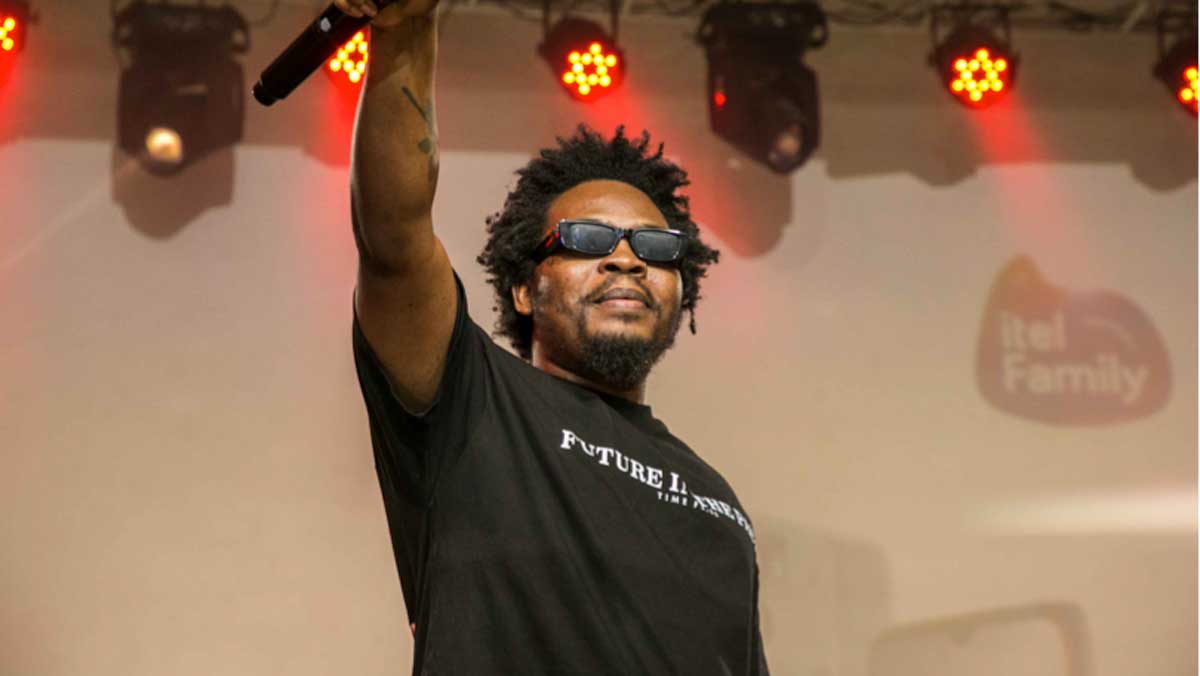
In a rare candid interview with YouTuber Korty EO, Nigerian rapper Olamide Gbenga Adedeji, popularly known as Baddo, opened up about the psychological toll that years of dangerous live performances have taken on him.
“I get nervous every time I go on the stage. I have had too many crazy experiences while performing. Someone from nowhere will just come and grab your chain or your hat; you don’t even know what to expect,” the rapper revealed, his words carrying the unmistakable weight of a man who has seen far too much happen in spaces that are supposed to celebrate his artistry.
For over a decade, Olamide has been a dominant force on Nigerian stages, headlining some of the country’s most prestigious concerts and festivals. His electrifying performances, raw energy, and deep connection with street audiences have cemented his reputation as one of the most compelling live acts in Afrobeats and hip-hop. Yet, it is precisely that intimate, unfiltered connection with crowds that has also made him vulnerable.
The rapper recounted multiple harrowing incidents in which audience members breached the stage and physically accosted him mid-performance—snatching his chain, grabbing his hat, and encroaching on his personal space in ways that left him shaken.
These were not isolated mishaps, but recurring episodes that have collectively embedded a sense of dread in what should be his moment of triumph.
Security experts and entertainment industry insiders have long flagged the inadequacy of crowd control measures at many Nigerian concert venues, particularly in the earlier years of Olamide’s career when large-scale live event infrastructure was still developing.
For an artist of his stature, the expectation of safety on stage is a basic professional right, one that, by his own account, has frequently been violated.
What Olamide is describing aligns closely with what mental health professionals refer to as performance anxiety compounded by trauma. Unlike conventional stage fright, which is typically rooted in fear of judgment or failure, his nervousness appears to stem from a conditioned fear response born out of real, physical threat.
The fact that he continues to perform despite this anxiety speaks volumes about his professionalism and dedication to his craft and to his fans. But it also raises important questions about the duty of care that concert promoters, venue managers, and the broader Nigerian entertainment industry owe to its artists.
Olamide’s revelation is not merely a personal confession; it is an inadvertent indictment of systemic gaps in how live performances are managed across Nigeria.
While the country’s music industry has experienced explosive global growth in recent years, with Nigerian artists now commanding stages from London to Los Angeles, the domestic live event ecosystem has struggled to keep pace in terms of safety standards and artist welfare.
Olamide remains, by every measure, a giant of Nigerian music. But even giants, it turns out, carry wounds. And in sharing his, Baddo has done something quietly courageous—he has reminded an entire industry that the human being behind the microphone matters just as much as the music he makes.
WHAT YOU SHOULD KNOW
Despite being one of Nigeria’s greatest rap icons, Olamide’s candid revelation about his stage fright exposes a critical and often overlooked issue within the Nigerian entertainment industry: the safety and mental well-being of its artists.
His anxiety is not born out of self-doubt but out of real, repeated physical violations he has endured on stage.