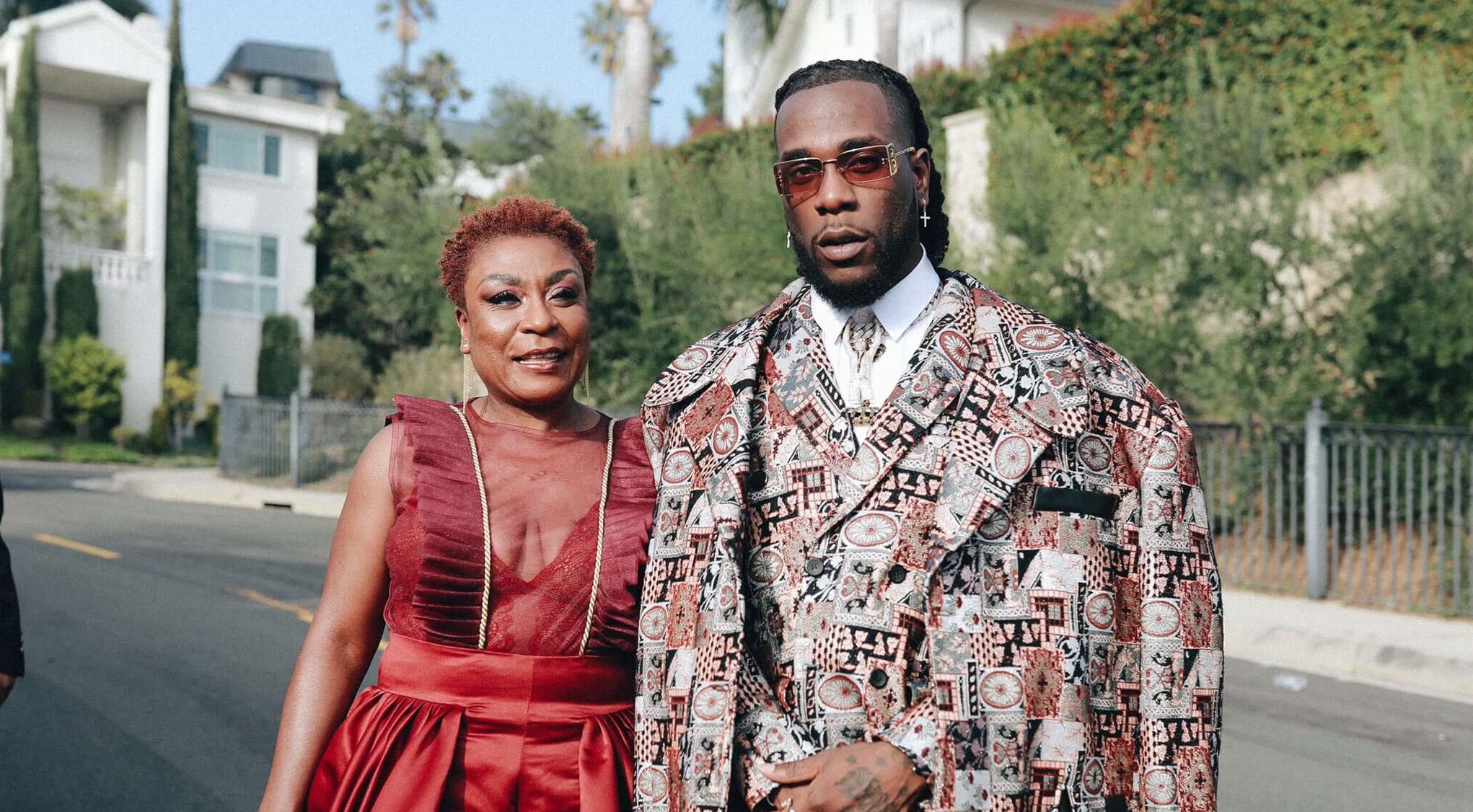
Bose Ogulu, mother and manager of Burna Boy, has unapologetically embraced the “arrogance” label critics have pinned on her son, and she has absolutely no regrets about it.
The saga began when Burna Boy, born Damini Ebunoluwa Ogulu, was involved in a widely condemned physical altercation with DJ Tunez, a close associate and disc jockey to fellow music heavyweight Wizkid, at a Lagos nightclub.
The incident, which sent shockwaves across Nigerian social media, quickly escalated beyond the walls of the club, igniting a very public war of words between two of Africa’s biggest music exports, Burna Boy and Wizkid, and reigniting long-standing questions about the volatile temperament of the self-styled “African Giant.”
The fallout was swift and severe. Nigerians took to X, formerly Twitter, Instagram, and other platforms in droves, lambasting Burna Boy for what many described as a recurring pattern of aggressive behavior.
Fans and observers alike questioned how a man who has carried the African continent’s flag on global stages could repeatedly resort to physical confrontation, with many expressing disappointment that the talent of his caliber continues to be overshadowed by controversy.
It was against this charged backdrop that Bose Ogulu chose to speak, and she did so without flinching.
In a sit-down interview with veteran broadcaster Ebuka Obi-Uchendu on Channels Television, the seasoned entertainment executive was asked directly whether she was troubled by the growing public perception of both her son and herself as arrogant. Her answer was unequivocal.
“I don’t mind, honestly. I don’t mind at all,” she told a visibly attentive Ebuka. “I mean, any adjective they want to attach to you is okay. The thing is, who are you?”
She continued with the kind of measured conviction that has characterized her stewardship of the Burna Boy brand for years. “If knowing your worth and carrying yourself as such is arrogant, then it is a good thing. And I can’t apologize for that.”
What followed was perhaps the most revealing and nuanced portion of her remarks, one that cast her defense not merely as a mother’s instinct but as a philosophical stance rooted in identity, race, and gender. Ogulu drew a direct line between the pressure to be “arrogant” and the systemic expectations placed on people like her and her son from birth.
“I think we were born into a world where we were expected to put our heads down,” she said pointedly. “First is the color of your skin, the color of your passport, and for me, my gender. So I don’t understand the concept of that life.”
She concluded with a challenge to her detractors, “I understand that if I know something, I know it, and I expect you to realize that I know it. And if you don’t realize that I know it, put me to the test.”
The remarks have since sparked yet another wave of debate online, with Nigerians split sharply down the middle. Supporters of the Ogulu camp praised Bose for her composure and intellectual clarity, arguing that Black excellence has historically been weaponized as arrogance by those uncomfortable with unapologetic success.
Critics, however, maintained that self-confidence and physical aggression are two very different things and that conflating the two does a disservice to the conversation.
For many industry watchers, Bose Ogulu’s intervention raises a deeper question: at what point does defending a brand become enabling a pattern? The music executive, who has been widely credited with architecting Burna Boy’s remarkable rise from Port Harcourt to Port Authority, from the streets of Nigeria to the stages of Madison Square Garden and Glastonbury. has always been an assertive presence in her son’s career.
Yet even admirers of her business acumen are now asking whether a more candid internal reckoning is overdue.
What is clear, however, is that the conversation about Burna Boy, his genius, his temper, his legacy, and now his mother’s defiant defense, is far from over.
The African giant remains polarizing. And apparently, his family would not have it any other way.
WHAT YOU SHOULD KNOW
Burna Boy’s mother, Bose Ogulu, has unapologetically defended her son against widespread accusations of arrogance following his physical altercation with Wizkid’s DJ Tunez at a Lagos club.
Rather than distancing herself from the “arrogant” label, she owned it, framing self-worth and confidence as virtues, not flaws, particularly for Black individuals navigating a world historically designed to keep them subdued.