The Minister of Power, Chief Adebayo Adelabu, is preparing to step down from his position after receiving the approval of President Bola Ahmed Tinubu to pursue his governorship ambition in Oyo State.
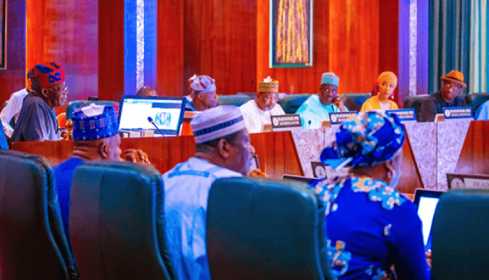
According to reports, the decision followed a meeting held on Tuesday at the Presidential Villa in Abuja, where Adelabu briefed the president on his performance in the power sector over the past two and a half years.

In a statement issued by his Special Adviser on Strategic Communications and Media Relations, Bolaji Tunji, it was revealed that a key highlight of the meeting was the presentation of the National Integrated Electricity Policy alongside its Strategic Implementation Plan.
During the engagement, the minister outlined notable achievements recorded during his tenure, including efforts aimed at stabilising electricity generation, improving transmission infrastructure, and implementing reforms designed to boost efficiency and service delivery across the power sector value chain.
The statement confirmed that Adelabu’s resignation is imminent.
“In view of this development, Chief Adebayo Adelabu is expected to resign his position as Minister of Power in the coming days.”
It further explained that the timing of his expected exit is intended to allow continuity in ongoing reforms within the sector.
“The timing of his anticipated resignation reflects his commitment to addressing key sectoral challenges and ensuring continuity in ongoing reforms prior to exiting office. Notably, this includes efforts to stabilise the sector following recent declines in power generation due to gas supply constraints to power plants, ongoing pipeline repairs, and outstanding obligations to gas suppliers, as well as the need to secure the President’s approval for his intended resignation and gubernatorial aspiration in Oyo State,” Tunji said.
It will be recalled that the president had earlier directed all political appointees seeking elective offices to resign on or before March 31.
The statement also reiterated that during the meeting, Adelabu presented a detailed account of his stewardship in office.
“During the meeting, the minister outlined key milestones recorded under his leadership, including efforts to stabilise electricity generation, strengthen transmission capacity, and implement reforms aimed at enhancing efficiency and service delivery across the power sector value chain,” it stated.
Additionally, the minister presented the National Integrated Electricity Policy and its Strategic Implementation Plan, as well as the Medium-Long Term Integrated Resource Plan for the Power Sector, designed to ensure sustainability and continuity.
Providing insight into the policy framework, the statement explained, “The NIEP is a comprehensive policy framework designed to guide the sustainable development of Nigeria’s electricity sector. It provides a long-term roadmap for achieving energy security, expanding electricity access, integrating renewable energy, and building a more resilient and efficient power sector.”
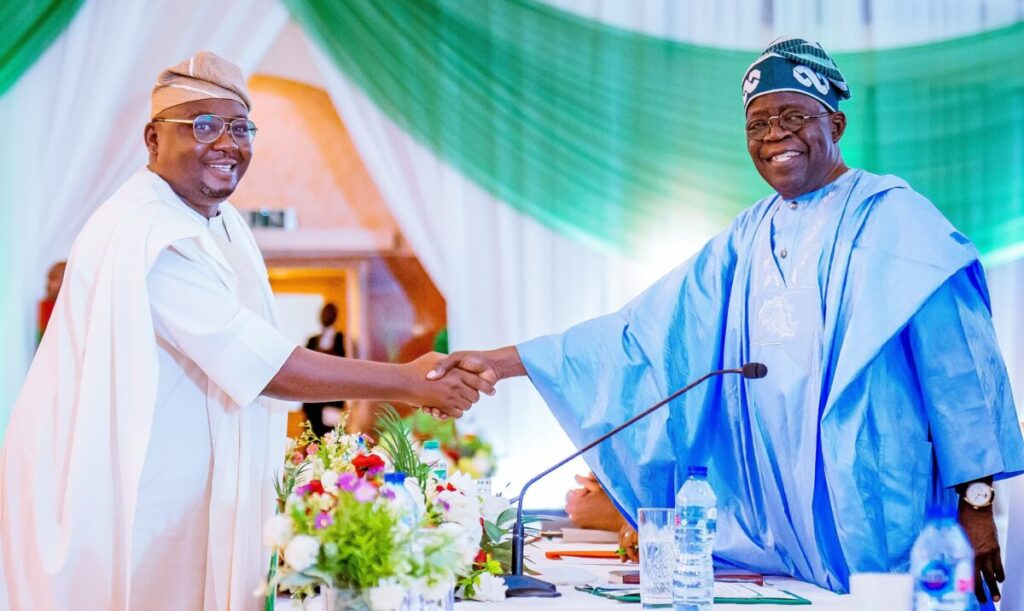
President Tinubu, according to the statement, praised the minister for his contributions and progress made in the sector.
“President Tinubu commended the minister for his dedication and the progress recorded, particularly in laying a strong policy foundation for the transformation of the power sector. The President also granted his consent and blessing for the minister to pursue his governorship ambition,” Tunji explained.
The minister also expressed gratitude to the president for his support, reaffirming his commitment to advancing Nigeria’s power sector and contributing to national development even as he prepares to exit office.
What you should know
Adebayo Adelabu’s planned resignation highlights a transition from executive governance to electoral politics, following President Tinubu’s approval for his Oyo State governorship ambition.
His exit comes amid ongoing reforms in Nigeria’s power sector, including efforts to stabilise electricity generation and improve infrastructure. The presentation of the National Integrated Electricity Policy underscores a long-term strategy for energy security and sector efficiency.
However, his resignation aligns with the administration’s directive requiring political appointees seeking elective office to step down, reflecting a broader push for accountability and proper political engagement ahead of future elections.