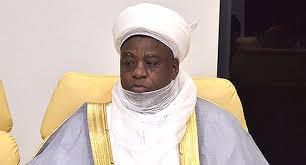
The Muhammad Sa’ad Abubakar, who also serves as President-General of the Nigerian Supreme Council for Islamic Affairs, has called on Muslims across Nigeria to begin the search for the Shawwal crescent, marking the end of Ramadan 1447AH and the approach of Eid celebrations.
In a statement issued by the Sultanate Council Sokoto and signed by its Wazirin Sokoto, Sambo Wali Junaidu, Wednesday, March 18, 2026—corresponding to the 29th day of Ramadan—has been designated for the nationwide moon sighting.
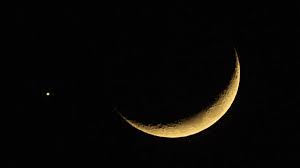
The Sultan urged Muslims to observe the sky for the new crescent on that day and report any credible sighting through recognised traditional and official channels.
According to the directive, individuals who sight the moon are expected to notify their nearest district or village head, who will then relay the information to the Sultan for confirmation and formal declaration.
To improve coordination and ensure accuracy in the process, the Sultanate Council also provided dedicated telephone lines for direct reporting of verified sightings.
This announcement aligns with the long-standing Islamic tradition where the sighting of the Shawwal crescent determines the conclusion of Ramadan fasting and the commencement of Eid al-Fitr, one of the most significant religious celebrations observed by Muslims.
What you should know
The sighting of the Shawwal moon is a key religious practice that determines the end of Ramadan and the beginning of Eid al-Fitr.
In Nigeria, the Sultan of Sokoto plays a central role in officially confirming the sighting, ensuring a unified celebration across the country. While astronomical calculations can predict the moon’s appearance, physical sighting remains the widely accepted method in many Islamic communities.
This process promotes religious unity and marks a joyful transition from fasting to celebration among millions of Muslims nationwide.