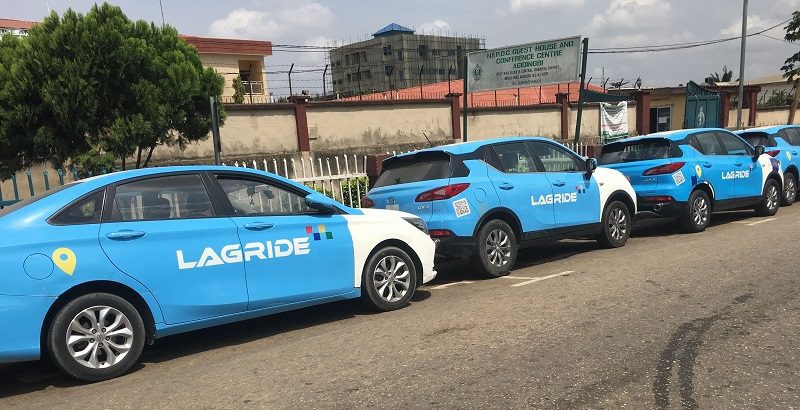
Ride-hailing platform Lagride has taken a significant step in deepening asset ownership among its drivers with the deployment of a new batch of vehicles in Lagos under its Drive-To-Own programme.
At a vehicle handover ceremony held in Lagos on Tuesday, the company reaffirmed its ambition to roll out a total of 3,500 vehicles under the scheme, positioning the initiative as a structured pathway for drivers—known on the platform as captains—to transition from rental arrangements to full vehicle ownership.
The programme is backed by a $100 million financing facility from United Bank for Africa, secured in December last year. The funding is designed to scale the Drive-To-Own model and reduce drivers’ dependence on informal lending structures or high-cost lease agreements that often erode earnings.
Unlike conventional vehicle financing schemes, Lagride’s model relies heavily on data-driven performance assessment. Drivers are evaluated using measurable criteria such as service quality, safety records, regulatory compliance, ride completion rates, customer feedback, and overall operational discipline on the platform. According to the company, a prior rental period serves as a performance track record, providing verifiable data that de-risks financing decisions for both the firm and its banking partner.
Lagride’s Executive Director, Mildred Ekanem, described the programme as a “credible ownership engine” designed not only to improve service standards but also to broaden economic opportunities for drivers over time.
“With UBA as a key partner and a strong financial backbone behind the programme, we are building a credible ownership engine that strengthens service quality and expands opportunity for captains over time. Our ambition is clear: scale responsibly and reach a deployment target of 3,500 vehicles as the programme grows,” she said.
Also speaking at the event, Babatunde Ajayi, Head of Business Banking at UBA, said the $100 million facility underscores the bank’s confidence in a financing framework anchored on performance data, governance, and a structured pathway to asset acquisition.
“This programme reflects what banking should be in the modern African economy: practical, inclusive, responsible, and forward-looking,” Ajayi stated.
Lagride Chairman, Chief Diana Chen, framed the initiative as a long-term economic empowerment strategy rather than a mere fleet expansion drive. She said the ultimate objective is to move drivers up the economic value chain—enabling them to own productive assets, potentially manage multiple vehicles, and build sustainable financial futures.
Industry analysts note that the Drive-To-Own model could reshape the economics of ride-hailing in Lagos by aligning driver incentives with asset accumulation and service quality. By embedding governance and performance metrics into financing decisions, the programme seeks to balance growth with accountability in a sector often challenged by income volatility and asset access constraints.
With the fresh vehicle deployment now underway, Lagride appears poised to test the scalability of a model that blends fintech-driven performance tracking with traditional bank financing—an approach that could redefine mobility entrepreneurship in Nigeria’s commercial capital.
WHAT YOU SHOULD KNOW
Lagride’s deployment of new vehicles under its Drive-To-Own scheme, backed by a $100 million facility from United Bank for Africa, marks a decisive shift toward data-driven vehicle ownership for drivers—linking performance to asset acquisition and aiming to scale 3,500 cars while expanding sustainable economic opportunities in Lagos’ ride-hailing sector.