Human rights activist Aisha Yesufu has restated her demand for the compulsory inclusion of real-time electronic transmission of election results, while raising concerns over the deployment of soldiers to protests at the National Assembly in Abuja.
Yesufu spoke on Tuesday at the protest venue in the federal capital, where demonstrators converged under the “Occupy National Assembly” campaign to oppose the Senate’s decision to reject a clause that would have made real-time electronic transmission of election results mandatory.

“All we are asking for is real-time electronic transmission of the electoral results. We are here, and we are waiting for the lawmakers we sent to Abuja to pass the bill the way it should be passed. All citizens are asking for is electronic transmission, real-time. I do not see any reason why that is a problem,” Yesufu said.
She also condemned the presence of soldiers at the protest ground, insisting that deploying the military against peaceful demonstrators violated constitutional provisions.
“To every soldier that you brought here, know that you are here unconstitutionally because your job description does not include being here against protesters. Before you pull that trigger or throw that canister, ask yourself: Is it constitutional or unconstitutional?” she said.
The activist further drew attention to ongoing security challenges in parts of the country, questioning the decision to deploy troops to the protest instead of areas under threat from violent attacks.
“There are soldiers that should be in Kwara defending the people, yet they are here. Terrorists threatened citizens yesterday. The last time they did, over 200 people were killed. They operated from sunset to sunrise,” she said.
Meanwhile, operatives of the Nigeria Police Force barricaded major access roads leading to the National Assembly complex ahead of the emergency plenary session scheduled for Tuesday.
The protest, which began on Monday, is being led by Yesufu alongside several civil society organisations pressing for a reversal of the Senate’s stance on the Electoral Act amendment.

Former Rivers State Governor and ex-Minister of Transportation, Rotimi Amaechi, also joined the protest on Tuesday, attending with his son. Amaechi accused the ruling All Progressives Congress of opposing electronic transmission of results out of fear of electoral defeat and called on opposition parties, including the Peoples Democratic Party and the African Democratic Congress, to participate in the demonstration.
He maintained that opposition groups and civil society organisations would continue to apply pressure until the Senate reverses its position, regardless of resistance from political leaders.
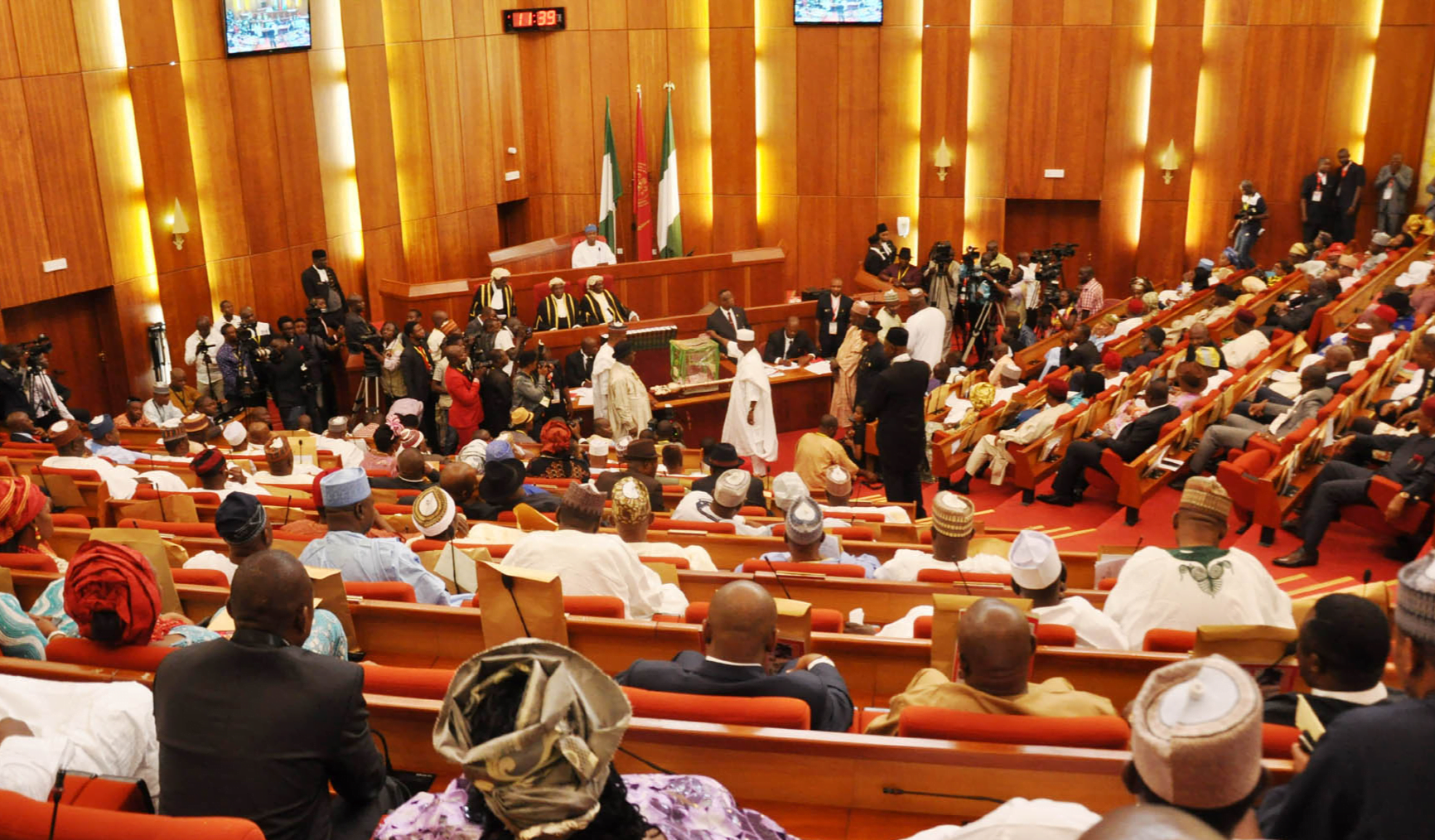
The demonstrations followed the Senate’s decision to retain Clause 60(3) of the Electoral Act 2022 Amendment Bill, which empowers the Independent National Electoral Commission to transmit election results “as it prescribes,” rather than compelling real-time transmission to the IREV portal.
Lawmakers also rejected proposals seeking a 10-year ban on vote-buying, opting instead to retain existing fines and prison terms.
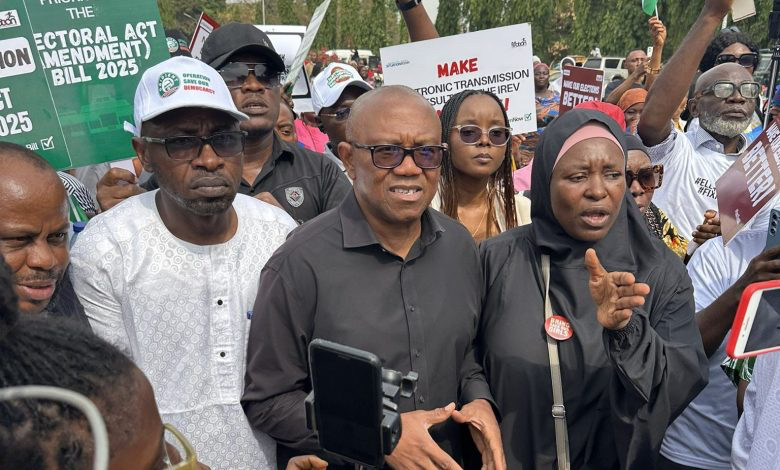
The Senate’s action triggered widespread criticism, with opposition figures and former Labour Party presidential candidate, Peter Obi, calling for compulsory real-time electronic transmission as a safeguard against election manipulation.
In response, Senate President Godswill Akpabio clarified that the Senate did not abolish electronic transmission of results, but removed the phrase “real-time” to prevent possible legal disputes arising from network failures and to grant INEC operational flexibility.
Other lawmakers, including Senator Victor Umeh, argued that the controversy was largely due to wording changes during plenary and insisted that the bill still enjoys significant support within the Red Chamber.
What you should know
The debate over electronic transmission of election results has become a central issue ahead of the 2027 general elections, reflecting deep public mistrust of past electoral processes.
Civil society groups argue that real-time transmission from polling units would reduce manipulation at collation centres, while lawmakers cite infrastructure and network challenges.
The protests at the National Assembly highlight growing citizen engagement in electoral reforms and renewed scrutiny of the legislature’s role in shaping credible elections in Nigeria.