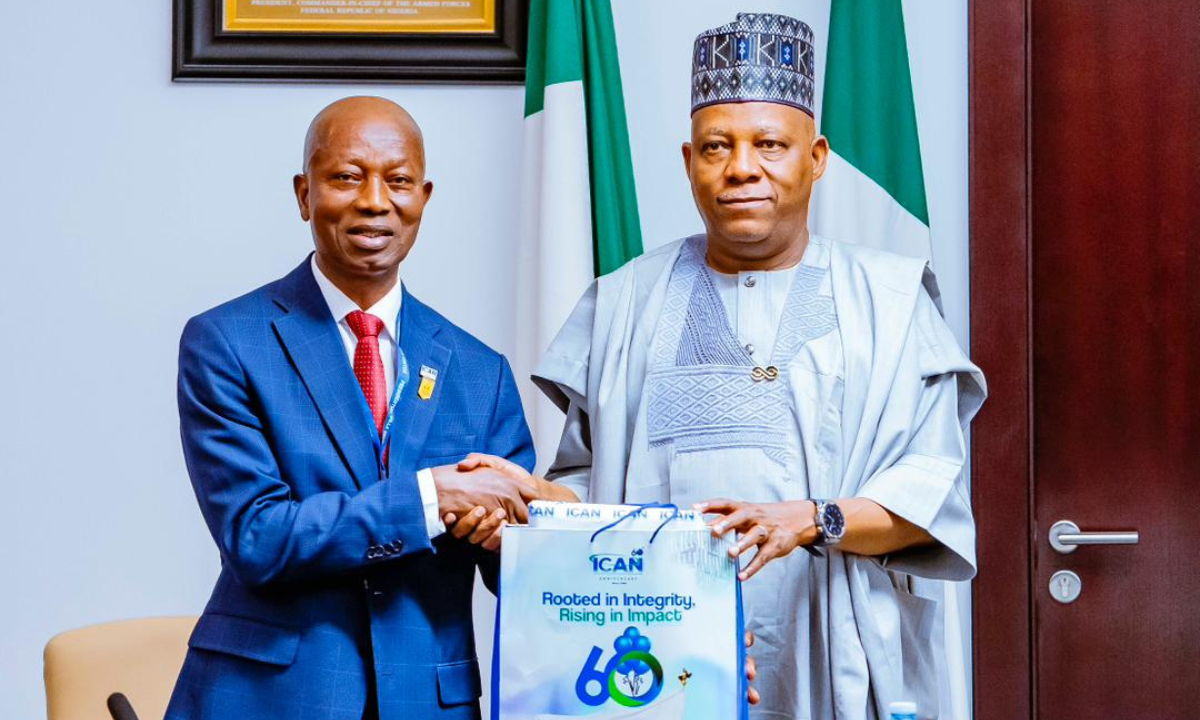
The Federal Government on Monday officially commenced a free nationwide financial inclusion and literacy training programme targeting 10 million Nigerians across the country.
The initiative comes as Vice President Senator Kashim Shettima stressed that Nigeria can only fully harness its demographic dividend if young people and women are equipped with the right skills and ethical foundation required to thrive in a rapidly expanding digital economy.

The training programme, being implemented by the Office of the Vice President through the Presidential Committee on Economic & Financial Inclusion (PreCEFI), which the Vice President chairs, is structured to provide Nigerians—especially women and youths—with core financial knowledge, investment awareness, and digital skills aimed at sustainable wealth creation.
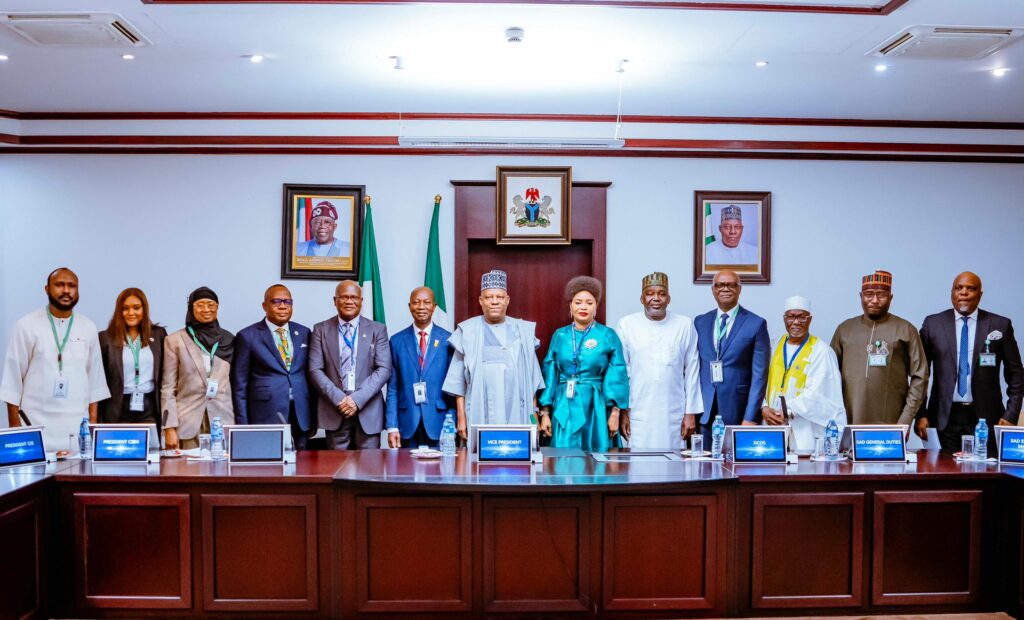
As part of the programme, the Office of the Vice President, through PreCEFI, signed a Memorandum of Understanding (MoU) with six leading professional bodies to collaboratively design training modules, certification pathways, digital skills programmes, and mentorship frameworks to strengthen Nigeria’s financial and entrepreneurial workforce.
The professional bodies involved are the Institute of Chartered Accountants of Nigeria (ICAN), Chartered Institute of Bankers of Nigeria (CIBN), Chartered Institute of Stockbrokers (CIS), National Institute of Credit Administration (NICA), Chartered Risk Management Institute (CRMI), and the Nigeria Institute of Innovation and Entrepreneurship (NIIE).
Speaking at the Presidential Villa in Abuja while flagging off the programme on behalf of President Bola Ahmed Tinubu, Vice President Shettima said the MoU represented far more than a ceremonial agreement.
“It is a strategic national investment in capacity as infrastructure, which is the human, institutional, and ethical foundations upon which inclusive growth must rest,” he said.
The Vice President explained that the Aso Accord on Economic and Financial Inclusion, which PreCEFI is tasked with implementing, recognises that “financial inclusion is not achieved by access alone, but by competence, trust, and capability.”
According to him, Nigeria “cannot build a one-trillion-dollar economy on weak skills, fragmented standards, or disconnected professional ecosystems.”

He noted that the MoU establishes a functional framework to pool the collective expertise of ICAN, CIBN, CIS, CRMI, NICA and NIIE in driving inclusion through capacity development, advocacy, digital innovation, youth empowerment and support for small and medium-scale practitioners.
“It establishes a structured mechanism for joint training programmes, policy dialogue, digital skills development, and professional standards that align market practice with national inclusion goals,” he said.
Shettima further stated that financial inclusion would remain ineffective without skilled professionals who understand critical areas such as MSME formalisation, credit risk assessment beyond collateral, consumer protection, digital risk management, and enterprise development.
He emphasised that the programme must deliberately focus on women and youths, noting, “Importantly, this collaboration prioritises women and youth inclusion and digital transformation, recognising that Nigeria’s demographic dividend will only materialise if young people are equipped with relevant skills and ethical grounding for a fast-evolving digital economy.”
The Vice President urged PreCEFI and the partner institutions to see the MoU as an action-driven framework rather than a symbolic document.
“Accordingly, on behalf of President Bola Ahmed Tinubu,GCFR, I hereby flag off the free training of 10 million Nigerians with priority for women and youth across the country,” he declared.
Earlier, ICAN President Mallam Haruna Nma Yahaya commended the Tinubu administration for implementing bold economic reforms that culminated in the launch of the free financial inclusion training programme.
He said the initiative was inspired by noticeable improvements in the economy following the Federal Government’s policy reforms and assured the Vice President of the institute’s full professional backing, describing their participation as an institutional privilege.
Similarly, the Chief Executive Officer of WAWU Africa, the programme’s technical partner, Mr Emmanuel Lennox, pledged the organisation’s commitment to delivering the digital infrastructure and support systems required for the success of the initiative.
Explaining the necessity of the programme, the Technical Adviser to the President on Economic and Financial Inclusion, Dr Nurudeen Abubakar Zauro, said, “Exclusion is not only by lack of access, but by limited skills, weak institutional capacity, and insufficient professional support.”
“Consequently, financial inclusion is not achieved by infrastructure alone; it is achieved when people and institutions are equipped to use that infrastructure responsibly, productively, and sustainably,” he added.
The highlight of the event was the formal signing of the MoU between the Federal Government and the six professional bodies, marking the official take-off of the nationwide capacity-building programme.
What you should know
The Federal Government’s plan to train 10 million Nigerians reflects a broader strategy to deepen financial inclusion beyond basic access to banking services.
By focusing on skills, ethics and digital competence, the programme aims to empower women and youths to participate meaningfully in Nigeria’s evolving digital economy. The collaboration with major professional bodies is intended to strengthen standards, improve trust in financial systems, and support small businesses and entrepreneurs.
The initiative aligns with the government’s ambition to build a resilient, inclusive economy capable of long-term growth and global competitiveness.