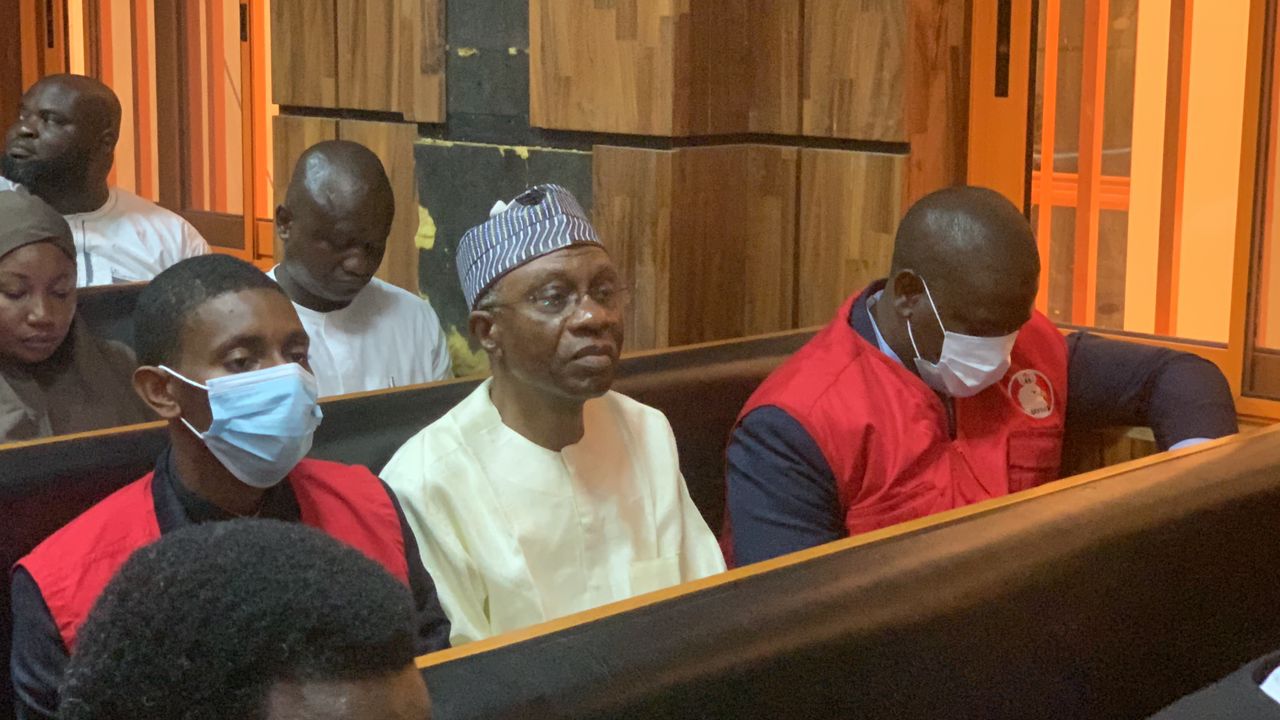
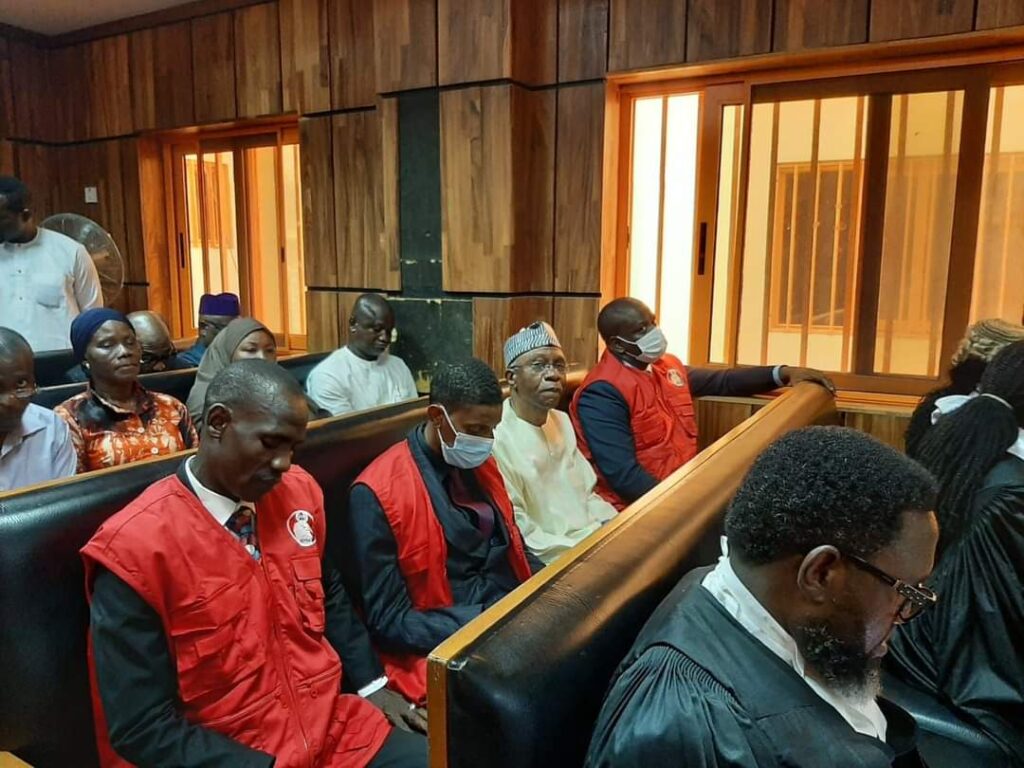
A prosecution witness, identified as PW11, on Thursday told the Federal Capital Territory High Court in Abuja that a sum of $6.23 million was allegedly withdrawn from the Garki Branch of the Central Bank of Nigeria on February 8, 2023, using documents he described as forged, in the ongoing trial of former CBN Governor, Godwin Emefiele.
Testifying before Justice Hamza Muazu, the witness, Bashirudden Maishanu, an Assistant Director at the apex bank, appeared for the Economic and Financial Crimes Commission and was led in evidence by the Director of Public Prosecution, Rotimi Oyedepo (SAN).
He told the court that the cash withdrawal was purportedly meant to cover expenses for election observers and logistics.
In a statement released by the EFCC, Maishanu explained that he first became acquainted with the defendant in 2015 through one Eric, who served as Emefiele’s personal assistant while he was CBN governor.
He narrated that in early January 2023, he was contacted by a man identified as Alhaji Ahmed. According to him, “he introduced himself to me and said Mr. Eric, the P.A., asked me to see you about some transactions that they were processing in CBN.
“He said he was working in a Special Committee in the SGF office. I asked him for I.D. and he showed me. I asked him to call Mr. Eric so that I could confirm he indeed asked him to see me.
“He called Mr. Eric, and we spoke, and he said he knew Alhaji Ahmed, and he said indeed he did ask him to see me. Thereafter, Mr.
“Ahmed explained to me that they were processing a payment from the CBN on the authority of Mr. President and that once they obtained the presidential approval on paper, they would proceed to CBN for payment.”
Maishanu told the court that he questioned Ahmed about his involvement in the transaction, given that he was not attached to the branch where the payment would be processed. According to him, Ahmed responded that it was still too early to involve him and promised to get back once official approval was secured.
The witness further stated that Ahmed returned about a week later, claiming that presidential approval had been obtained. “I demanded to see it, and he showed me the copy and told me that they will now go to the CBN to obtain Mr Emefiele’s approval. At that point, he told me that they wanted cash payment, and if I could either go with them or recommend someone to go with them.
“I told him I couldn’t go, and I suggested that I should call someone I knew,” he said.
Continuing his testimony, Maishanu said Ahmed later confirmed that government approval was in place and that his acquaintance could accompany him for the cash collection. He told the court that on February 8, his friend, accompanied by a driver, went to the Garki Branch of the CBN and withdrew the funds.
“On the 8th of February, my friend went with his driver and cashed the money in Garki Branch of CBN: $6,230,000.
“Thereafter, they dropped my friend off at the same location inside the estate, it is called the 09 ClubHouse inside Ibrahim Coomasie Crescent. My friend called and said they had cashed the money and that Mr. Ahmed had left with $2.5 million in cash with his friends.”
According to the EFCC statement, the witness told the court that he advised his friends to hold on to the remaining cash, an idea they reportedly accepted. “I saw the cash and I told them that I thought it was outrageous because we never negotiated for any payment with the said Alhaji Ahmed, and I suggested to my friends that we keep the money; they agreed.”
When questioned by the prosecution on internal disciplinary measures at the Central Bank, Maishanu explained that sanctions against erring officials vary depending on the seriousness and circumstances of each case.
“It could be demotion, termination of appointment or dismissal from service or warnings. These sanctions are all clearly contained in the human resource handbook.”
He added that disciplinary action usually follows a review by a committee made up of selected staff members, who investigate allegations, conduct hearings, and make recommendations to management before any punishment is imposed.
Godwin Emefiele is currently facing multiple charges, including allegations of accepting gratification, receiving gifts through intermediaries, corruption, and fraudulent receipt of property.
What you should know
The trial of former CBN Governor Godwin Emefiele is one of Nigeria’s most closely watched corruption cases, as it involves allegations of large-scale cash withdrawals and abuse of office.
The EFCC alleges that millions of dollars were accessed through forged approvals under the guise of official government activities.
Testimony from senior CBN officials is expected to play a key role in establishing how internal processes were allegedly bypassed and whether funds were diverted for personal or political use.