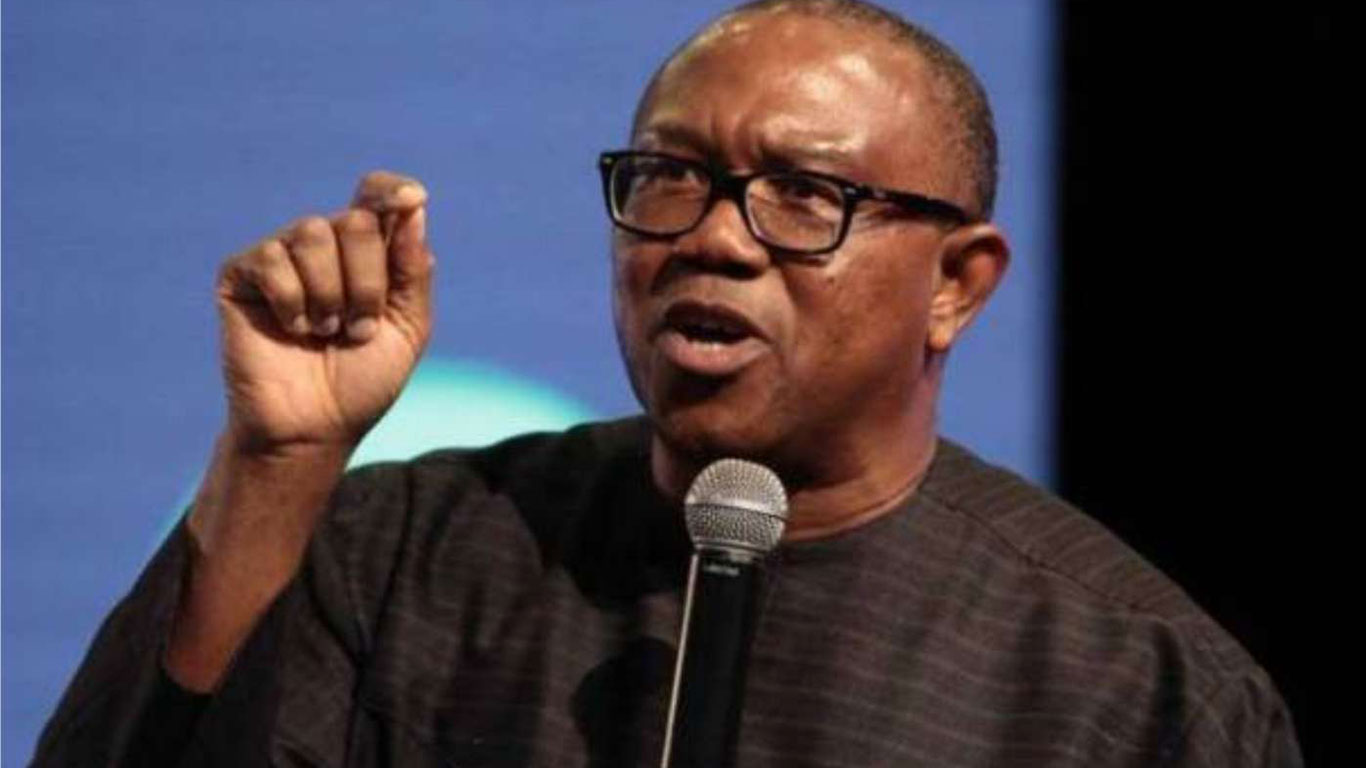
Former Anambra State Governor and Labour Party presidential candidate, Peter Obi, has criticised the Federal Government over reports that about $9 million was spent on foreign lobbyists in Washington, describing the move as another example of Nigeria’s long-standing preference for wasteful expenditure over the welfare of its citizens.
In a statement shared on his official X handle on Friday, Obi said the reported expenditure was a disturbing reminder of how public resources are frequently channelled towards managing Nigeria’s image abroad while living conditions at home continue to worsen.

He argued that the country’s deepening development challenges are rooted in repeated leadership decisions that ignore human wellbeing.
“It is both tragic and concerning that our leaders continue to prioritize waste, corruption, propaganda, lies, and negative aspects of development over positive initiatives. Recently, it was reported that $9 million of taxpayers’ money was spent on lobbyists in Washington, which I believe is just a small fraction of the global waste occurring in the same manner.
“This situation aligns with the disgraceful state of Nigeria. This is merely a small example of wasteful spending that has contributed to our nation’s current failing status. To further illustrate the impact of such waste, we can look at a critical measure of development: the Human Development Index (HDI).”
Obi observed that Nigeria has remained trapped in the low category of the Human Development Index for more than three decades, from 1990 to 2025, despite vast resources. He contrasted this with countries that were once in similar or worse positions but made steady progress through deliberate policy choices. According to him, nations such as China, which had a significantly lower per capita income than Nigeria in 1990, and Indonesia have moved from low to medium, and now to high development categories.

“The achievements of these nations were not the result of fate, miracles, or natural endowments, but rather a consequence of choices and the cumulative effects of good and bad leadership,” Obi stated.
Turning to healthcare, he painted a grim picture of Nigeria’s standing on the global stage, noting that health outcomes remain among the weakest indicators of national development. He lamented that Nigeria currently records the lowest life expectancy worldwide and ranks among the top two countries for maternal mortality, making childbirth extremely risky for Nigerian women.
“Nigeria now has the lowest life expectancy in the world and ranks among the top two countries globally for maternal mortality, making childbirth one of the most precarious experiences for Nigerian women. Instead of investing in life-saving systems, we spend millions trying to obscure our failures,” he said.
Obi further argued that the reported $9 million could have been channelled into tangible healthcare improvements that would directly save lives and improve Nigeria’s international standing organically. He explained that such an amount could adequately fund capital projects in major teaching hospitals across the country.
“This $9 million is sufficient to fund the entire 2024 capital budget for at least one major teaching hospital in each zone, enhancing survival rates, care, and life expectancy,” he said.

According to the former governor, Nigeria’s central problem is not a lack of financial resources but a chronic failure in prioritisation, discipline, and leadership. He insisted that public funds must be used to meet the urgent needs of citizens rather than to create false impressions abroad.
“Every naira of taxpayers’ money should serve the Nigerian people. Instead, citizens are dying in failing hospitals while the government pays foreigners to pretend that everything is fine. We cannot continue to live in an illusion while our reality deteriorates. This constant prioritization of trivial matters must come to an end,” Obi declared.
What you should know
Peter Obi’s remarks reflect ongoing criticism of Nigeria’s governance approach, especially regarding public spending and development priorities.
The former governor argues that excessive focus on foreign perception management diverts critical funds from sectors like healthcare, education, and social welfare. By highlighting Nigeria’s long stagnation in the Human Development Index and poor health outcomes, Obi underscores how leadership decisions, rather than lack of resources, shape national progress.
His comments add to wider debates about accountability, transparency, and the urgent need to redirect public funds toward improving citizens’ quality of life.