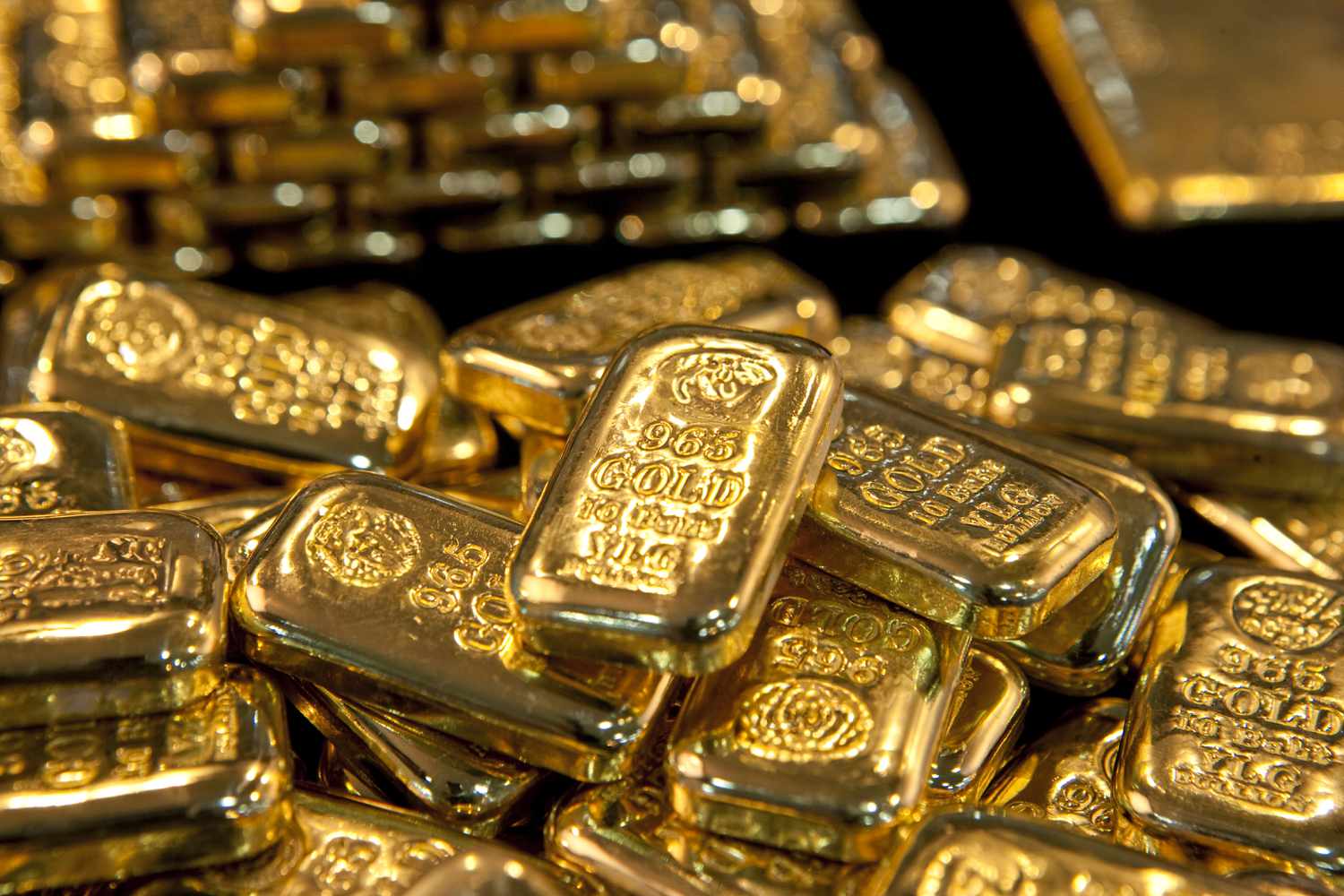
Gold prices slipped on Friday, pulling back from the record territory reached earlier this week as a confluence of factors—including robust U.S. economic indicators and diminishing tensions in the Middle East—tempered the precious metal’s recent rally.
Spot gold declined 0.3% to $4,603.02 per ounce as of 0918 GMT, marking the second consecutive session of losses. U.S. gold futures for February delivery fell 0.4% to $4,606.70. Despite the Friday retreat, bullion remains on course to post a weekly gain of approximately 2%, buoyed by Wednesday’s historic peak of $4,642.72 per ounce.
The pullback comes as resilient U.S. economic data has strengthened the dollar and altered the market calculus for gold investors. Carsten Menke, an analyst at Julius Baer, noted that the bullish momentum that carried gold to unprecedented heights earlier in the week appears to be losing steam.
“There was a lot of momentum in the market, which seems to have faded slightly at the moment,” Menke explained. “The economic news flow out of the U.S. has been causing some headwinds rather than tailwinds as of late, which is reflected in a somewhat stronger U.S. dollar.”
The dollar index hovered near a six-week high following Thursday’s surprisingly positive jobless claims report. Initial unemployment claims dropped to 198,000 last week, down 9,000 from the previous week and well below the 215,000 forecast by economists. The stronger dollar makes dollar-denominated gold more expensive for international buyers, reducing demand from overseas markets.
Adding to the pressure on gold prices, reports from inside Iran suggest that protests that had roiled the country earlier in the week have now subsided. Reuters correspondents reached on Wednesday and Thursday indicated that demonstrations appeared to have eased since Monday, removing one of the geopolitical risk factors that had supported gold’s safe-haven appeal.
Gold traditionally benefits during periods of geopolitical and economic uncertainty, as investors seek shelter from volatility in tangible assets.
The global demand landscape for gold presents a mixed picture. In India, one of the world’s largest gold-consuming nations, retail buying remained subdued this week as record-high prices deterred purchases. Meanwhile, in China, bullion continued to trade at a premium as steady demand persisted ahead of the Lunar New Year celebrations, when gold purchases traditionally increase.
Silver experienced a sharper pullback, shedding 1.1% to $91.33 per ounce, though the white metal remained on track for an impressive weekly gain exceeding 14%. Silver reached an all-time high of $93.57 in the previous session, bringing the psychologically significant $100-per-ounce level tantalizingly close.
“The silver market seemed very determined to reach the $100 per ounce threshold before moving lower again,” Menke said, adding that “speculative traders are keeping an eye on that level even though it would not be sustainable in the medium to longer term.”
The platinum group metals showed varied performance. Spot platinum dropped 2.7% to $2,345.78 per ounce but was still positioned to gain more than 3.1% for the week. Palladium lost 2.6% to $1,755.04 per ounce after touching a more than one-week low earlier in the session and was headed for a weekly decline of 3.3%.
As the trading week draws to a close, the precious metals market finds itself at a crossroads—balancing record-setting momentum against fundamental headwinds from a resilient U.S. economy and stabilizing geopolitical conditions.
WHAT YOU SHOULD KNOW
Gold prices retreated from their record high of $4,642.72, pressured by a strengthening U.S. dollar following better-than-expected jobless claims data and easing tensions in Iran. Despite Friday’s pullback, gold remains on track for a 2% weekly gain.
The resilient U.S. economy is shifting market dynamics away from safe-haven assets, even as gold maintains elevated price levels. Meanwhile, silver is eyeing the historic $100-per-ounce mark after surging over 14% this week, though analysts warn this level may not be sustainable long-term.