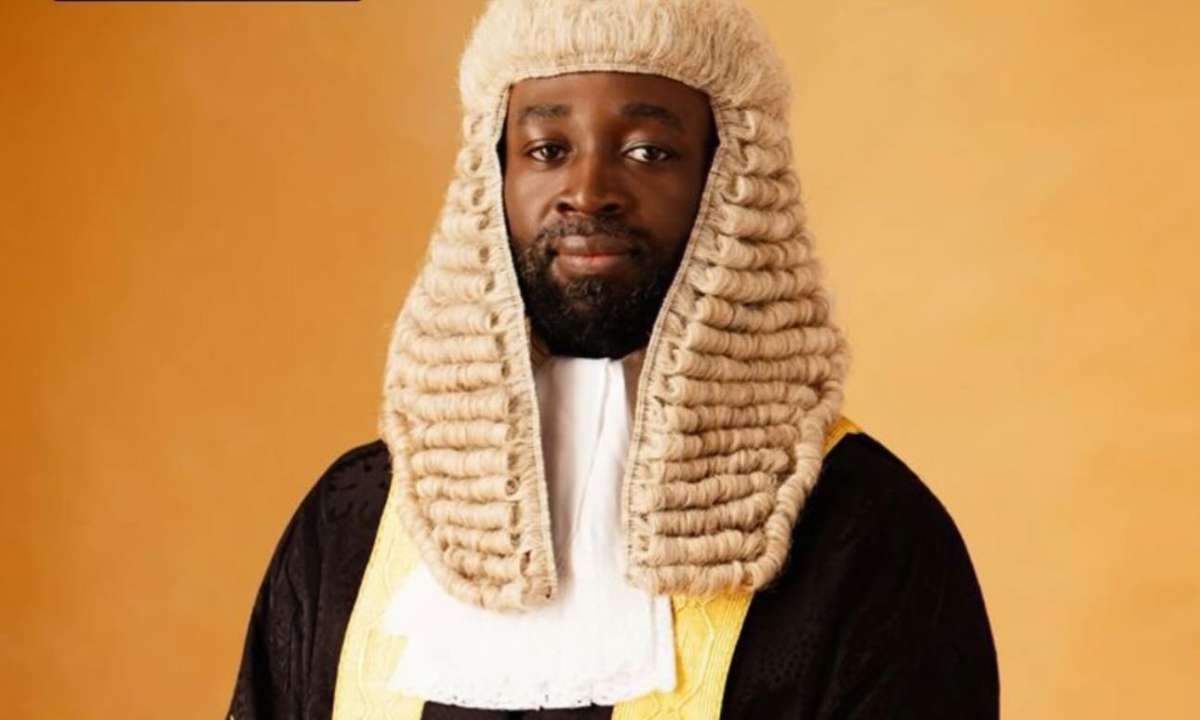
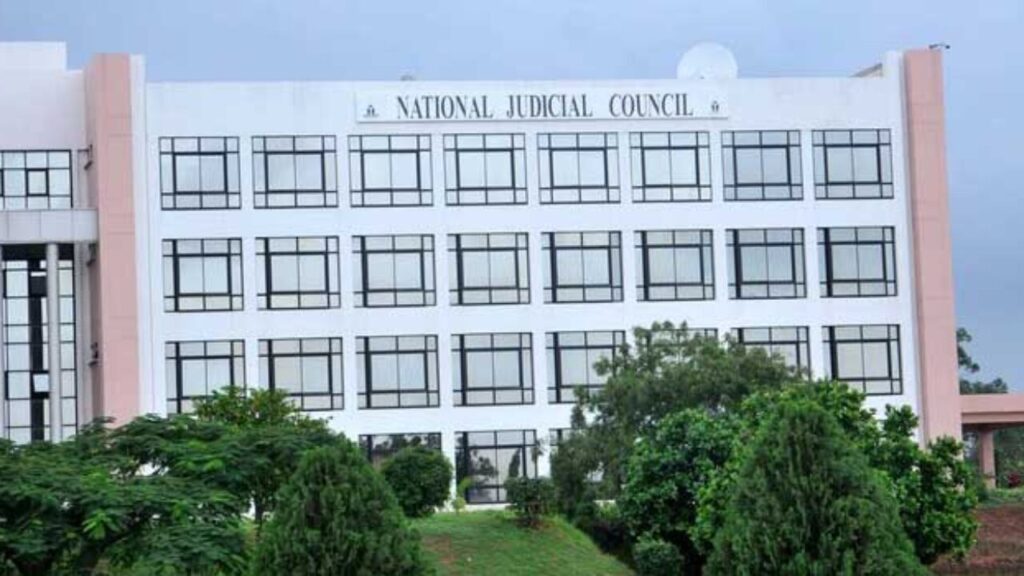
The National Judicial Council (NJC) has recommended the presiding justice of the Court of Appeal, Enugu Division, Justice Olubunmi Oyewole, for elevation and appointment as a Justice of the Supreme Court of Nigeria.
The development was made public on Wednesday through a statement issued by the NJC’s Deputy Director of Information, Kemi Babalola-Ogedengbe. According to her, the recommendation was reached during the Council’s 110th Meeting held on January 13, 2026, under the chairmanship of the Chief Justice of Nigeria, Justice Kudirat Kekere-Ekun.
Babalola-Ogedengbe explained that Justice Oyewole was recommended alongside 35 other candidates for appointments into different judicial positions across the country. Justice Oyewole, who was born on May 13, 1965, hails from Ila-Orangun in Osun State and is filling the South-West slot created by the retirement of the immediate past Chief Justice of Nigeria, Justice Olukayode Ariwoola.
Beyond Justice Oyewole’s recommendation, the Council also approved the appointment of 27 candidates as Judges of various High Courts nationwide. A breakdown of the approvals indicates that Borno and Plateau states are each to receive six new judges, Ekiti State will have five, while Niger and Delta states will get four judges each. Benue and Taraba states are to receive one judge apiece.
The NJC further recommended the appointment of six Kadis to the Sharia Courts of Appeal in Niger State, three Kadis for Taraba State, and two judges for appointment into the Customary Court of Appeal in Delta State.
In another decision, the Council approved a three-month extension of the tenure of the Acting Chief Judge of Imo State, Hon. Justice I. O. Agugua. At the same time, it urged the Governor of Imo State, Hope Uzodimma, to immediately initiate the process of constituting the State Judicial Service Commission to pave the way for the appointment of a substantive Chief Judge.
The NJC emphasised the urgency of appointing a substantive Chief Judge in Imo State, noting that such a move is essential for ensuring institutional stability, protecting judicial independence and enhancing the effective administration of justice within the state.
On disciplinary matters, the Council cleared the Chief Judge of Osun State, Justice Oyebola Adepele Ojo, of allegations relating to financial recklessness, diversion of funds and judicial misconduct. The NJC said the decision followed its consideration and endorsement of the findings of a three-member Investigation Committee set up to examine multiple petitions filed against the Chief Judge.
Similarly, the Council dismissed a petition against a Judge of the Delta State High Court, Justice Gentu E. Timi, which stemmed from allegations of professional misconduct linked to a chieftaincy dispute.
In a related move, the NJC reversed the one-year suspension without pay earlier imposed on Hon. Justice Jane Inyang of the Court of Appeal, Uyo Division. The Council disclosed that out of 39 petitions reviewed during the meeting, 26 were dismissed for lacking merit, seven were recommended for further investigation, while two judicial officers were issued formal cautions.
One of the cautioned judges was faulted for delivering judgment outside the constitutionally stipulated 90-day period, contrary to Section 294(1) of the 1999 Constitution (as amended), and for using uncouth language in his response to a petition brought against him.
The NJC also reiterated its earlier warning to judicial officers against the indiscriminate issuance of ex parte orders and advised Heads of Court to exercise caution when assigning complex cases to newly appointed judges.
Additionally, the Council constituted a committee to examine the request for review submitted by the nine dismissed judges of the Imo State Judiciary. However, it declined to consider a fresh petition against the Acting Chief Judge of the Imo State High Court, Justice I. O. Agugua, noting that the same issues had already been examined and resolved on multiple occasions.
What you should know
The National Judicial Council is constitutionally empowered to oversee judicial appointments, discipline and policy direction within Nigeria’s judiciary.
Its recommendations, especially for Supreme Court appointments, play a critical role in shaping the country’s justice system. The latest decisions highlight efforts to fill judicial vacancies, address disciplinary concerns and maintain judicial integrity.
The Council’s insistence on timely appointments and adherence to constitutional provisions reflects its broader mandate to strengthen judicial independence and ensure the smooth administration of justice across states.