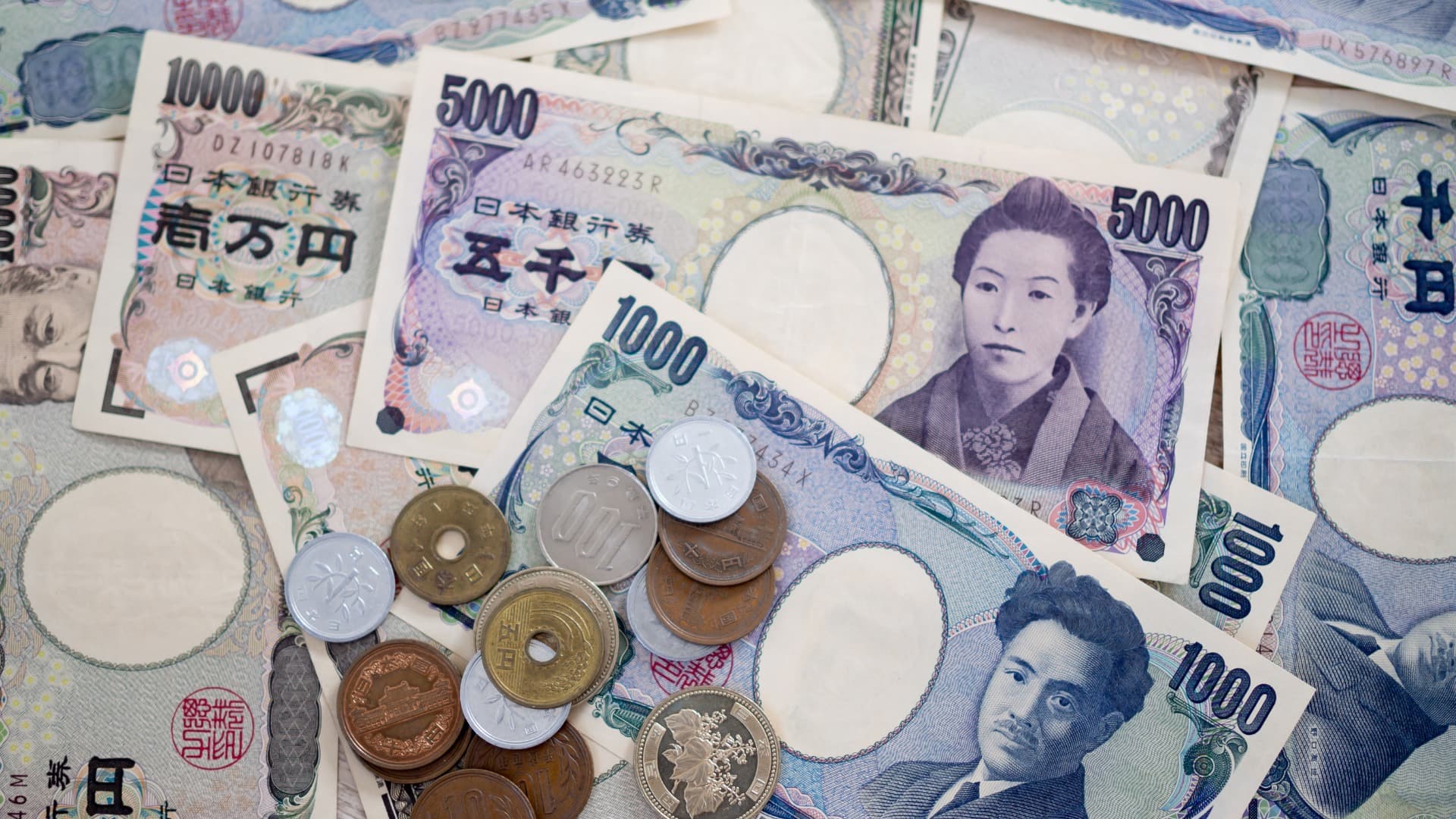
The Japanese yen clawed back modest gains in Monday’s trading after suffering losses at the end of last week, as currency traders weighed the prospect of additional interest rate increases from the Bank of Japan against the looming threat of government intervention in foreign exchange markets.
In characteristically thin year-end trading conditions, the dollar retreated 0.17% to 156.3 yen following Friday’s 0.45% surge, while European currencies remained largely range-bound as major financial centers prepare for New Year’s holidays.
The yen’s modest recovery comes as newly released minutes from the Bank of Japan’s December policy meeting revealed considerable support among board members for continuing the country’s monetary tightening campaign. The central bank raised its benchmark rate to 0.75% from 0.5% last month—the highest level in three decades—yet policymakers indicated this may not be enough.
“Many board members saw the need for further increases,” the summary of opinions showed, noting that even at current levels, Japan’s policy rate remains “significantly negative in inflation-adjusted terms” when accounting for persistent inflation.
However, the December rate hike has done little to arrest the yen’s slide. The currency weakened to 157.78 per dollar on December 19, approaching levels that previously triggered Japanese authorities to step into markets. Finance Minister Satsuki Katayama moved quickly to remind markets last week that Tokyo maintains “a free hand in dealing with excessive moves in the yen”—a thinly veiled warning that intervention remains on the table.
Those warnings appear to be having their intended effect on dollar-yen positioning, according to Bart Wakabayashi, Tokyo branch manager at State Street. Yet pessimism about Japan’s currency is manifesting in unexpected ways across other currency pairs.
“I think a long position in yen is quite painful,” Wakabayashi observed, noting that traders are increasingly expressing bearish yen views through alternative crosses. “We’re seeing some expression of yen shorts against these currencies, particularly Aussie-yen.”
Indeed, the Australian dollar surged to 105.15 yen on Monday—its strongest showing since July 2024—underscoring how yen weakness is playing out beyond the traditional dollar-yen benchmark.
“The market is still trying to figure out what kind of role the yen plays now in terms of being a haven,” Wakabayashi added, highlighting the currency’s evolving status as Japan transitions away from its long-standing ultra-loose monetary policy.
Japan last intervened to support the yen in July 2024, when the currency plummeted to a 38-year nadir of 161.96 per dollar, forcing authorities to conduct yen-buying operations.
With economic data releases sparse this holiday-shortened week and trading volumes expected to remain subdued, geopolitical developments are commanding increased attention from currency markets.
U.S. President Donald Trump offered cautiously optimistic comments Sunday regarding negotiations to end the war in Ukraine, saying he and Ukrainian President Volodymyr Zelenskiy were “getting a lot closer, maybe very close” to an agreement. Both leaders acknowledged, however, that significant obstacles remain unresolved.
In Asia, tensions continue to simmer. China has positioned military units around Taiwan ahead of scheduled live-fire drills on Tuesday, while North Korean state media reported that leader Kim Jong Un supervised long-range missile launches on Sunday. South Korea’s Yonhap news agency suggested additional tests could occur around New Year’s Day.
The week’s primary data point arrives Tuesday with the release of minutes from the Federal Reserve’s December meeting. The U.S. central bank reduced rates at that gathering while projecting only one additional cut in 2025—a more hawkish stance than market expectations, which currently price in at least two reductions next year.
Goldman Sachs analysts anticipate the minutes will reveal “ongoing disagreement among FOMC participants about the appropriate policy path over the near term,” noting that both the post-meeting statement and Chair Powell’s press conference signaled “a higher bar for further rate cuts.”
Elsewhere in currency markets on Monday, the euro dipped fractionally to $1.1760, while sterling shed 0.1% to $1.3486. The dollar index, measuring the greenback against a basket of major currencies, edged marginally higher to 98.12. The Australian dollar declined 0.36% to $0.6688, and the Swiss franc weakened slightly to 0.7904 per dollar.
As 2024 draws to a close, the yen’s trajectory—caught between domestic monetary tightening and persistent depreciation pressures—remains a central question mark for global currency markets heading into the new year.
WHAT YOU SHOULD KNOW
The Japanese yen remains caught in a policy paradox: despite the Bank of Japan raising rates to a 30-year high and signaling more hikes ahead, the currency continues to weaken, forcing officials to threaten market intervention.
This struggle highlights Japan’s difficulty transitioning from decades of ultra-loose monetary policy while maintaining currency stability. With thin holiday trading and geopolitical tensions rising across Asia, the yen’s uncertain role as a safe-haven currency—and whether Tokyo will actually intervene—will be critical factors for global markets entering 2025.