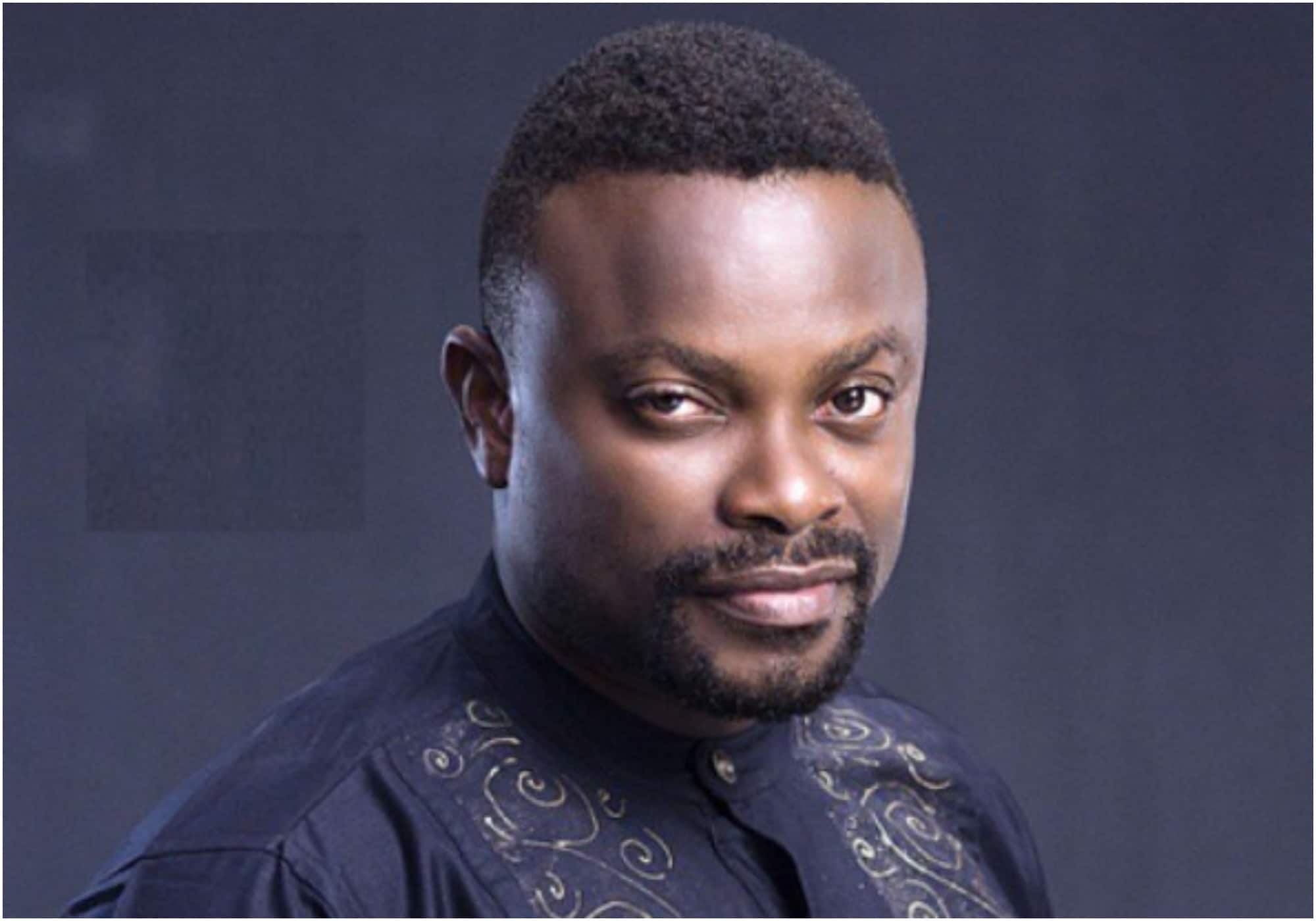
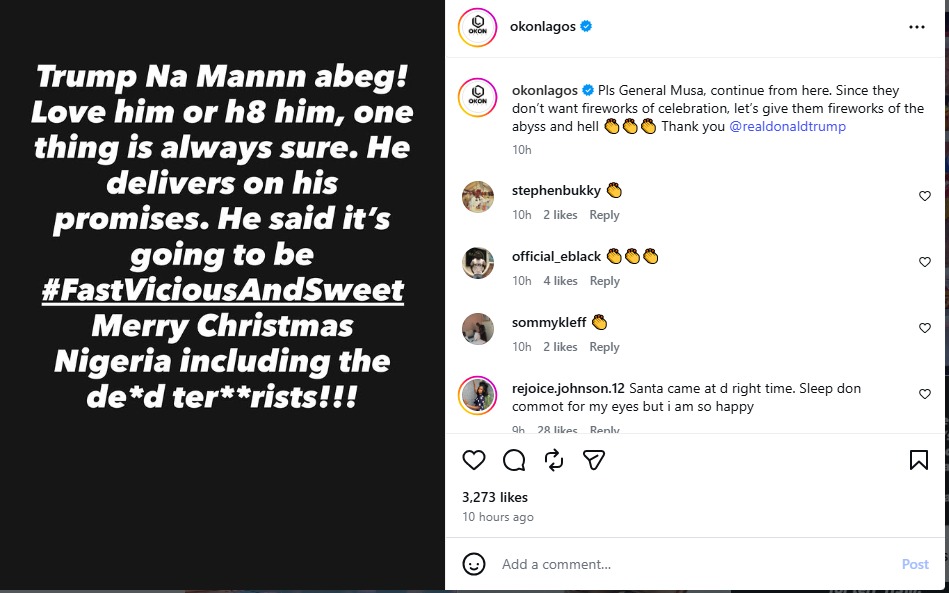
Nigerian comedian and social media personality OkonLagos has publicly commended US President Donald Trump after American forces conducted military strikes against what Washington identified as ISIS-affiliated camps in northwest Nigeria on Christmas Day.
The airstrikes represent a dramatic escalation in US involvement in Nigeria’s long-running security crisis and mark the fulfillment of a controversial pledge made by President Trump nearly two months earlier.
On October 31, 2025, the Trump administration redesignated Nigeria as a “country of particular concern” under the International Religious Freedom Act, citing what it characterized as an ongoing genocide against Christian communities in Africa’s most populous nation. At the time, President Trump issued an ultimatum to the Nigerian federal government, threatening direct US military intervention if Abuja failed to halt attacks on Christian civilians.
“If the Nigerian government cannot or will not protect its Christian population from systematic killing, the United States will act,” Trump reportedly said during the October announcement, warning that American forces were prepared to conduct airstrikes on terrorist positions within Nigerian territory.
The promised military action materialized on December 25, when US forces launched what Pentagon sources described as precision airstrikes targeting ISIS encampments in Nigeria’s northwest region. The strikes came as Christian communities across Nigeria observed Christmas amid heightened security concerns.
Details regarding the scale of the operation, specific locations targeted, and casualty figures remain limited. The US Department of Defense has not yet released a comprehensive statement on the strikes, and it remains unclear whether the Nigerian government was consulted before the military action or if the strikes were conducted unilaterally.
OkonLagos, whose real name and substantial social media following have made him an influential voice on national issues, took to his platforms following the attacks to express support for President Trump’s intervention. While the specific content of his statement was not detailed, his endorsement reflects a sentiment among some Nigerians who have grown frustrated with their government’s handling of persistent insecurity.
Nigeria has struggled for years with multiple security threats, including Boko Haram insurgency in the northeast, banditry and kidnapping in the northwest, and farmer-herder conflicts across the Middle Belt region. International human rights organizations have documented attacks on both Christian and Muslim communities, though the characterization of these attacks as genocide remains disputed.
The US military action raises significant questions about sovereignty, international law, and the precedent for unilateral intervention. Nigerian authorities have yet to issue an official response to the strikes, leaving it unclear whether Lagos granted permission for the operation or views it as a violation of national sovereignty.
Critics are likely to question both the legal basis for the strikes and the accuracy of characterizing Nigeria’s complex security challenges solely through the lens of religious persecution. While attacks on Christian villages have been documented, analysts note that violence in Nigeria often involves ethnic, economic, and political dimensions beyond religious identity.
As of this report, neither the Nigerian presidency nor the country’s military command has released a statement regarding the Christmas Day airstrikes or the broader implications of direct US military involvement on Nigerian soil.
WHAT YOU SHOULD KNOW
The United States conducted airstrikes on alleged ISIS camps in northwest Nigeria on Christmas Day 2025, following through on President Trump’s October threat to intervene militarily if Nigeria failed to stop attacks on Christians.
While some Nigerians, like comedian OkonLagos, have praised the action, the strikes raise serious questions about national sovereignty, international law, and whether unilateral foreign military intervention on Nigerian soil occurred with or without the government’s consent.
The incident marks an unprecedented escalation in US involvement in Nigeria’s complex security crisis, with potentially far-reaching implications for both nations’ relationship and regional stability.