Early Life and Background
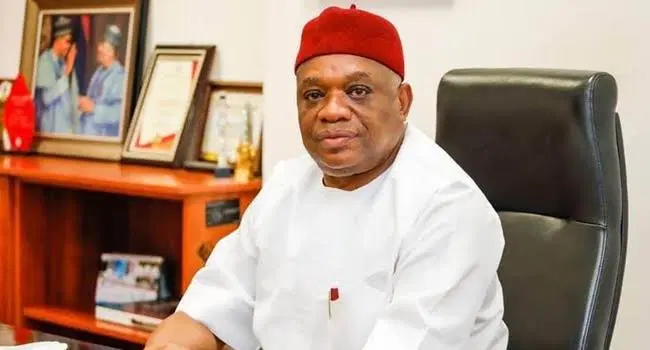
Orji Uzor Kalu MON was born on April 21, 1960, in Igbere, a prominent town in the Bende Local Government Area of what is now Abia State, Nigeria. He was born into the family of Mr. Johnson Uzor Nesiegbe Kalu and Mrs. Eunice Kalu, a woman who would later become a significant political figure and social activist in her own right. Growing up in the southeastern region of Nigeria during a period of significant national transformation, young Orji demonstrated remarkable entrepreneurial instincts and leadership qualities from an early age.
His childhood in Igbere, though modest in material terms, was rich in lessons about resilience, hard work, and the value of taking calculated risks. These formative years laid the foundation for what would become one of Nigeria’s most remarkable rags-to-riches stories, a journey that would see him transform from a student activist with borrowed capital into a billionaire businessman and influential politician whose name resonates across Nigeria’s political and economic landscape.
Quick Facts
- Full Name: Orji Uzor Kalu
- Date of Birth: April 21, 1960
- Place of Birth: Igbere, Abia State, Nigeria
- Current Position: Senator, Abia North Senatorial District (2019-present)
- Previous Roles: Governor of Abia State, Senate Chief Whip, Business Magnate
- National Honor: Member of the Order of the Niger (MON)
- Political Party: All Progressives Congress (APC)
- Business: Chairman, SLOK Holding, Daily Sun & New Telegraph
Education: From Activism to Entrepreneurship
Orji Kalu’s educational journey was as unconventional as it was formative. He began his primary education at Christ the King School in Aba, one of the most prestigious primary schools in the region, before proceeding to Government College, Umuahia, for his secondary education. He also spent time at Barewa College in Zaria, northern Nigeria, where he was exposed to the diverse cultures and traditions that characterize Nigeria’s complex national fabric.
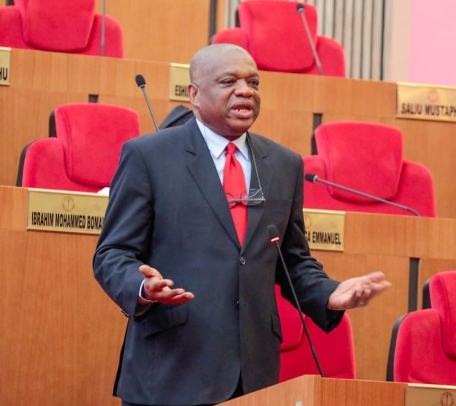
In the late 1970s, Kalu gained admission to the University of Maiduguri to study Political Science. It was during his time at this institution that a pivotal moment in his life occurred. As a politically conscious student, Kalu became actively involved in student unionism and participated in the famous “Ali Must Go” protests of 1979. These demonstrations were directed against Colonel Ahmadu Ali, then Nigeria’s Federal Commissioner (Minister) for Education, whose policies students found objectionable.
The protests attracted severe consequences from university authorities, and Kalu, along with other student leaders, was suspended from the university. However, while this setback devastated many of his colleagues who subsequently took the university to court seeking reinstatement, Kalu saw it as an opportunity rather than a disaster. This perspective would define his character throughout his life, the ability to transform adversity into advantage.
Interestingly, the university administration later reviewed the suspensions and offered amnesty to some of the suspended students, including Kalu. However, in a demonstration of principle and solidarity that foreshadowed his future leadership style, Kalu refused to accept the pardon unless all suspended students were reinstated together. When the university declined this condition, Kalu made the momentous decision to abandon formal education and pursue entrepreneurship full-time.
Years later, recognizing the importance of formal credentials in Nigerian society, Kalu obtained a degree from Abia State University, Uturu. He also attended the Advanced Management Program (AMP 153) at Harvard Business School in Boston, USA, earning a Certificate in Business Administration, a credential that enhanced his already formidable business acumen. Additionally, he received honorary doctorate degrees from the University of Maiduguri, Abia State University, the University of Port Harcourt, and City State University in Los Angeles, USA, in recognition of his contributions to business and national development.
The Turning Point: Kalu’s suspension from university, which could have ended his prospects, instead became the catalyst for his entrepreneurial journey. His decision to reject selective amnesty demonstrated a leadership philosophy he would carry throughout his career: collective progress over individual advancement.
Building an Empire: The SLOK Story
Humble Beginnings
The Orji Kalu business empire began with a mere $35 (approximately 35 dollars at the time) borrowed from his mother, Mrs. Eunice Kalu, when he was just 19 years old. With this modest capital, young Kalu ventured into commodity trading, initially focusing on palm oil. His business model was simple but effective: he purchased palm oil from producers in Nigeria’s eastern region and transported it for sale in the northern states, where it commanded higher prices.
During his palm oil trading expeditions to the north, particularly Maiduguri, Kalu made a crucial observation that would change his trajectory. He noticed that quality furniture was considered a luxury in northern Nigeria and was often imported from abroad at exorbitant prices. Recognizing an untapped market opportunity, Kalu began sourcing furniture from Aba, the furniture manufacturing hub of eastern Nigeria, and reselling it in Maiduguri and other northern cities.
The furniture business proved remarkably profitable, and within a short time, Kalu abandoned palm oil trading entirely to focus on furniture. As his capital grew, he made the strategic decision to move from merely trading furniture to manufacturing it himself. By age 20, Orji Kalu had become a millionaire, an extraordinary achievement for a university dropout in 1980s Nigeria.
The SLOK Conglomerate
Kalu’s success in furniture manufacturing and trading provided the foundation for what would become SLOK Holding, one of West Africa’s most diversified conglomerates. The SLOK Group expanded rapidly across multiple sectors, demonstrating Kalu’s ability to identify opportunities and execute ambitious plans. At its height, SLOK comprised numerous successful enterprises spanning continents and industries.
Key companies under the SLOK umbrella included Ojialex Furniture Company, SLOK Nigeria Limited, SLOK United Kingdom Limited, SLOK United States Incorporated, SLOK Vegetable Oil (Aba), SLOK Paper Factory (Aba), Adamawa Publishers Limited, Supreme Oil Limited, SLOK Airlines, and First International Bank Limited. The conglomerate extended operations across multiple African countries, including Ghana, Togo, Benin Republic (Cotonou), Guinea, South Africa, Liberia, Botswana, and as far as South Korea.
At the remarkably young age of 33, Kalu became the chairman of First International Bank Limited, making him one of the youngest bank chairmen in Nigeria’s history. His business interests also extended to shipping, with SLOK operating maritime vessels, and telecommunications, positioning him at the forefront of Nigeria’s economic transformation during the 1980s and 1990s.
Early Recognition and Government Appointments
Kalu’s business success earned him national recognition at an extraordinarily young age. In 1986, when he was just 26 years old, President Ibrahim Babangida conferred upon him the National Merit Award, making him the youngest Nigerian ever to receive this prestigious honor. This recognition validated his achievements and elevated his profile in Nigerian business circles.
His success also attracted government attention, leading to several strategic appointments. He served as chairman of the Borno Water Board and chairman of the Cooperative and Commerce Bank Limited. These positions provided him with valuable experience in public sector management and expanded his network of influential contacts that would later prove crucial when he ventured into politics.
“I borrowed $35 from my mother and became a millionaire at 20. The key was not the money, it was the vision to see opportunities where others saw obstacles.” – Orji Uzor Kalu
Media Empire: Daily Sun and New Telegraph
Recognizing the power of media in shaping public opinion and national discourse, Kalu ventured into publishing, establishing two of Nigeria’s most widely circulated newspapers. The Daily Sun, founded on March 29, 2001, and launched as a weekly publication on January 18, 2003, before transitioning to a daily newspaper on June 16, 2003, quickly became one of Nigeria’s most popular tabloids.
The Daily Sun distinguished itself through bold, populist journalism that resonated with ordinary Nigerians. By 2011, it boasted a daily circulation of approximately 130,000 copies, rising to 135,000 for weekend editions, with an impressive sales rate of about 80 percent, remarkably high for the Nigerian newspaper industry. The newspaper covers social, political, cultural, and business issues, targeting both domestic readers and Nigerians in the diaspora.
Kalu also established the New Telegraph, which produces approximately 100,000 copies daily, further solidifying his influence in Nigeria’s media landscape. These media houses have not only been commercially successful but have also provided Kalu with significant platforms to shape public discourse and advance his political interests.
Political Career: From House to Government House to Senate
Early Political Involvement
Kalu’s political journey began during Nigeria’s Second Republic when he supported the National Party of Nigeria (NPN). However, his substantive entry into electoral politics came during the transition program of General Ibrahim Babangida when he was elected to the House of Representatives from 1992 to 1993 under the National Republican Convention (NRC). This brief legislative experience provided him with insights into Nigeria’s political machinery and governance structures.
Governor of Abia State (1999-2007)
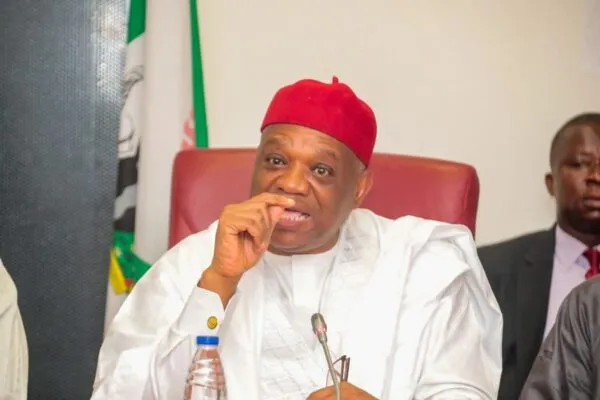
In 1999, as Nigeria transitioned to democratic governance after years of military rule, Orji Kalu contested for the position of Governor of Abia State under the People’s Democratic Party (PDP) platform. He won decisively, becoming one of the youngest governors in Nigeria’s Fourth Republic. He was re-elected in 2003, serving two full terms from May 29, 1999, to May 29, 2007.
As governor, Kalu implemented several developmental initiatives focused on infrastructure, education, and healthcare. His administration is credited with constructing and rehabilitating numerous roads across the state, renovating public schools, ensuring the timely payment of teachers’ salaries, and upgrading facilities at Abia State University. He earned the nickname “Action Governor” for his energetic approach to governance and his ability to execute projects rapidly.
His tenure also saw efforts to position Abia State as a commercial hub, leveraging the entrepreneurial spirit of the Igbo people, particularly in Aba, the state’s commercial nerve center. However, his governorship was not without controversy, as allegations of financial mismanagement and corruption would later lead to protracted legal battles with Nigeria’s anti-corruption agencies.
Presidential Ambition (2007)
Following his departure from the Abia State Government House in 2007, Kalu had a falling out with the PDP leadership. In response, he founded the Progressive Peoples Alliance (PPA), a new political party, and contested for President of the Federal Republic of Nigeria in the April 2007 general elections. While he finished third in that election, the PPA performed remarkably well, winning governorship positions in two of the five southeastern states, Abia and Imo, demonstrating Kalu’s significant political influence in the region.
Senator for Abia North (2019-Present)
After years of political maneuvering across different parties, including returning to the PDP and the PPA before finally settling in the All Progressives Congress (APC) in 2016, Kalu contested for the Abia North Senatorial seat in the 2019 general elections. He won decisively, becoming the first politician from the southeastern geopolitical zone to win on the APC ticket, a significant achievement in a region traditionally dominated by other parties.
In June 2019, Kalu was appointed Senate Chief Whip of the 9th National Assembly, one of the principal leadership positions in the Senate. He held this position throughout the 9th Senate (2019-2023) and continued in the 10th Senate (2023-present), making him one of the most influential senators in the current legislative session.
As a senator, Kalu has been prolific in legislative activities. As of August 2025, he had sponsored or co-sponsored 12 of the 18 bills introduced by Abia State senators in the 10th Senate. In February 2025, he was appointed as the inaugural Chairman of the Senate Committee on South East Development Commission (SEDC), a strategic position responsible for overseeing initiatives for regional economic revitalization, infrastructure development, and security in Nigeria’s southeastern region.
He also serves as Chairman of the Senate Committee on Privatization, a powerful position that places him at the center of Nigeria’s economic reform efforts. Additionally, in December 2025, he was named chairman of an 18-member Ad Hoc Committee investigating the implementation of the Safe Schools Initiative, reflecting his continued relevance in critical national issues.
Legal Battles: The EFCC Saga
Orji Kalu‘s political career has been significantly shaped by his protracted legal battles with the Economic and Financial Crimes Commission (EFCC). In July 2007, shortly after leaving office as governor, Kalu was arrested by the EFCC on charges of corruption involving the alleged diversion of approximately 7.65 billion naira during his tenure as Abia State governor from 1999 to 2007.
The case dragged through the courts for over a decade, becoming one of Nigeria’s longest-running corruption trials. Kalu consistently maintained his innocence, arguing that the charges were politically motivated persecution orchestrated by the administration of President Olusegun Obasanjo, with whom he had a strained relationship. This claim was later mentioned in former U.S. Ambassador to Nigeria John Campbell’s book, “Nigeria: Dancing on the Brink,” lending some credibility to allegations of political witch-hunt.
Conviction and Imprisonment
On December 5, 2019, the Federal High Court in Lagos convicted Kalu and sentenced him to 12 years’ imprisonment after finding him guilty on all 39 counts of fraud and money laundering. He was convicted alongside his company, SLOK Nigeria Limited, and his former Director of Finance in Abia State, Udeh Udeogu. The court also ordered the forfeiture of SLOK Nigeria Limited and its assets to the federal government.
Kalu was immediately taken into custody at the Kuje Correctional Centre in Abuja. Remarkably, despite his imprisonment, the Senate leadership refused to declare his seat vacant, citing constitutional provisions that protect legislators until they have exhausted all appeal options. This decision was controversial but ultimately proved prescient.
Supreme Court Acquittal
On May 8, 2020, in a landmark ruling, the Supreme Court of Nigeria nullified Kalu’s conviction on technical grounds. The apex court held that Justice Mohammed Idris, who presided over the trial, lacked the jurisdiction to hear the case because he had already been elevated to the Court of Appeal when he delivered the judgment. The Supreme Court ordered that the case be reassigned to another judge for retrial from scratch.
Kalu was released from prison on June 3, 2020, after spending approximately six months in custody. His release was celebrated by supporters as vindication, though critics noted that the acquittal was on technical grounds rather than on the merits of the case. The legal battle continues, with the EFCC obtaining permission in March 2025 to appeal the decision halting Kalu’s retrial, leaving the matter unresolved as of late 2025.
Upon his return to the Senate in June 2020, Senate President Ahmad Lawan welcomed him warmly, stating, “I want to welcome back our only chief whip of the Senate and indeed the national assembly. Chief whip, you are welcome. We are very grateful to the Almighty God for his blessings.”
The Njiko Igbo Movement and Igbo Presidency Advocacy
One of Orji Kalu’s most significant political initiatives has been the Njiko Igbo Movement, an organization he founded with the core objective of securing Nigeria’s presidency for a citizen of Igbo extraction. Since Nigeria’s independence in 1960, an Igbo person has held the position of head of state for only six months, General Johnson Aguiyi-Ironsi’s brief tenure in 1966, before he was overthrown and killed in a counter-coup.
This historical marginalization has been a source of grievance in southeastern Nigeria, and Kalu’s Njiko Igbo Movement seeks to address it through political mobilization and advocacy. He launched the organization with branches and support groups throughout Nigeria and the diaspora, collaborating with Senator Emmanuel Onwe, a human rights advocate and lawyer.
The movement represents Kalu’s broader vision of inclusive Nigerian politics where the Igbo people occupy their rightful place in the nation’s leadership structure. While the movement has faced challenges in achieving its ultimate goal, it has elevated discussions about power rotation and equity in Nigeria’s political architecture.
Personal Life and Family
In December 1989, Orji Kalu married Ifeoma Ada Menakaya in his hometown of Igbere, Abia State. Ifeoma was described as a woman of virtue, deeply committed to service to God and humanity. Together, they had four children: Neya Uzor Kalu, Michael Uzor Kalu, Olivia Uzor Kalu, and Nicole Uzor Kalu. Some sources also mention Zina Uzor Kalu as one of his children.
Tragically, on April 3, 2023, Ifeoma Kalu passed away in the United States at the age of 61. Her death was a devastating blow to Senator Kalu, who described her as his partner and confidante through decades of triumphs and tribulations. The Senate and numerous dignitaries, including President Muhammadu Buhari, sent condolences to the Kalu family. A memorial service in her honor was held in the United States, where she died.
Beyond his immediate family, Kalu maintains close relationships with his mother, Mrs. Eunice Uzor Kalu, who has been a significant figure in Abia State politics and social activism. Her initial loan of $35 to her teenage son has become legendary in Nigerian entrepreneurship folklore, symbolizing the transformative power of faith, family support, and calculated risk-taking.
Awards, Honors, and Recognition
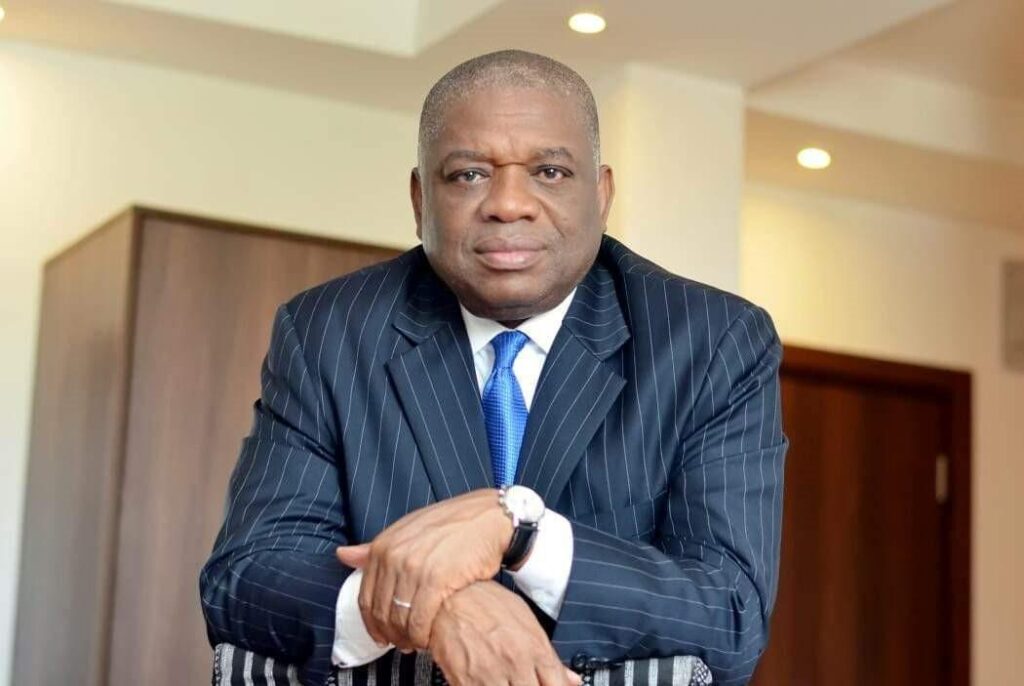
Throughout his multifaceted career, Orji Uzor Kalu has received numerous awards and recognitions acknowledging his contributions to business, politics, and national development. Notable among these are:
- National Merit Award – Conferred by President Ibrahim Babangida in 1986 (youngest recipient at age 26)
- Member of the Order of the Niger (MON) – National honor
- Industrialist of the Year – Nigerian Chamber of Commerce
- Humanitarian Award – University of Nigeria, Nsukka’s Humanitarian Club
- Volunteer Award – International Association of Volunteers
- Senator of the Year in Constituency Projects – 2022 nationwide online poll monitored by NAN
- Danbaiwan-Hausa (Gifted Son of Hausa Kingdom) – Conferred by the Emir of Daura in 2018
- Honorary Doctorate Degrees – University of Maiduguri, Abia State University, University of Port Harcourt, City State University (Los Angeles)
These recognitions span his diverse achievements across business entrepreneurship, political leadership, humanitarian service, and cross-cultural bridge-building between Nigeria’s diverse ethnic groups.
Business Acumen and Estimated Net Worth
Orji Kalu’s business empire has made him one of Nigeria’s wealthiest individuals. In 2015, Forbes estimated his net worth at $330 million, making him one of Africa’s 50 richest men at that time. More recent estimates by some online sources place his wealth at approximately $1.1 billion, though Forbes has not updated its official assessment in recent years.
His wealth derives from diverse sources, including SLOK Holding’s various subsidiaries in shipping, banking, oil trading, manufacturing, furniture, vegetable oil production, paper manufacturing, and airlines. His media investments, Daily Sun and New Telegraph, also contribute significantly to his net worth, as do his extensive real estate holdings across Nigeria and abroad.
Kalu is widely acknowledged as one of Nigeria’s richest politicians, though he has experienced fluctuations in wealth due to volatility in oil prices, depreciation of real estate values, and the legal challenges surrounding some of his business interests. Despite these challenges, he remains a formidable economic force with business interests spanning multiple continents.
Legacy and Current Influence
At 65 years old, Orji Uzor Kalu remains one of Nigeria’s most influential and controversial figures. His journey from a $35 loan to building a billion-dollar conglomerate embodies the quintessential Nigerian entrepreneurial spirit. His story resonates particularly with young Nigerians who aspire to overcome humble circumstances and achieve extraordinary success.
As Chairman of the Senate Committee on the South East Development Commission and former Chief Whip of the Senate, Kalu continues to wield significant legislative influence. His political survival through numerous challenges, including imprisonment, party switches, and electoral defeats, demonstrates remarkable resilience and political acumen.
Kalu is known for his proximity to President Bola Ahmed Tinubu and remains a key APC figure in the southeast. In November 2025, he publicly declared that President Tinubu and the APC were “unstoppable” ahead of the 2027 elections, positioning himself as a crucial ally in the ruling party’s efforts to expand its base in traditionally opposition-leaning southeastern Nigeria.
His legislative record demonstrates a consistent focus on constituency projects, attracting federal attention and resources to Abia North. His pragmatic approach to politics, characterized by strategic alliances, party switching when necessary, and a focus on tangible deliverables, has ensured his continued relevance across different political dispensations.
A Complex Legacy: Orji Kalu’s legacy is complex and multifaceted. To supporters, he represents entrepreneurial brilliance, political resilience, and dogged representation of Igbo interests. To critics, his corruption trial and business practices raise questions about governance and accountability. Regardless of perspective, his impact on Nigerian business, media, and politics is undeniable.
As Nigeria approaches critical elections and navigates significant economic and security challenges, figures like Orji Uzor Kalu, with their extensive networks, resources, and political experience, will continue to play crucial roles in shaping the nation’s trajectory. Whether his legacy will ultimately be defined by his entrepreneurial achievements, his political survival skills, or the unresolved corruption allegations remains to be seen. What is certain, however, is that the story of the young man who borrowed $35 from his mother and built an empire will continue to inspire, provoke debate, and influence Nigerian politics for years to come.