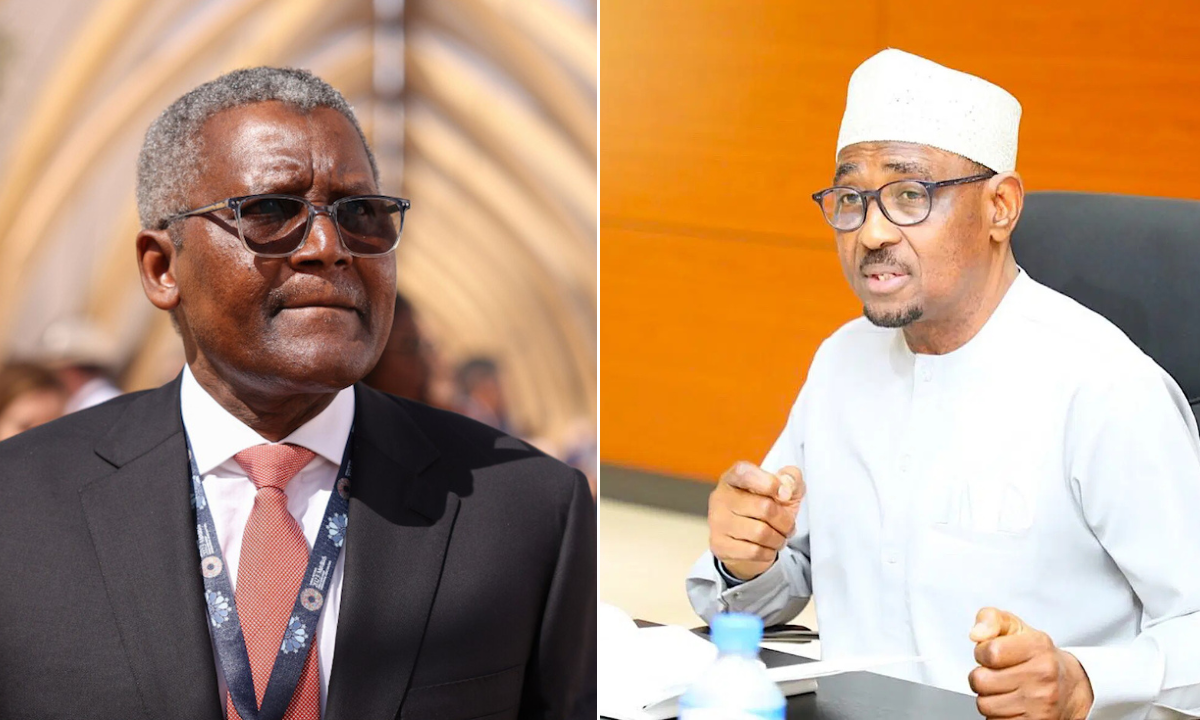
The Chairman of Dangote Group, Aliko Dangote, has formally petitioned the Independent Corrupt Practices and Other Related Offences Commission (ICPC) over allegations of corruption and financial impropriety against the Managing Director of the Nigerian Midstream and Downstream Petroleum Regulatory Authority (NMDPRA), Ahmed Farouk.
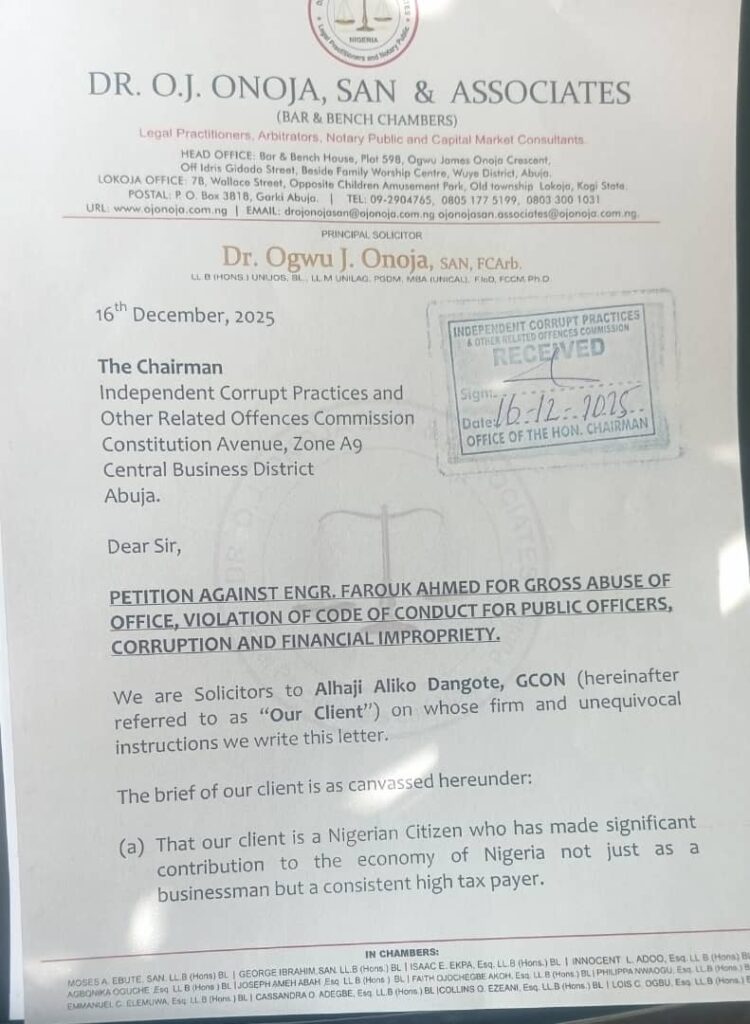
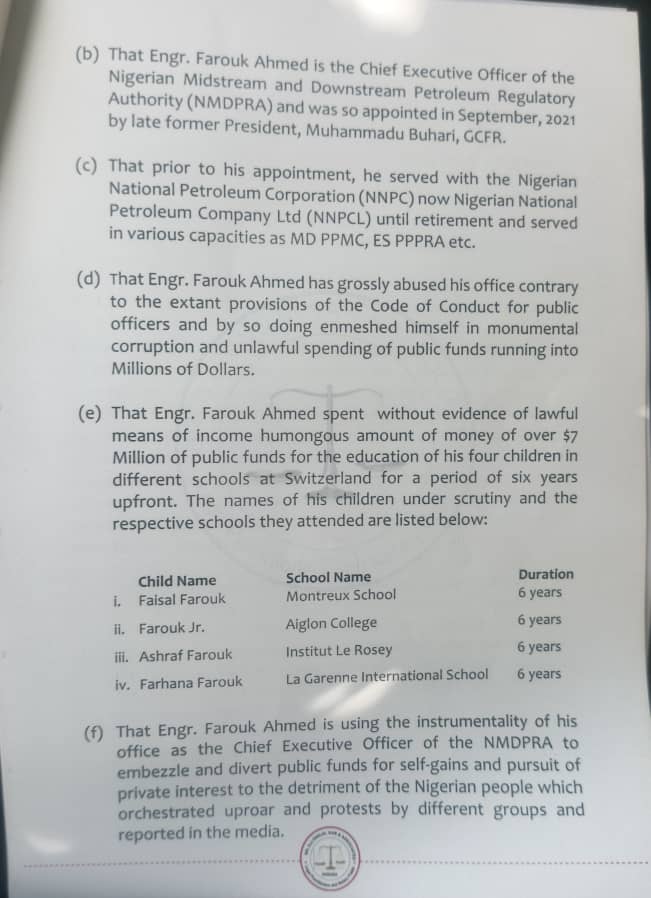
The petition, dated December 16 and submitted through Dangote’s lawyer, Ogwu Onoja (SAN), called for the arrest, investigation and prosecution of Farouk, accusing him of living far beyond his lawful earnings as a public officer. The petition, which was received by the office of the ICPC Chairman, Musa Aliyu (SAN), alleged that the NMDPRA chief spent more than seven million dollars on the education of his four children in Switzerland over a six-year period.
Dangote detailed the names of the children, the schools they attended and the amounts allegedly paid for each, urging the anti-graft agency to verify the claims. He further accused Farouk of using the NMDPRA as a tool to divert public funds for personal benefit, actions he said had triggered public outrage and protests by various groups.
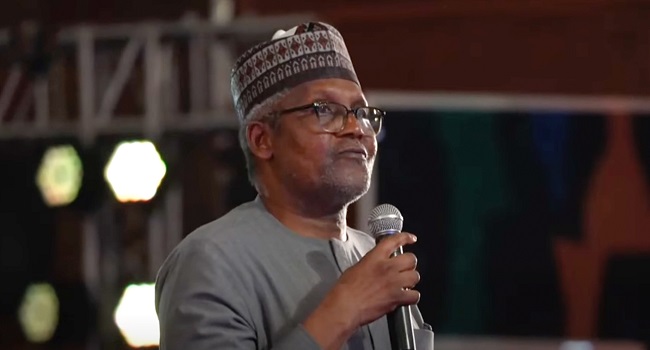
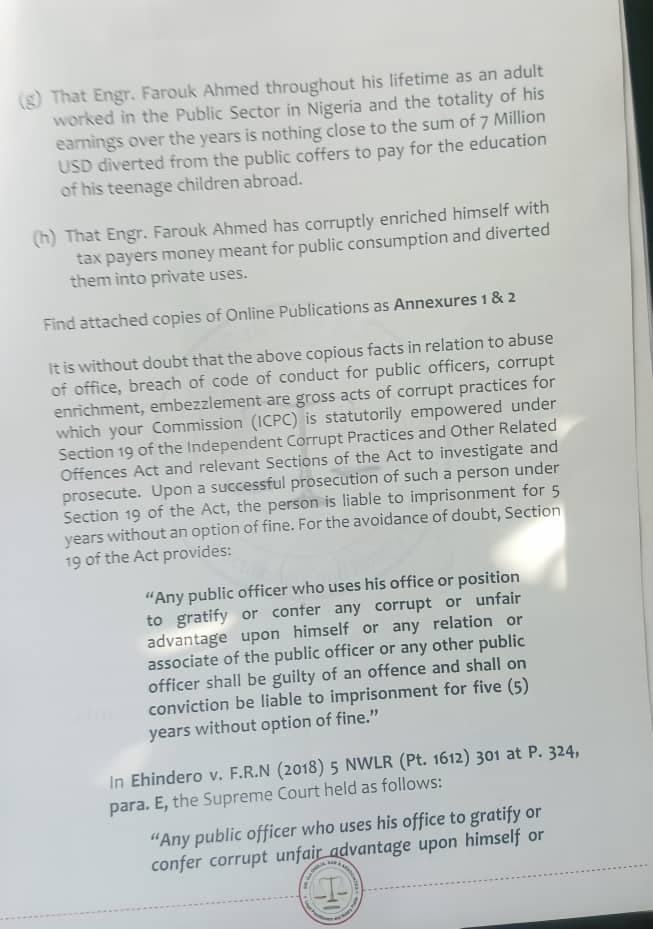
According to Dangote, Farouk has spent his entire professional life in Nigeria’s public sector, making it impossible for his legitimate earnings to amount to the funds allegedly used to finance his children’s foreign education. He claimed the money was diverted from public resources to cover the costs of schooling abroad.
“It is without doubt that the above facts in relation to abuse of office, breach of Code of Conduct for public officers, Corrupt enrichment, embezzlement are gross Act of corrupt practices for which your Commission (ICPC) is statutorily empowered under section 19, of the ICPC Act to investigate and prosecute,” Dangote said.
“Upon a successful prosecution of such a person, under section 19, of the ICPC Act, the person is liable to imprisonment for five years without an option of fine.
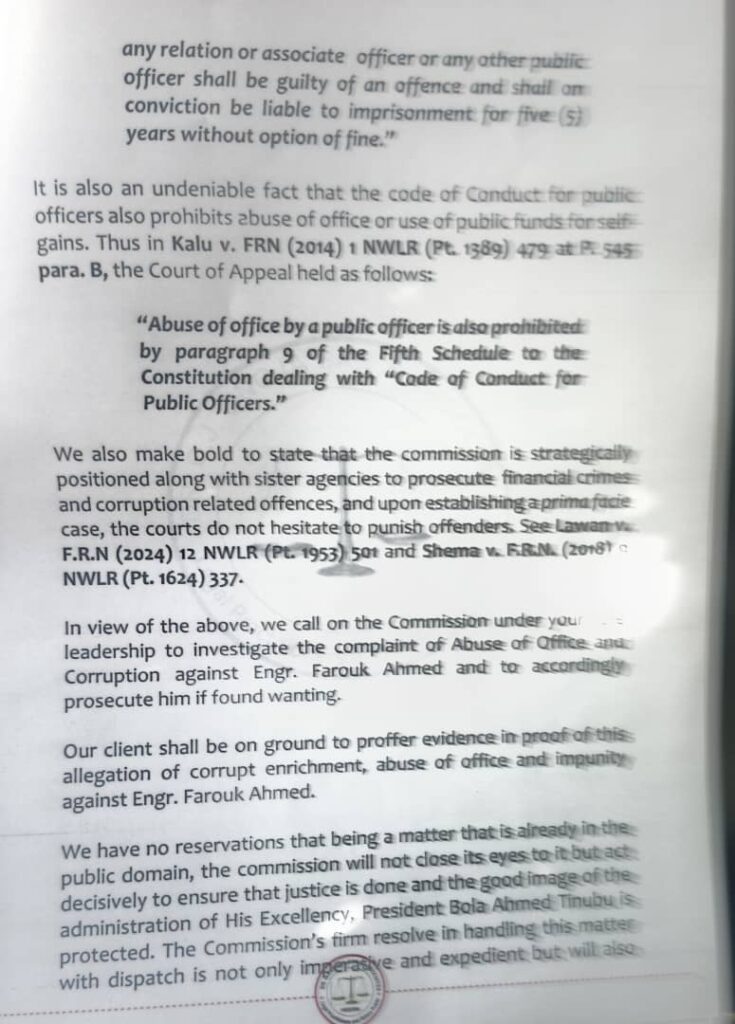
“We make bold to state that the ICPC is strategically positioned along the sister agencies to, prosecute financial crimes and other corruption related offences, and upon establishing a prima facie case, the Courts do not hesitate to punish offenders.
“In view of the above, we call on the Commission under your leadership to investigate the complain of abuse of office and corruption against Engr Farouk Ahmed and to accordingly, prosecute him if found wanting.
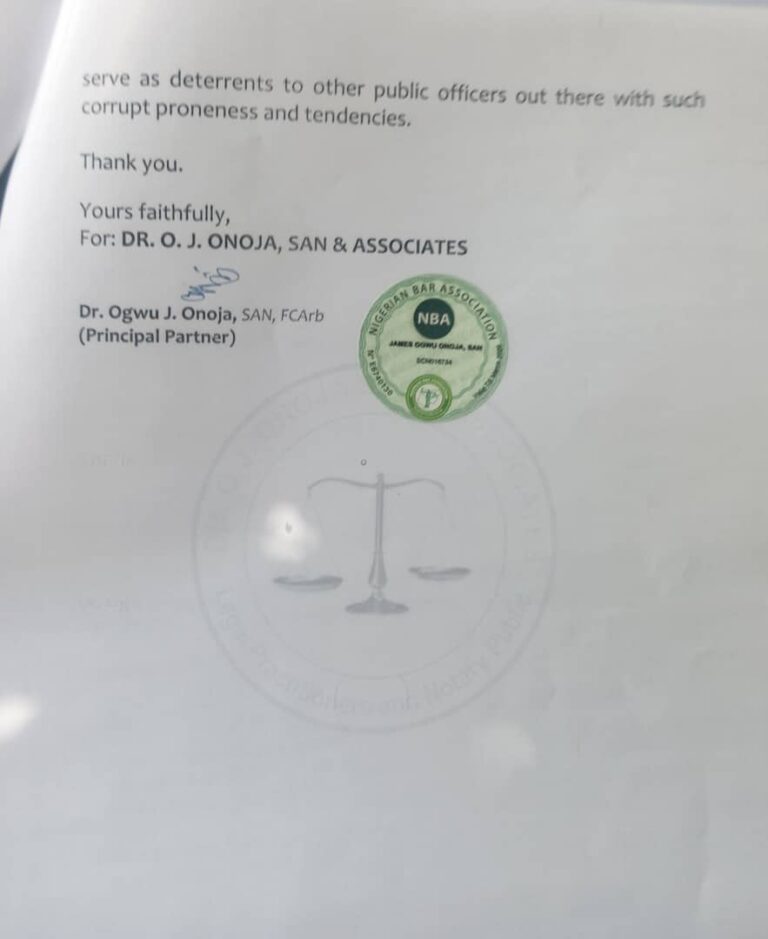
“We have no reservation that, being a matter that is in the public domain, the Commission will not close its eyes to it but act decisively to ensure that justice is done and the good image of the administration of President Bola Ahmed Tinubu is protected.”
Dangote also pledged to cooperate fully with investigators, saying he was ready to provide evidence to support his allegations of abuse of office and illicit enrichment.
The Kano-born businessman had earlier raised the allegations during a media interaction, questioning the source of Farouk’s wealth. “I’ve had people actually complaining about a regulator who put his children in secondary school, and that secondary school education, which is six years, four of them cost Nigeria five million dollars,” he said at a press conference held at the Dangote Refinery in the Ibekku-Lekki area of Lagos State. “My children went to secondary school in Nigeria. They did not go outside Nigeria to attend secondary school.”
Dangote later expanded on the claims in a national newspaper before formally lodging the petition with the ICPC. He insisted that “Nigerians deserve to know the source(s) of these sums of money paid by a public officer while many parents in his home state of Sokoto cannot afford to pay N10,000 school fees for their children and wards”.
He also accused the regulatory authority of obstructing efforts to boost local refining, particularly through the continued issuance of fuel import licences.
Meanwhile, the House of Representatives has stepped into the dispute, summoning both Dangote and Farouk. The Joint Committees on Petroleum Resources (Downstream and Midstream) have also urged both parties to halt public exchanges, saying the intervention is aimed at easing tensions capable of destabilising the downstream petroleum sector.
“We can only find sustainable solutions when we identify the critical issues leading to this tension.
“That is why the committee resolved to write to Alhaji Aliko Dangote and the NMDPRA chief to meet with us and give insights into what is driving these allegations and counter-allegations,” said Ikenga Ugochinyere, one of the committee leaders.
As of the time of filing this report, neither Ahmed Farouk nor the NMDPRA had issued an official response to the allegations.
Dangote’s Petition Against Ahmed
Below is a letter containing Dangote’s petition against NMDPRA boss:
What you should know
The petition by Aliko Dangote places Nigeria’s petroleum regulatory framework under renewed public scrutiny, particularly around transparency, accountability and the lifestyle of top public officials.
At the centre of the controversy is whether a senior regulator’s personal spending aligns with legitimate earnings from public service. The matter has now drawn the attention of anti-corruption agencies and lawmakers, underscoring broader concerns about governance in the oil and gas sector.
The outcome of the ICPC’s response and the National Assembly’s intervention could shape public trust in regulatory institutions and influence ongoing debates about reform, local refining and oversight within Nigeria’s energy industry.