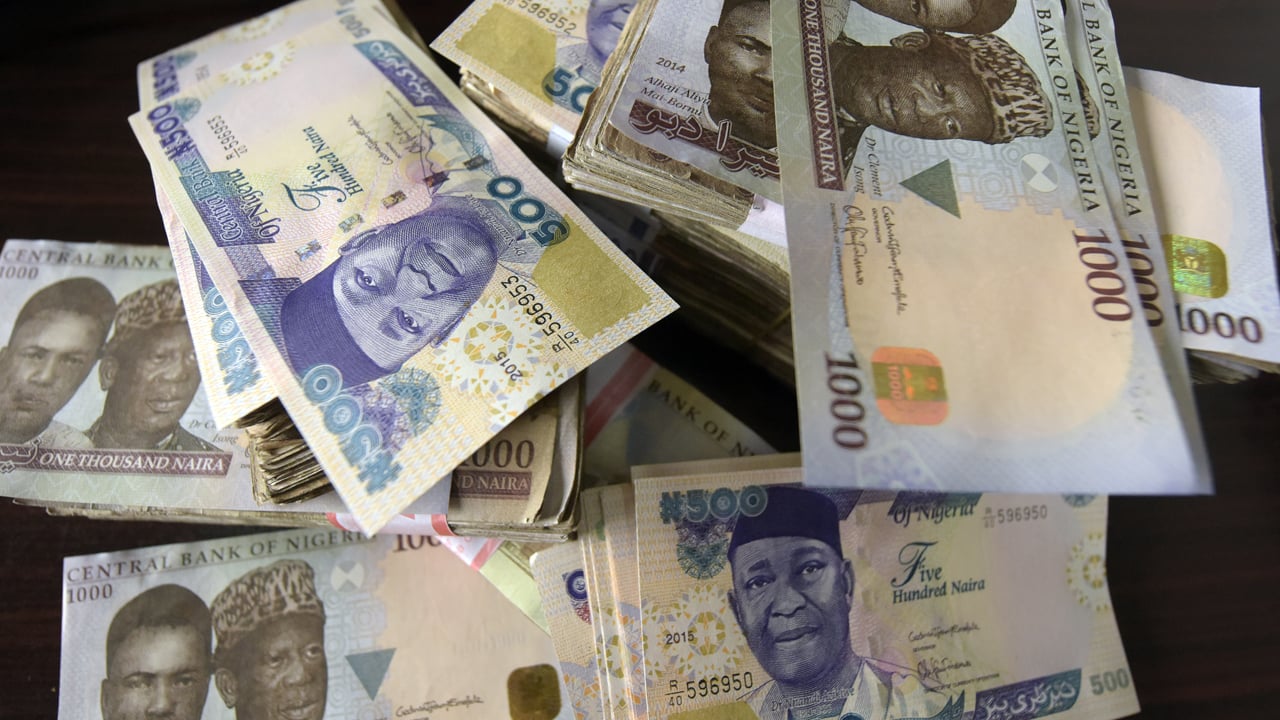
Nigeria’s currency continued to struggle this week as the naira lost further ground against the US dollar, closing at N1,454/$1 on Friday amid mounting pressure driven by festive-season demand.
For many Nigerians, the December rush for imports, travel expenses, and retail stocking has once again spilled into the foreign exchange market, pushing up dollar demand and weakening the local currency.
The latest movement marks a noticeable shift from the relative calm seen in recent weeks. Official data from the Central Bank of Nigeria (CBN) showed a day-by-day weakening pattern:
Monday: N1,450.01/$1
Tuesday: Slight appreciation to N1,447/$1
Wednesday: Mild drop to N1,447.5/$1
Thursday: Depreciation to N1,449/$1
Friday: Further slide to N1,454/$1
Parallel market operators in Abuja reported even higher levels, with trades occurring between N1,469.5/$1 and N1,472/$1, reflecting the deeper strain in the unofficial market.
According to analysts, the downturn is hardly surprising. The final quarter of the year traditionally brings a spike in FX demand as import-dependent businesses restock for Christmas and New Year, while consumers increase spending on travel, electronics, clothing, and seasonal goods. These activities typically heighten pressure on the naira—an annual pattern now compounded by speculative trading and persistent structural issues in the FX market.
A Bureau de Change operator in Wuse Zone 4 told Nairametrics that “CBN’s interventions alone can’t offset the pressure coming from speculative activities and the surge in import demand,” adding that traders were bracing for further volatility if market liquidity remains tight.
This week’s depreciation contrasts sharply with last week’s brief recovery, when the naira strengthened as low as N1,441/$1 and closed at N1,446.9/$1. The reversal underscores how fragile the currency remains amid ongoing market adjustments and incomplete reforms.
Meanwhile, policymakers appear to be aligning expectations with reality. The Federal Government recently approved the 2026–2028 Medium-Term Expenditure Framework (MTEF), which projects an exchange rate of N1,512/$1 for 2026, suggesting that the government anticipates a sustained period of currency pressure.
Still, there was a glimmer of positive news. Nigeria’s foreign reserves rose to $45.04 billion, up from $44.9 billion at the start of the week. Analysts say the uptick may reflect crude-oil inflows, Eurobond-related transactions, or multilateral support. Higher reserves typically give the CBN more intervention capacity should volatility worsen.
As part of broader efforts to restore stability and investor confidence, the CBN last week announced it was finalising a revised Foreign Exchange Manual. The new document is expected to broaden market participation, strengthen documentation protocols, enhance surveillance of Electronic Financial Markets, and streamline Nigeria’s transition to a more transparent and predictable FX framework.
CBN Governor Olayemi Cardoso also noted that earlier in the year, the introduction of the Nigerian Foreign Exchange Code laid a foundation for ethical conduct among authorised dealers, signalling the apex bank’s commitment to long-term structural reform.
For now, however, the naira’s renewed slide highlights the complex tug-of-war between seasonal demand pressures, market sentiment, and the ongoing struggle to build a stable and credible foreign exchange system.
WHAT YOU SHOULD KNOW
The naira’s renewed depreciation this week underscores how vulnerable the currency remains to festive-season demand and broader market pressures, despite rising foreign reserves and ongoing CBN reforms aimed at stabilising the FX market.