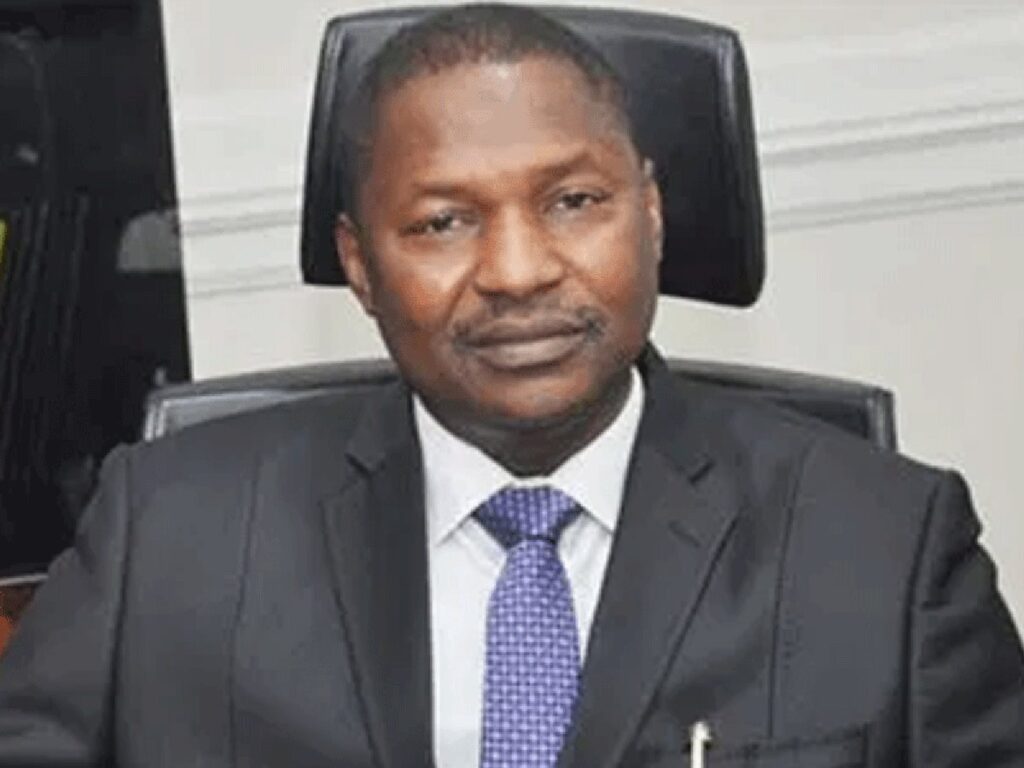
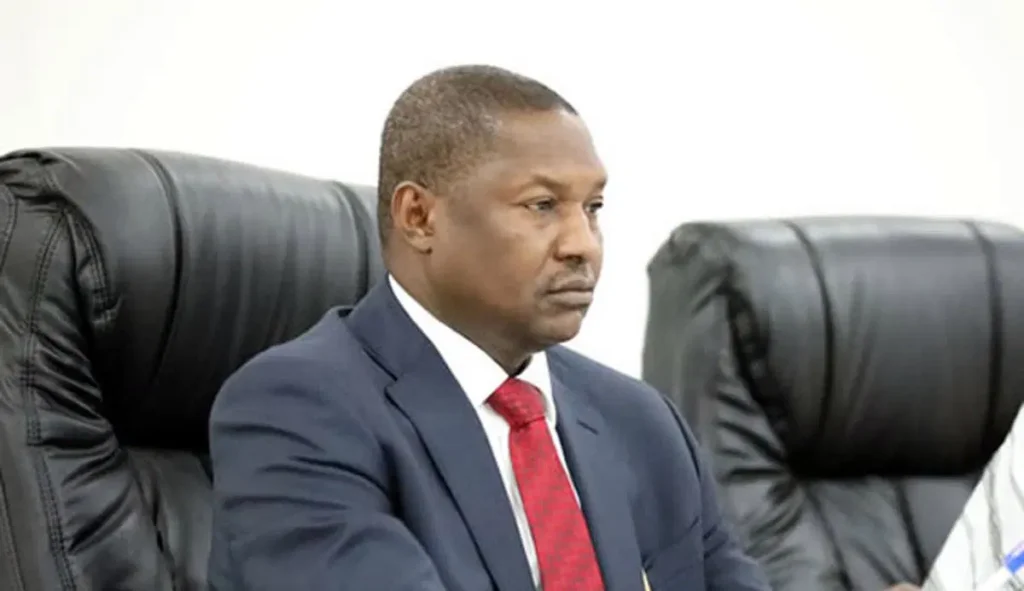
Former Attorney-General of the Federation and Minister of Justice, Abubakar Malami, has firmly dismissed reports linking him to terrorism financing, insisting the claims are entirely baseless and distorted.
In a statement shared on his official social media pages on Friday, Malami criticised the publication that mentioned his name alongside alleged terror suspects and purported financiers, describing the narrative as “unfounded and unfair.” He emphasised that he has never been questioned, investigated, or charged by any security or intelligence agency within or outside Nigeria over terrorism financing or related activities.
He explained that the retired military officer referenced in the publication had made it clear that neither he nor any other individuals were accused of funding terrorism. Instead, the officer referred to alleged “business” or “institutional” interactions involving some suspects—details that Malami said were later twisted into misleading claims which his political opponents seized upon for ulterior motives.
Calling attention to the seriousness of terrorism financing, Malami stressed that linking anyone to such an offence must depend on verified evidence, not assumptions or attempts to suggest guilt by association. He cautioned against turning routine institutional engagements into tools for tarnishing reputations or spreading falsehoods about public officials.
Reflecting on his time in office, Malami highlighted key reforms he championed that significantly bolstered Nigeria’s anti-money-laundering and counter-terrorism-financing systems. Among these were the creation of an independent Nigerian Financial Intelligence Unit (NFIU), the enactment of the Money Laundering (Prevention and Prohibition) Act 2022, and the Terrorism (Prevention and Prohibition) Act 2022.
He explained that these measures, which were implemented in collaboration with the National Assembly, law-enforcement agencies, the Central Bank of Nigeria, and international organisations, formed part of the progress later evaluated by the Financial Action Task Force (FATF). This work contributed to Nigeria’s removal from FATF’s grey list, a development Malami said contradicts any suggestion that he could have been involved in protecting or assisting terror financiers.
While reiterating his appreciation for the media’s constitutional responsibilities, Malami urged journalists to act with caution and professionalism, especially when reporting matters relating to national security. He warned that careless reporting or sensational interpretations could damage individual reputations and weaken public confidence in institutions responsible for protecting the country.
What You Should Know
Abubakar Malami, Nigeria’s former Attorney-General, has firmly denied suggestions linking him to terrorism financing, arguing the claims stem from distorted interpretations of institutional interactions rather than facts.
He stressed that he has never faced any investigation concerning such offences and highlighted reforms he led—including the establishment of the NFIU and major AML/CFT legislation—that helped strengthen Nigeria’s financial intelligence framework and contributed to the nation’s removal from FATF’s grey list.
Malami warned that misrepresenting national-security issues could harm public trust and urged media outlets to report responsibly.