Biography and Early Life
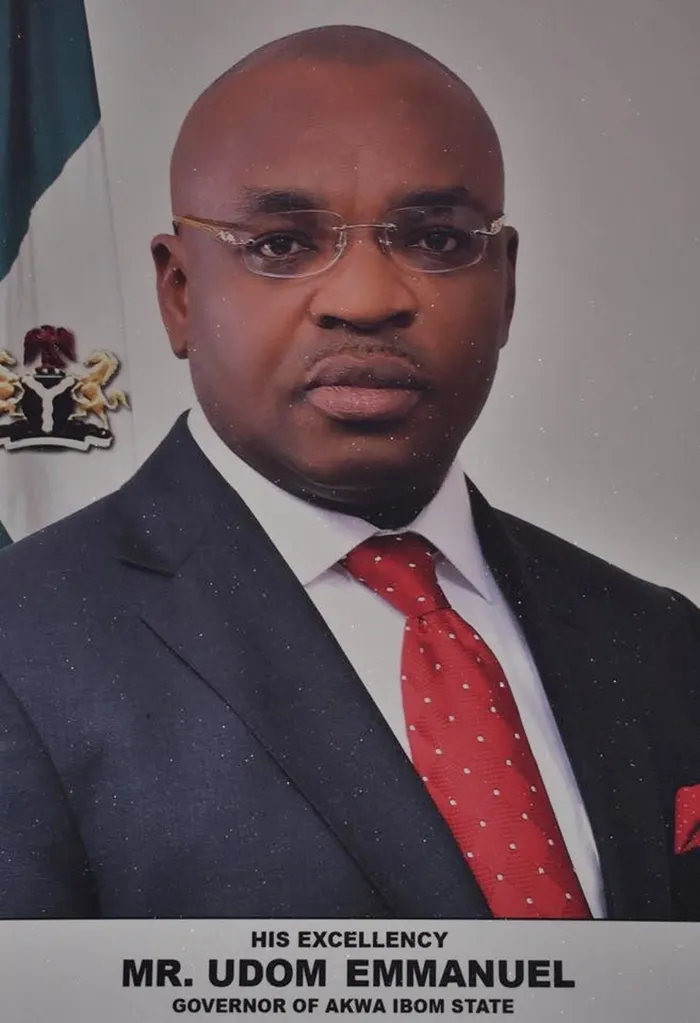
Udom Gabriel Emmanuel was born on July 11, 1966, in Awa Iman, a rural community in the Onna Local Government Area of Akwa Ibom State, Nigeria. Deacon Udom Emmanuel is from the Annang ethnic group, one of the three major ethnic groups in Akwa Ibom State alongside Ibibio and Oron. His father, the late Ette Gabriel Emmanuel Nkanang, was a respected educator and community elder who passed away in 2019.
Growing up in Awa Iman exposed Emmanuel to the challenges facing rural communities in oil-producing regions and areas rich in resources but often lacking in development and infrastructure. These early experiences would later inform his governance priorities when he became governor.
Emmanuel was raised in a devout Christian home and has remained deeply committed to his faith throughout his life. He is a longstanding member and deacon of the United Evangelical Church (formerly Qua Iboe Church), where he served for many years as a Sunday school teacher and leader before entering politics.
Educational Background
Emmanuel’s educational journey reflects consistent academic excellence:
Secondary Education: He attended Secondary Commercial School in Ikot Akpan Ishiet, Onna Local Government Area, where he obtained his West African Examination Council Certificate (WAEC).
Advanced Studies: He proceeded to the School of Arts and Science in Uyo, where he earned both an Advanced Certificate of Basic Studies (CBS) and a Higher School Certificate (HSC).
University of Lagos: Emmanuel earned his Bachelor of Science degree in Accounting from the University of Lagos in 1988, graduating with Second Class Upper Honours.
Leeds Metropolitan University: He obtained a Master’s degree in Corporate Governance from Leeds Metropolitan University in the United Kingdom, deepening his expertise in financial management and organizational leadership.
INSEAD, France: He attended the Advanced Management Program at INSEAD in Fontainebleau, France, participating in executive education at one of the world’s premier business schools.
Professional Qualifications: Emmanuel is a Fellow of the Institute of Chartered Accountants of Nigeria (ICAN), having qualified as a Chartered Accountant, one of the most prestigious professional designations in Nigerian finance and accounting.
This exceptional educational background, combining accounting expertise with advanced corporate governance and management training, positioned Emmanuel for leadership roles in Nigeria’s financial sector and eventually in public service.
Banking and Corporate Career
Early Career at PricewaterhouseCoopers
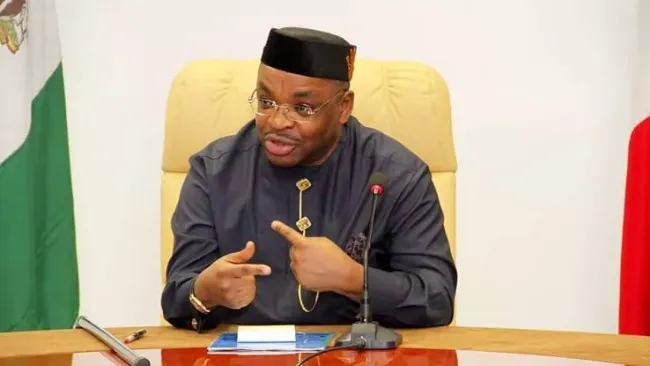
After completing his National Youth Service Corps (NYSC) with the Federal Ministry of Works in Lagos in 1989, Emmanuel joined PricewaterhouseCoopers (PwC) as an audit trainee. At PwC, one of the world’s “Big Four” accounting firms, he received rigorous training in auditing, financial analysis, and corporate advisory services. He qualified as a Chartered Accountant during this period.
Diamond Bank Plc (1993-2004)
Emmanuel’s transition into commercial banking came in 1993 when he joined Diamond Bank Plc, where he served in various senior capacities and built a strong foundation in financial management. His eleven years at Diamond Bank provided experience in retail banking, credit analysis, and bank operations.
Zenith Bank Plc (2004-2013)
Emmanuel’s career reached its peak at Zenith Bank Plc, one of Nigeria’s largest and most successful commercial banks:
General Manager (2004): In 2004, he moved to Zenith Bank Plc as General Manager, overseeing the Lagos Zone.
Executive Director (2006): By 2006, he had been appointed Executive Director for Lagos and the South-West, making him one of the youngest executive directors in the banking sector at the time. This was a remarkable achievement in Nigeria’s competitive banking industry.
Regional Oversight: He later assumed responsibility for the South-South, South-East, and Abuja/FCT regions, solidifying his reputation as a skilled strategist.
Board Positions: Emmanuel served in multiple director roles including Non-Executive Director for Africa Finance Corporation (AFC) from 2008, Director of Nigerian Inter-bank Settlement Systems (NIBBS) from 2009, and Non-Executive Director positions at Zenith Bank subsidiaries in the United Kingdom, Gambia, and Sierra Leone, as well as Zenith Insurance, Zenith Pensions and Custodian, Zenith Securities, Zenith Trustees, and Zenith Registrars.
Emmanuel’s banking career spanned over 17 years across audit, merchant banking, and commercial banking, giving him a comprehensive understanding of Nigeria’s financial sector, corporate governance, and business strategy.
Entry into Politics
Secretary to the State Government (2013-2015)
In July 2013, Governor Godswill Akpabio appointed Emmanuel as Secretary to the State Government (SSG) of Akwa Ibom State, replacing Umana Umana, who had left to pursue the governorship. The appointment leveraged Emmanuel’s extensive private-sector experience in banking and finance, positioning him as a technocratic advisor in Akpabio’s administration.
As SSG, Emmanuel served as the chief administrative officer, coordinating government policies, managing bureaucratic operations, and acting as a key liaison between the governor and state ministries. This role provided him with crucial government experience and exposed him to the mechanics of state administration.
2015 Gubernatorial Campaign and Election
In 2014, Emmanuel contested for the governorship of Akwa Ibom State in a primary election and defeated 22 other aspirants to emerge as the candidate of the Akwa Ibom State People’s Democratic Party (PDP). His primary victory demonstrated the political machinery and support he had built with Akpabio’s backing.
In 2015, Emmanuel was elected Governor of Akwa Ibom State, Nigeria. Contesting under the platform of the People’s Democratic Party (PDP), he won with 996,071 votes to defeat APC’s candidate Umana Okon Umana, who scored 89,865 votes, and was declared elected by the Independent National Electoral Commission (INEC).
His campaign slogan, “Udom is Right,” captured popular support for continuity with Akpabio’s development agenda while promising technocratic competence.
Governor of Akwa Ibom State (2015-2023)
Emmanuel was sworn in on May 29, 2015, as the fourth democratically elected governor of Akwa Ibom State, serving two full terms until May 29, 2023.
“Dakkada” Philosophy
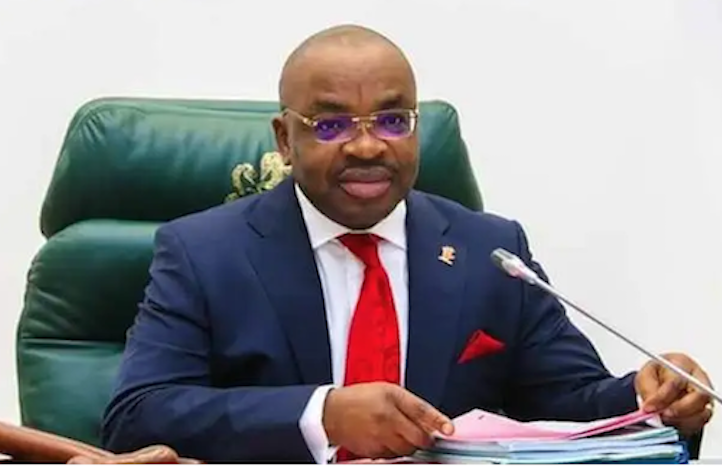
Emmanuel branded his administration with the “Dakkada” philosophy, a moral rebirth and motivational initiative urging Akwa Ibom people to embrace self-belief, hard work, innovation, and excellence. The Dakkada philosophy emphasized:
- Self-reliance and entrepreneurship
- Moral values and integrity
- Pride in Akwa Ibom identity
- Can-do attitude and determination
This philosophical framework aimed to change mindsets and inspire citizens to contribute to state development.
Industrialization Agenda
Emmanuel’s signature policy thrust was industrialization, transforming Akwa Ibom from a civil service-dependent state to an industrial hub. His industrialization strategy focused on three key gateways: Air, Sea, and Land.
Ibom Air (Aviation Gateway): Ibom Air commenced operations on June 7, 2019, making Akwa Ibom the first and only state government in Nigeria (and West Africa) to establish and successfully operate a commercial airline. The airline:
- Started with 5 staff members and grew to over 656 employees
- Carried its 500,000th passenger by March 1, 2021, despite COVID-19 disruptions
- Achieved 95% schedule reliability and on-time performance
- Won Best Airline awards
- Operates multiple daily flights across Nigerian cities
- Expanded fleet with modern Airbus A220 aircraft
- Plans regional expansion to West and Central African destinations
- Employs Akwa Ibomites in highly skilled aviation professions, including piloting, cabin crew, and aircraft maintenance engineering
Ibom Air’s success exceeded expectations, proving skeptics wrong who said no African state could establish a viable airline.
Ibom Deep Seaport (Sea Gateway): Emmanuel prioritized development of the Ibom Deep Seaport project in partnership with the federal government and private investors, aiming to position Akwa Ibom as a maritime trade hub.
Road Infrastructure (Land Gateway): His administration constructed and rehabilitated hundreds of kilometers of roads across Akwa Ibom’s 31 local government areas, improving connectivity for commerce and mobility.
Industrial Parks and Factories: Emmanuel’s administration attracted over 20 companies to set up in Akwa Ibom State, including an automobile assembly plant at Itu, an LED factory at Itam, a Shoprite at Ibom Tropicana, a Lion Plywood and Timber factory in Awa (Onna), and a DAAR Communications Broadcasting Complex in Abak.
Infrastructure Development
Beyond roads, Emmanuel’s administration delivered extensive infrastructure:
Dakkada Towers: Built a twenty-one-storey smart building in Uyo, becoming one of the tallest buildings in the South-South region.
Aviation Infrastructure: Construction of a second airport runway, upgrade of the airport main runway to Category II, construction of a new Commercial Terminal Building at Victor Attah International Airport, installation of full runway lighting, and construction of an A maintenance, Repair, and Overhaul (MRO) facility.
Urban Development: Extensive urban renewal in Uyo, Eket, Ikot Ekpene, and other major towns.
Ibom Tropicana Entertainment Centre: Built a world-class entertainment and shopping complex.
Healthcare Improvements
The administration remodeled and equipped general hospitals across the three senatorial districts, including General Hospital Iquita town (Oron LGA), Etinan General Hospital, Methodist General Hospital Ituk Mbang (Uruan LG), Immanuel General Hospital (Eket), and General Hospital (Onna).
Built a 300-bed capacity isolation and infectious diseases treatment center at the Ituk Mbang General Hospital to address the COVID-19 pandemic.
Education Sector
Emmanuel invested in educational infrastructure, rehabilitating schools across the state and improving teachers’ welfare. He rehabilitated Government Model Girls Secondary School, Ikot Ekang, among numerous other educational facilities.
Agricultural Development
His administration established large hybrid rubber nurseries, refurbished cassava processing factories at multiple locations, distributed hybrid plantain suckers to farmers, installed maize preservation and shelling machines, and established agricultural demonstration plots for technology transfer to farmers.
2019 Re-election
In the March 9, 2019, Akwa Ibom State gubernatorial election, Emmanuel was re-elected as Governor, defeating 44 other candidates. His re-election affirmed public satisfaction with his first-term performance and provided a mandate to complete his projects.
Eight-Point Agenda (Second Term)
His second term focused on an expanded eight-point agenda:
- Industrialization
- Aviation Development
- Rural and Riverine Area Development
- Agriculture
- Human Capacity Development
- Security
- Infrastructure
- Small and Medium Enterprises Development
Controversies and Criticisms
Despite his achievements, Emmanuel’s governorship faced serious controversies:
Budget Irregularities and Corruption Allegations
In 2020, Udom faced allegations of corruption about budget overruns and questionable expenses. Reports showed that the office of the Secretary to the State Government bought 15 new Toyota Prados for ₦4.864 billion. ₦800 million was allocated for Emmanuel’s hospitality and traditional gifts, but ₦1.18 billion was spent. In 2019, ₦2.7 billion was spent on fuel and lubricants for generators and cars of the Governor, his family, and his appointees, though only ₦1.3 billion had been allocated.
When the International Centre for Investigative Reporting published a full investigative article on the budget irregularities, state commissioners arranged a press conference claiming that budget overruns and questionable expenses were due to coding errors in International Public Sector Accounting Standards software. However, reporting showed that Akwa Ibom had been using IPSAS software since 2014, the Office of the Accountant General had spent ₦132 million on IPSAS training and procurement, and the Nigerian Governors’ Forum rated Akwa Ibom in the top five states for IPSAS adoption in 2020.
Between 2015 and 2019, up to ₦13.61 billion was allocated and supposedly spent on “Government Special Development Project,” an item under the budget for Governor Emmanuel’s Office with no footprint or known project having been completed.
Peacock Paints Controversy
The administration’s handling of Peacock Paints company raised questions, with the report showing that the Emmanuel administration had not properly taken over the company, causing financial records to still note the state government as holding a 15% stake. Emmanuel’s Commissioner for Trade and Investment, Ukpong Akpabio, along with Peacock Paints management, ignored Freedom of Information requests and further inquiries by reporters.
Political Intimidation Allegations
In August 2021, the Uyo Capital City Development Authority of the Akwa Ibom State Government marked the church of Holy Ghost Ambassadors Ministry International for demolition, and the SSS brought in the church’s senior pastor, Nyeneime Andy, for questioning. Andy had voiced opposition to Emmanuel’s plan to dictate who the PDP nominated to succeed him in the 2023 gubernatorial election. The UCCDA claimed the church building did not meet planning standards and gave a seven-day ultimatum for demolition. The demolition ultimately did not occur after Andy swiftly changed his opinion post-detainment, posting on Facebook support for Emmanuel.
EFCC Investigation
In March 2025, the Economic and Financial Crimes Commission (EFCC) invited former Governor Udom Emmanuel to their headquarters in Abuja. Details of the investigation have not been fully publicized, but it relates to his tenure as governor.
Personal Life
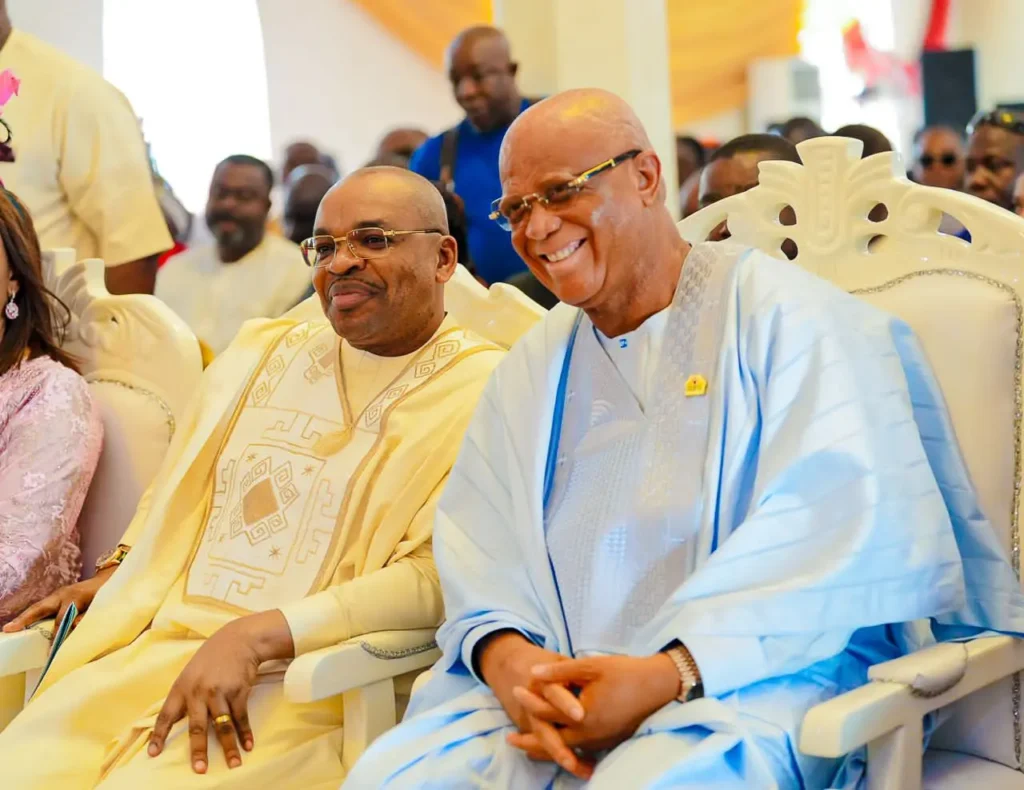
Udom Emmanuel is married to Dr. Martha Udom Emmanuel, a medical doctor and philanthropist. Dr. Martha served as First Lady of Akwa Ibom State and founded the Family Empowerment and Youth Reorientation (FEYReP) initiative, focusing on women’s empowerment, education, and social welfare. They have children together.
Emmanuel is known for his quiet, analytical demeanor, a contrast to more flamboyant Nigerian politicians. His management style reflects his banking background: data-driven, strategic, and focused on measurable outcomes.
He is an avid supporter of Arsenal Football Club and has publicly expressed his passion for the English Premier League team.
Post-Governorship
Since leaving office in May 2023, Emmanuel has:
- Remained active within the PDP, maintaining influence in Akwa Ibom politics
- Successfully installed his chosen successor, Pastor Umo Eno, as governor
- Continued his business and philanthropic activities
- Maintained his church leadership role as a deacon
- Faced EFCC investigation regarding his tenure
His influence in Akwa Ibom politics remains substantial, with his protégé now governing the state.
Legacy and Assessment
Emmanuel’s legacy is complex, marked by genuine achievements alongside serious governance questions:
Achievements
Ibom Air: His signature achievement in establishing Nigeria’s only state-owned commercial airline that not only survived but thrived, becoming one of the country’s best airlines.
Industrial Attraction: Successfully attracted numerous companies to establish operations in Akwa Ibom, diversifying the state’s economy.
Infrastructure Transformation: Delivered extensive road networks, modern airport facilities, and urban development.
Aviation Development: Comprehensive development of aviation infrastructure, including MRO facility, modern terminal, and runway upgrades.
Healthcare Investment: Built modern healthcare facilities, including the 300-bed COVID-19 isolation center.
Relative Peace: Maintained Akwa Ibom as one of Nigeria’s more peaceful and stable states.
Technocratic Governance: Brought private sector efficiency and strategic planning to public service.
Criticisms and Controversies
Financial Accountability: Serious questions about budget overruns, unexplained expenditures, and the ₦13.61 billion “Government Special Development Project” with no visible outcomes.
Corruption Allegations: Multiple allegations of corruption, inflated contracts, and questionable spending remain unresolved.
EFCC Investigation: Post-tenure invitation by EFCC raises questions about financial propriety during his governorship.
Political Intimidation: The Holy Ghost Ambassadors Church incident suggested intolerance of dissent and willingness to use state apparatus for political purposes.
Transparency Deficit: Resistance to Freedom of Information requests and inadequate explanations for budget discrepancies.
Debt Burden: Questions about the debt accumulated during his tenure and its sustainability.
Balanced Perspective
Udom Emmanuel represents the promise and limitations of technocratic governance in Nigeria. His banking background and management expertise delivered visible projects, particularly Ibom Air, which stands as proof that state governments can execute complex, world-class projects when properly managed. His industrialization drive attracted genuine investment and employment to Akwa Ibom.
However, the budget irregularities, unexplained expenditures, and EFCC investigation suggest that technical competence alone doesn’t guarantee accountability. The gap between allocated and actual spending, combined with projects that never materialized despite budgetary allocations, raises serious governance questions.
His legacy will ultimately be judged by two competing narratives: the technocrat who transformed Akwa Ibom through Ibom Air and industrialization versus the leader whose financial management raised accountability concerns that overshadowed his achievements.
Comparative Assessment
Among Nigerian governors of his era, Emmanuel stands out for:
- Successfully establishing and operating a commercial airline (unique achievement)
- Attracting significant industrial investment to his state
- Maintaining relative peace and stability
- Bringing private sector management approaches to governance
However, he also exemplifies challenges common among Nigerian governors:
- Questions about financial transparency and accountability
- Concentrating power and successor-selection
- Using the state apparatus to suppress dissent
- The gap between budget allocations and visible outcomes
Deacon Udom Gabriel Emmanuel’s eight years as Akwa Ibom State Governor (2015-2023) produced one of Nigerian state governance’s most distinctive records, combining undeniable achievements like Ibom Air with troubling questions about financial management and accountability. His journey from Sunday school teacher to Zenith Bank Executive Director to Governor exemplifies how professional competence can create opportunities for public service leadership. Ibom Air alone is defying skeptics to become Nigeria’s most reliable airline, validating his vision and execution capabilities. Yet the budget irregularities, unexplained expenditures, and ongoing EFCC investigation remind us that competence without accountability remains incomplete governance. Whether remembered primarily as the visionary who gave Akwa Ibom its wings through Ibom Air or as a leader whose financial management raised serious concerns will depend partly on how current investigations conclude and how history weighs his tangible achievements against governance shortcomings. What seems certain is that his governorship significantly impacted Akwa Ibom’s trajectory, industrialization efforts, and aviation sector while raising important questions about accountability in Nigerian state governance that extend well beyond one administration or one state.