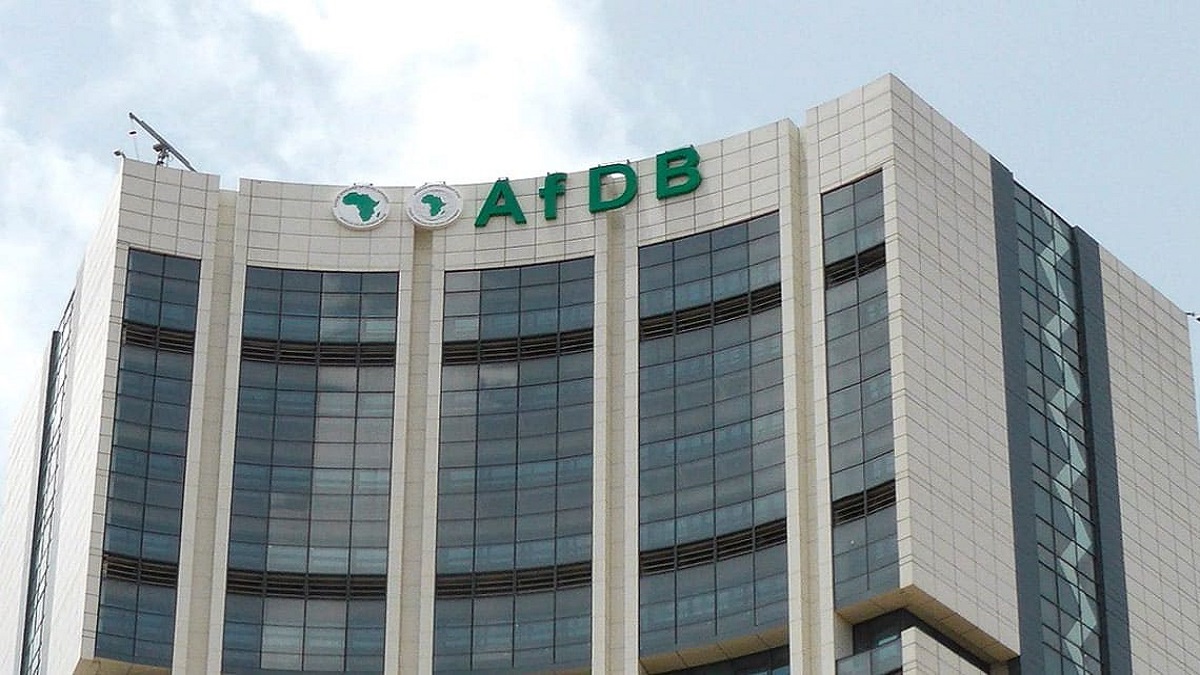
The African Development Bank ( AFDB) has moved to intensify its assault on the continent’s crippling infrastructure deficit, approving a $100 million loan facility to the Emerging Africa and Asia Infrastructure Fund (EAAIF) a deal that signals renewed urgency in mobilizing private capital for development projects.
The financing package, greenlit by the Bank’s Board of Directors and announced Friday, represents the fourth such loan the AfDB has extended to EAAIF, underscoring what officials describe as a proven partnership model in one of development finance’s most challenging arenas.
At stake is Africa’s estimated infrastructure financing gap—a chasm that economists say runs into hundreds of billions of dollars annually and continues to hamper economic transformation across the continent. The new facility is explicitly designed to crowd in private sector money for projects in renewable energy, transportation networks, digital infrastructure, and other foundational sectors that remain chronically underfunded.
“Partnering with the Emerging Africa and Asia Infrastructure Fund allows us to unlock long-term financing for critical projects that power economies, create jobs, and improve lives across Africa,” said Mike Salawou, who directs the Infrastructure and Urban Development Department at the AfDB. His remarks point to a strategic calculus: using development bank capital as a catalyst to de-risk investments and attract commercial financiers who have historically shied away from frontier markets.
The fund itself—a vehicle of the Private Infrastructure Development Group and managed by London-based investment firm Ninety One—has carved out a niche financing mid-sized infrastructure projects in markets where traditional commercial banks often fear to tread. EAAIF’s model blends development finance with private capital, attempting to bridge what Sumit Kanodia, a director at Ninety One, characterized as the gap between developmental need and commercial viability.
“This loan will enable us to finance more renewable energy, digital, and transport projects that drive inclusive growth, create jobs, and build climate resilience in the region,” Kanodia said, framing the injection as both a vote of confidence and a practical expansion of the fund’s lending capacity.
The timing is significant. Africa faces mounting pressure to expand electricity access—some 600 million people still lack reliable power—while simultaneously transitioning to cleaner energy sources. Transport infrastructure remains patchy, constraining trade and economic integration, while the digital revolution has exposed stark connectivity divides between urban centers and rural hinterlands.
Development finance institutions have increasingly turned to blended finance structures like EAAIF, which layer concessional capital alongside commercial investment to improve risk-return profiles. The AfDB’s repeated backing—this being the fourth loan—suggests the model is delivering results, though officials have not disclosed specific project outcomes or default rates.
The broader strategy reflects a recognition that public resources alone cannot close Africa’s infrastructure gap. By positioning development banks as anchor investors, institutions like the AfDB hope to demonstrate that carefully structured deals in emerging markets can generate acceptable returns while delivering measurable development impact—a pitch aimed squarely at pension funds, insurance companies, and other institutional investors with deep pockets but low risk appetites.
Whether this approach can be scaled sufficiently to meet Africa’s needs remains an open question, but Friday’s announcement adds another $100 million to the experiment.
WHAT YOU SHOULD KNOW
The African Development Bank’s $100 million loan to EAAIF represents a critical strategy to solve Africa’s massive infrastructure crisis—using public development funds as a magnet to pull in reluctant private investors.
This is the fourth such loan to the fund, proving the model works. The real significance: it’s an attempt to unlock the hundreds of billions in private capital needed to build the power grids, roads, and digital networks that 600 million Africans still lack.
Without this kind of risk-sharing arrangement, commercial investors won’t touch these markets. The question isn’t whether $100 million helps—it’s whether this approach can scale fast enough to close a gap that grows wider each year.
Africa can’t build its way out of poverty with public money alone. This deal is about making private investment possible in places it normally won’t go.